Renault Megane Estate
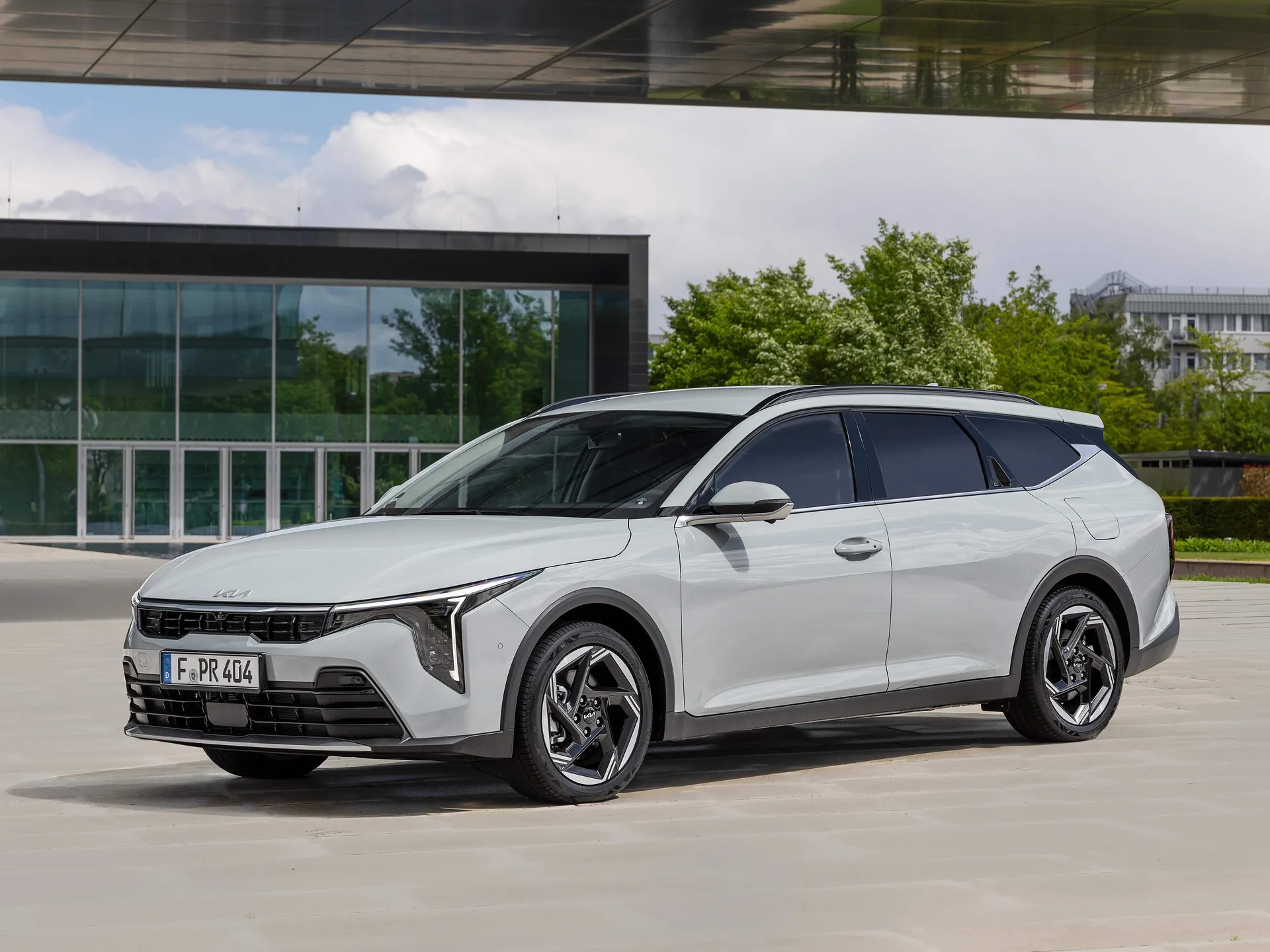
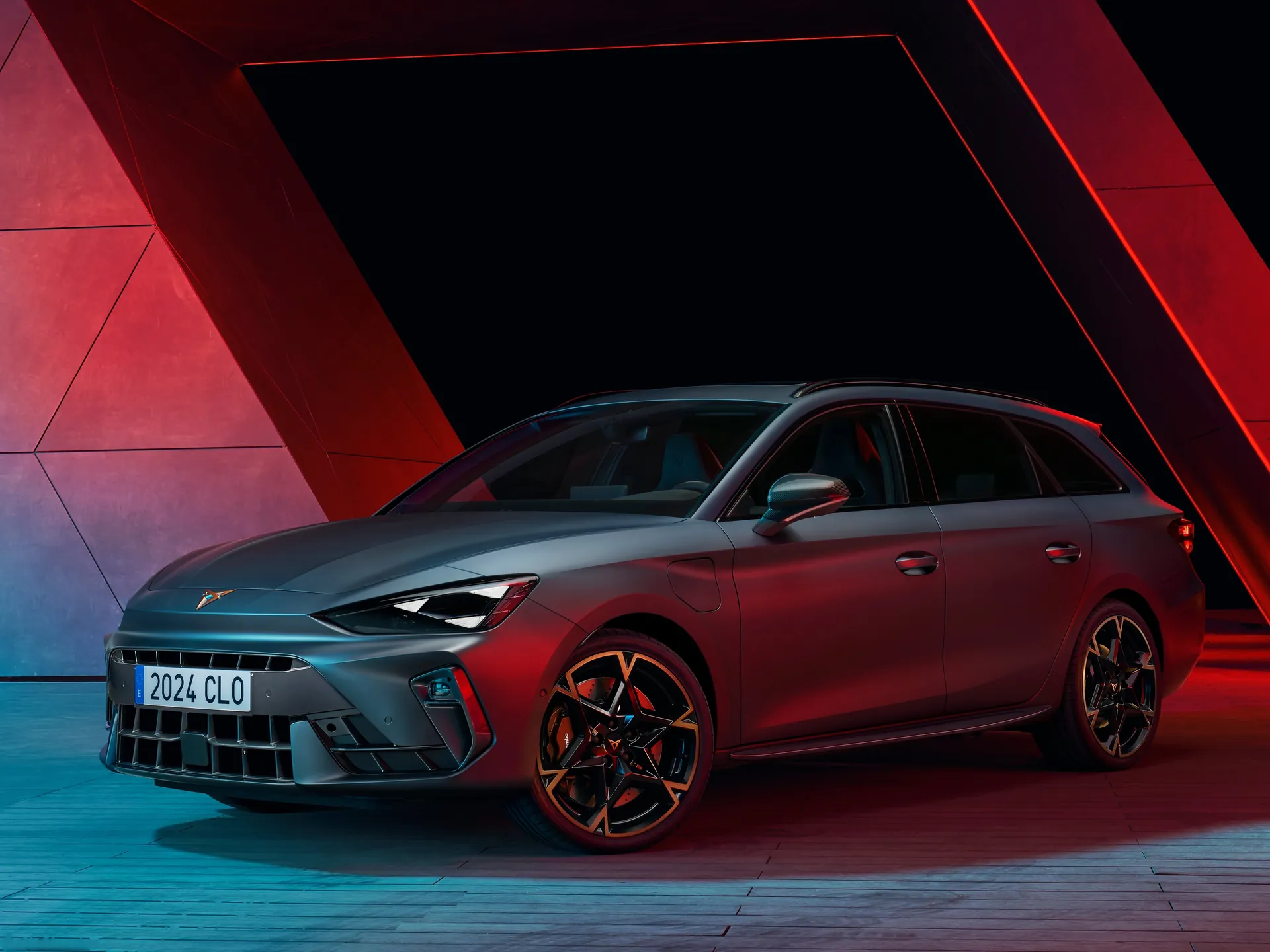
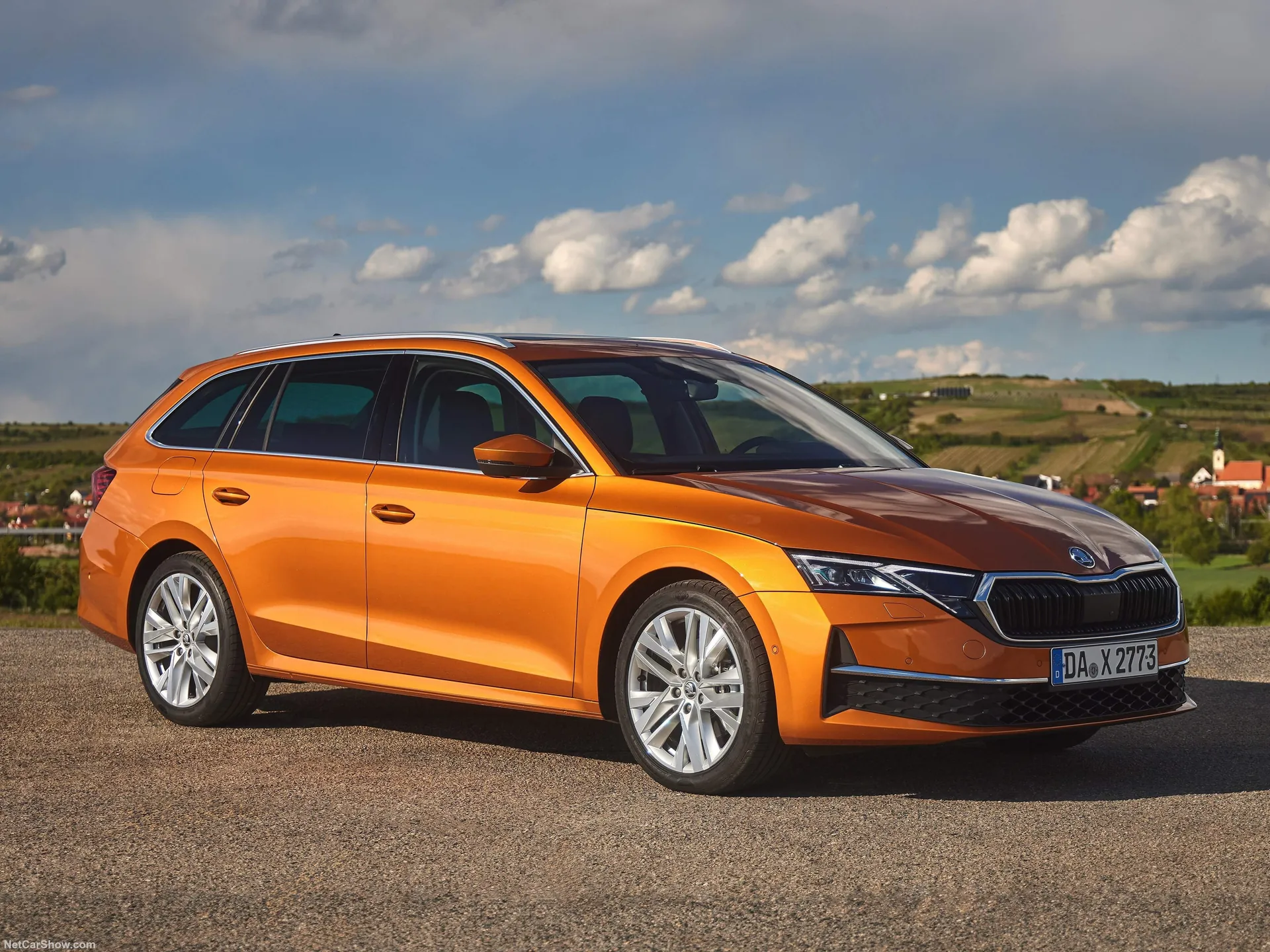
The new Renault Megane Estate is an elegant, dynamic car which offers all the features, technology and engines available for the hatchback version of the new Megane.
The car's intuitive, modular interior is its key asset, featuring:
The new Renault Megane Estate is available with a GT-Line pack for a sportier interior and exterior look.
The new Megane Estate GT, which was unveiled at the 2016 Geneva Motor Show, offers a combination of the following:
The new Renault Megane Estate, the Estate GT-Line and the Estate GT goes on sale on September 1, 2016. Dealerships started taking orders for the models on June 1, 2016.
Balanced proportions and distinctive styling
The racy design of the new Megane Estate blends dynamism with elegance. The lowest vehicle in its class, it also has the widest track to enhance its solid stance.
The car projects a feeling of the very highest perceived quality, notably in terms of:
Integrated, matt-finish anodised aluminium roof bars will be available as standard from the second equipment level upwards.
The new Renault Megane Estate boasts a distinctive lighting signature. At the front, C-shaped headlights feature LED 3D-effect light guides. High-end versions of the new Megane Estate are equipped with full LED headlights complete with automatic main/dipped beams (LED Pure Vision technology). At the rear, LED lights form a unique horizontal 3D-effect signature featuring Edge Light technology.
The new Megane Estate has a cabin ambience tailored to the driver. Compared with the previous model, the driving position has been improved ergonomically.
All the high-tech features (colour head-up display, dashboard with colour adjustable seven-inch TFT data screen, R-LINK 2 8.7-inch portrait-format multimedia tablet) are designed to facilitate everyday motoring.
Careful finishing touches, fine chrome detailing and high-quality materials further enhance travelling comfort.
The new Megane Estate GT-Line: a sportier version of the new Megane Estate
An exterior and interior GT-Line design pack is available on some versions of the new Megane Estate for sportier styling.
The new Megane Estate has 521dm3 VDA of luggage space (equivalent to 580 litres, quite the same as its predecessor).
The boot is straightforward to use, practical and offers a variety of arrangements to make everyday driving easier, including:
The longest load area in its segment, at 2.7 metres
The highest standards of cabin space and comfort, especially for rear passengers
The new Megane Estate boasts added comfort and space for rear passengers, featuring:
The comfort and ergonomics of the front seats, which use dual-density foam, have also been improved.
Unrivalled technology within the C segment
The new Renault Megane Estate is built on the CMF (Common Module Family) C/D platform and has numerous features inherited from the new Espace and the Talisman that are usually found only in higher segments. As a result, the new Megane Estate and the new Megane hatchback are both equipped with a range of technology unique to their market sector:
A connected driving experience courtesy of the R-LINK 2 8.7-inch multimedia touchscreen tablet
Higher-end versions of the new Megane Estate come with R-LINK 2 complete with an 8.7-inch (22cm) portrait-format display. Unique in the segment, it benefits from a capacitive 'pinch & zoom' screen for simplified use, much like that of a smartphone or tablet. The R-LINK 2 multimedia tablet is also available in a seven-inch landscape format.
R-LINK 2 is an easy, safe way of controlling the following features:
A package is available that includes a free 12-month subscription to TomTom Traffic, access to a catalogue of driving-related apps (Michelin Guide, Coyote and many others depending on market) and up-to-date European maps (depending on market).
The audio system's acoustics have been significantly enhanced by the introduction of larger loudspeakers (increasing in diameter from 130mm to 160mm) that are better-positioned at the foot of the doors. The vehicles fitted with R-LINK 2 enjoy excellent auditorium sound with eight loudspeakers.
For the Bose® versions, engineers from Renault and Bose® collaborated closely to produce a tailor-engineered sound for the new Megane Estate thanks to the optimal positioning of 11 high-performance loudspeakers around the cabin. The central loudspeaker at the front ensures well-balanced sound, while the subwoofer with two loudspeakers integrated into the boot reproduces music in all its original depth. This combination generates sound that is precise, clear and well-balanced. Every note, detail and nuance of the original recording is flawlessly transmitted.
A personalised driving experience thanks to MULTI-SENSE technology
The retractable colour head-up display contributes to driving comfort and safety by making the driving aids (ADAS) clearer and easier to use. Without the driver needing to take their eyes off the road, the screen displays information like current speed, navigation and driving aid data to ensure a reassuring driving experience.
The new Megane Estate benefits from the very latest driving aid technologies that also equip the new Espace, the Talisman and the new Megane. These driving aids are all accessed and activated via the R-LINK 2 tablet and include the following functions:
This automatically adjusts the speed of the vehicle to maintain a pre-selected following distance. The front radar evaluates the distance to the vehicle ahead and calculates its speed. It then communicates with the engine and braking system to adapt the car's speed accordingly and respect the following distance. This technology functions between 50kph and 150kph.
Active between speeds of 30kph and 150kph, this system alerts the driver to the risk of a collision with the vehicle ahead. If the driver fails to respond or does not react sufficiently, the brakes are automatically applied in order to avoid or minimise a collision.
Active at speeds of more than 70kph, this warns the driver should the car unintentionally cross a solid or broken white line. This technology contributes to in-car safety by alerting the driver if the vehicle adopts a trajectory that could result in it leaving the road.
This helps the driver to comply with safe stopping distances. A warning pictogram - corresponding to the time interval separating the new Megane Estate from the vehicle ahead - is displayed in an intuitive manner in the form of bars on the dashboard or head-up display. This system operates at speeds of between 30kph and 200kph.
Overspeed Prevention with Traffic Sign Recognition (OSP with TSR)
By reading traffic signs via a camera, this system informs the driver of the speed limit in the area in which they are travelling and offers to adjust the speed limiter accordingly (availability depending on market).
To ensure safe overtaking manoeuvres, this system alerts the driver by means of a visual signal on the wing mirrors when another vehicle is detected in the blind spot. The system functions between 30kph and 140kph.
A camera sensor detects the lights of oncoming vehicles and the rear lights of vehicles ahead and automatically switches to dipped beam head lights. This function is also able to detect street lighting.
After helping the driver to identify a suitable parking spot by measuring the available space with its sensors, this system subsequently takes charge of the steering during the parking manoeuvre. Easy Park Assist caters for three different types of parking: parallel, perpendicular and angled. The central screen displays all of the information required to complete the manoeuvre (graphic illustration, reversing camera and sensors). In every case, the driver has control over the braking and acceleration during the manoeuvre. The system functions up to 30kph.
The new Renault Megane Estate is a versatile family car that performs well in every area by dint of its first-class handling and a range of engines that cover the needs of all motorists. Significant work has also gone into improving the suspension system and acoustic comfort. The powertrain combinations deliver driving enjoyment in everyday motoring with closely spaced ratios.
The comfort delivered by the new Megane Estate has been enhanced thanks to:
The rear suspension joints have also been revised in order to improve the way uneven road surfaces are absorbed. The beam has been modified to provide bigger micro-steering movements of the rear wheels when turning in to corners for a more reassuring ride at higher speeds.
Compared to the Mégane 3 Estate, significant progress has been made in terms of acoustic comfort in the following areas:
A selection of engines to cover every need, including Hybrid Assist
The new Renault Megane Estate (excluding the GT version) comes with a choice of five diesel engines, including a diesel-electric powerplant known as Hybrid Assist and three petrol engines.
The Energy dCi 90 with six-speed manual transmission: 90hp and 220Nm of torque from 1,750rpm.
Teamed with six-speed manual transmission, this engine delivers an economic, dynamic ride. It is fitted with the Stop & Start system for improved fuel efficiency, consuming just 3.7 litres every 100 kilometres and emitting 95g CO2/km.
This powerplant guarantees an enhanced driving experience as a result of extensive work on the intake phase and combustion process. Fuel consumption and CO2 emissions remain very low (95g CO2/km and 3.7l/100km) when combined with the six-speed manual transmission or the six-speed EDC transmission.
The Energy dCi 110 ECO2 with six-speed manual transmission: 110hp and 260Nm of torque from 1,750rpm.
This ECO2 unit positions the new Megane Estate amongst the very best in its segment in terms of low CO2 emissions (90g CO2/km) and fuel consumption (3.5l/100km). The powerplant delivers enhanced driveability thanks to the implementation of technologies straight out of F1, like steel pistons.
The Energy dCi 130 with six-speed manual transmission: 130hp and 320Nm of torque from 1,750rpm.
This unit is packed with advanced technologies. Courtesy of downsizing, this 16-valve diesel produces 130hp despite a cubic capacity of just 1,598cc. It is underpinned by a particularly efficient design, based upon an architecture derived from Renault's expertise in F1. Fuel consumption figures for this diesel engine are just 4 litres/100km and CO2 emissions only 103g/km. The generous torque ensures brisk and effective pick-up for genuine driving enjoyment.
The dCi 110 Hybrid Assist with six-speed manual transmission.
The new Megane Estate is available with a diesel-electric powerplant known as Hybrid Assist. The unit functions with an electric motor-generator and a 48V battery. Hybrid Assist technology recovers energy under deceleration and the electric motor assists the internal combustion engine during acceleration. The result is lower fuel consumption and CO2 emissions, amongst the lowest in the segment.
The Energy TCe 100 with six-speed manual transmission: 100hp and 175Nm of torque from 1,500rpm. 120g CO2/km, 5.4l/100km.
Responsive at low speeds, this engine is perfect for city driving. Mated to a six-speed manual transmission, it delivers flexible and brisk pick-up at a lower cost.
The Energy TCe 130 with six-speed manual transmission: 130hp and 205Nm of torque from 2,000rpm.
This 1.2-litre turbocharged petrol unit offers the same performance and efficiency as a naturally-aspirated two-litre powerplant. Its direct injection technology and integrated turbo manifold mean it is flexible and responsive. The direct injection improves combustion to the benefit of fuel consumption figures (5.3 litres/100km) and CO2 emissions (119g of CO2/km).
The Energy TCe 130 with seven-speed EDC transmission: 130hp and 205Nm of torque from 2,000rpm.
This version generates the same fuel consumption and CO2 emissions levels as the manual gearbox version (5.4 litres and 122g), whilst providing the comfort and response of a dual-clutch transmission.
The naturally-aspirated SCe 115 petrol engine with five-speed manual transmission: 156Nm of torque from 4,000rpm (available in some markets).
The new Renault Megane Estate GT reinforces the sporty design of the new Megane Estate.
Inside, the new Megane Estate GT delivers the full Renault Sport experience:
4CONTROL: a new level of driving enjoyment and a first in the C segment
The new Megane Estate GT is the first estate car in its segment to benefit from 4CONTROL technology. A Renault-inspired innovation, the 4CONTROL chassis acts on the steering of the rear wheels. Configured by Renault Sport's engineers specifically for the new Megane Estate GT, this technology generates a sporty, dynamic and precise cornering feel. The car's handling feels sharper and more reassuring and inspires genuine driving pleasure, whatever mode has been selected. In emergency situations, the instant response of the four-wheel steering is quick to put the driver at ease. Moreover, this system provides a high degree of cornering stability at high speeds and easy manoeuvrability at low speeds, and, for an estate, the new Megane Estate GT is remarkably agile in built-up areas. To ensure optimal stability, the 4CONTROL system calculates and adjusts the steering angle of the rear wheels 100 times every second.
The new Mégane GT offers a choice of four driving settings (Sport, Neutral, Comfort and Perso) calibrated to meet the needs of different drivers at different moments.
With 4CONTROL, at speeds of less than 80kph in the Sport mode and less than 60kph in the other modes, the rear wheels turn in the opposite direction to those at the front. This endows the car with the precise and dynamic handling characteristics of a shorter-wheelbase vehicle. In excess of these speed thresholds, the rear wheels turn in the same direction as those at the front, making the car feel as if it were a longer-wheelbase vehicle from the next segment up and imbuing it with a sense of reassuring stability when cornering.
The Sport mode brings out the best in the sporty qualities of the new Megane Estate GT, with the R.S. Drive button serving as an instant shortcut. In the Sport mode, the 4CONTROL technology truly comes into its own in terms of response. The steering wheel needs to be turned 40% less (a 5% difference compared to the other modes) compared to an identical car without 4CONTROL, which favours a dynamic, surefooted ride on twisty roads. The Sport mode adjusts the calibration of the steering, the accelerator pedal mapping and the engine/transmission mapping. The Neutral mode is the default selection when the vehicle starts up and offers the optimum balance between sportiness and comfort for everyday use.
The Comfort mode optimises fuel consumption by switching certain functions to an economy setting.
The Perso mode can be configured by the driver, enabling them to adapt the vehicle to suit their mood of the moment.
The new Renault Megane Estate GT's suspension system is completed by specific settings in Renault Sport's traditional areas of expertise, whilst at the same time preserving the vehicle's comfort and versatility.
The new Megane Estate GT is also fitted with specific new springs, dampers, anti-roll bars and steering. The springs and dampers provide better vertical ride comfort, thereby contributing to the all-round ability of a vehicle that is intended for everyday use, while at the same time providing a distinctive sporty feel.
The diameter of the brake discs is 30mm wider than those on the new Megane Estate (320mm at the front/290mm at the rear) which translates into enhanced stopping power.
Two engines developed by Renault Sport: Energy TCe 205 EDC and Energy dCi 165 EDC
The Energy TCe 205 EDC with seven-speed EDC transmission: 205hp and 280Nm of torque from 2,400rpm.
This 1.6-litre turbocharged petrol unit developed for the GT version by Renault Sport ensures brisk acceleration and pick-up. Yet the level of driving enjoyment and performance it delivers remains compatible with low CO2 emissions (134g/km) and fuel consumption (6 litres/100km).
The Energy dCi 165 with six-speed EDC transmission: 165hp and 380Nm of torque from 1,750rpm.
Due out before the end of the year, this diesel engine will round out the new Megane Estate GT's engine line-up. This diesel unit benefits from Renault's Twin-Turbo technology. The first, low-inertia turbo produces immediate pick-up at low revs. The second turbo delivers sprightly response and dynamic mid-range acceleration across a broad rev-band. This engine delivers power, sporty driving enjoyment and low fuel consumption.
Launch Control and Multi-Change Down: two Renault Sport-inspired technologies
In the Sport mode, the new Renault Megane Estate GT benefits from a raft of specific technologies developed by Renault Sport engineers. Launch Control with the Energy TCe 205 EDC unit allows for considerably faster acceleration from a standing start, whilst Multi-Change Down with the Energy TCe 205 EDC and Energy dCi 165 EDC units significantly speeds up downshifting more than one gear at a time.
Perfect getaways courtesy of Launch Control
The Launch Control system is inspired by the automatic starting systems employed by Renault cars on motor racing starting grids. With 'Launch Control', the new Megane Estate GT is capable of fully managing standing starts. The system's sophisticated electronics ensure that it works as quickly as possible and in complete safety. This means that the new Megane Estate GT is able to pull away from the starting line more cleanly and efficiently, sprinting from 0-100kph (0-62mph) in just 7.4 seconds.
The system is simple to operate: with the driver's left foot on the brake pedal, Launch Control is activated by simultaneously pulling and holding the two steering wheel-mounted gearshift paddles, with confirmation provided by a 'Launch Control On' message displayed on the dashboard. With the driver's right foot pressed down on the accelerator pedal, the car pulls away as soon as the brake pedal is released.
In order to guard against mechanical damage, Launch Control is always under electronic surveillance, which has the ability to temporarily suspend its activation.
Faster downshifting with Multi-Change Down
After selecting the manual mode of the EDC transmission, Multi-Change Down enables the driver to downshift several gears in quick succession while braking, through a simple activation of the paddle to the left of the steering wheel. This means the car will be in the best gear to tackle the following corner.