Porsche 911 SC 3.0 Targa
After 10 years, Porsche revised the 911 from the ground up, without watering down the silhouette or the design. With model year 1974, series production of the new 911 - known internally as the G-Series - began after the summer holidays in August 1973. The second generation was longer and more comfortable, at 4,291 millimetres. New bumpers with plastic bellows-style telescopic ends met the strict US crash regulations and could absorb impacts at up to 5 miles per hour (approximately 8 km/h) without the body being damaged. Inside, comfortable seats with integrated headrests and automatic seat belts became standard.
From the second model generation, every 911 featured an engine with 2.7 litres of displacement. This had previously been reserved for the most performance-focused model in the range, the 911 Carrera RS 2.7. The 150 PS 911 Coupé of model year 1974 cost 26,980 Deutschmarks. The Carrera was slightly wider around the rear wheel arches than the first-generation model. Highlights of the G-Series included the 911 Turbo introduced in 1974. It featured a turbocharger, wide rear end and rear spoiler. Other notable versions included the Cabriolet and the Speedster models. The launch of the G-Series came at an inauspicious time, however, as the oil crisis in autumn 1973 hit Porsche hard. But the second-generation 911 was ever more popular among customers despite internal competition from the 924, 944 and 928 ranges. The G-Series was manufactured until the 1989 financial year (the end of the K programme - Porsche's internal code for distinguishing model years). Porsche built 196,397 examples of the G-Series.
Porsche initially opted for the six-cylinder boxer with 2.7 litres of displacement and Bosch K-Jetronic mechanical fuel injection. There were two performance levels of 150 PS and 210 PS available for the high-torque boxer engine, which was designed for regular petrol. Over the years, displacement rose first to 3.0 litres (from 1975) with 200 PS and then to 3.2 litres with 231 PS after the 1983 summer break. In 1975, the 911 Turbo arrived, drawing its 260 PS of power from 3.0 litres of displacement. From 1977, the engine grew to 3.3 litres and 300 PS of power, aided by the addition of an intercooler.
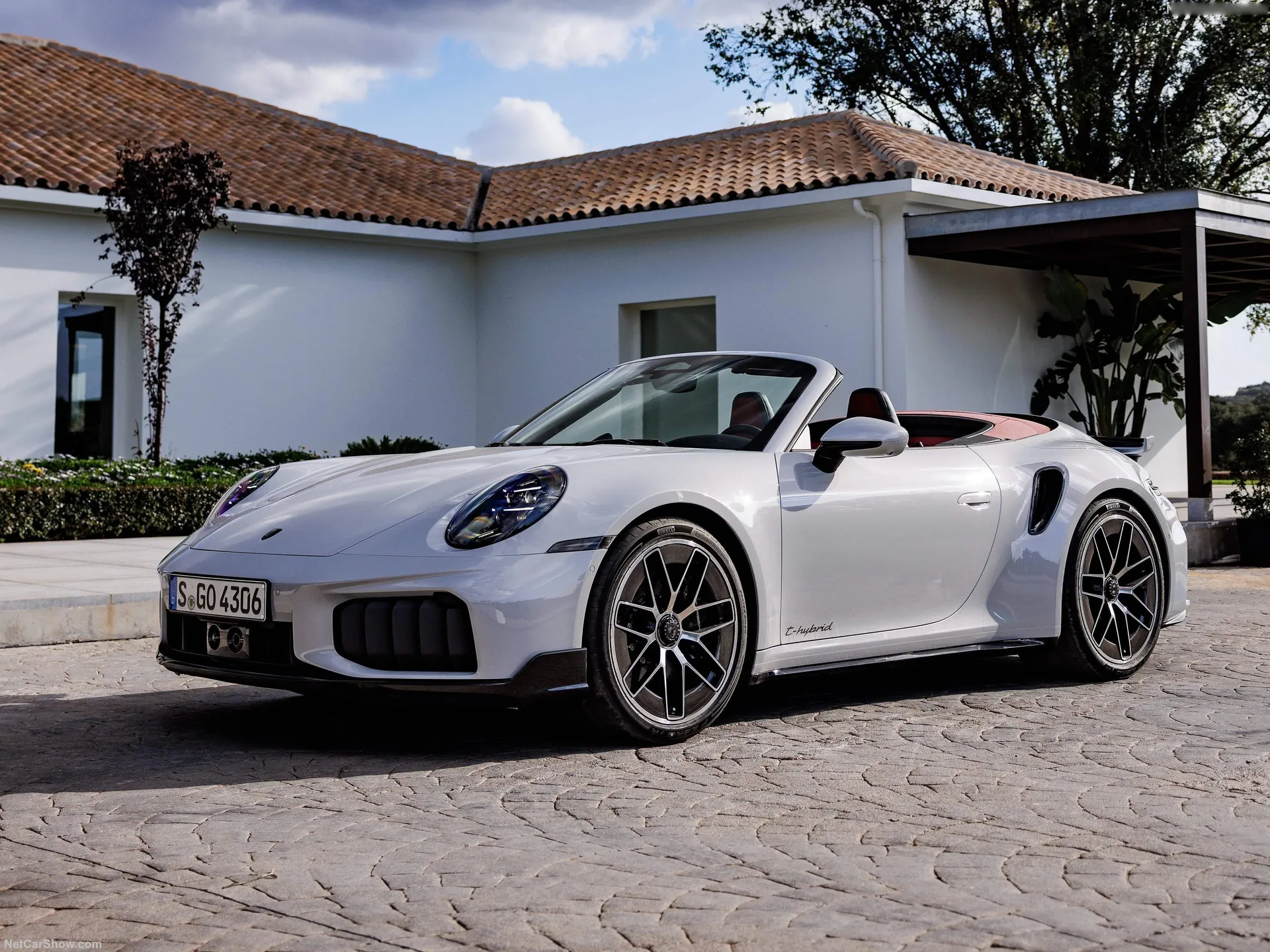
Porsche offered 2+2-seater models in the form of the Coupé, Targa (from 1973), Cabriolet (from 1983) and Speedster (from 1988). With the introduction of the 911 SC in 1977, Porsche widened the body at the rear for all models. And for its wide tyres and wider track, the 911 Turbo needed a rear end that was wider still.
In the 911 G-Series, Porsche fitted a turbocharger in the 911 for the first time in 1974. The Turbo would become synonymous with extreme performance, especially once an intercooler was added to the mix in 1977. From 1975, hot-dip galvanised sheet metal for the body and floorpan offered greater durability and resistance to rust. With the 911 Carrera 3.2 for the 1984 model year, Porsche introduced digital engine electronics.