Porsche 911 Turbo S Cabriolet
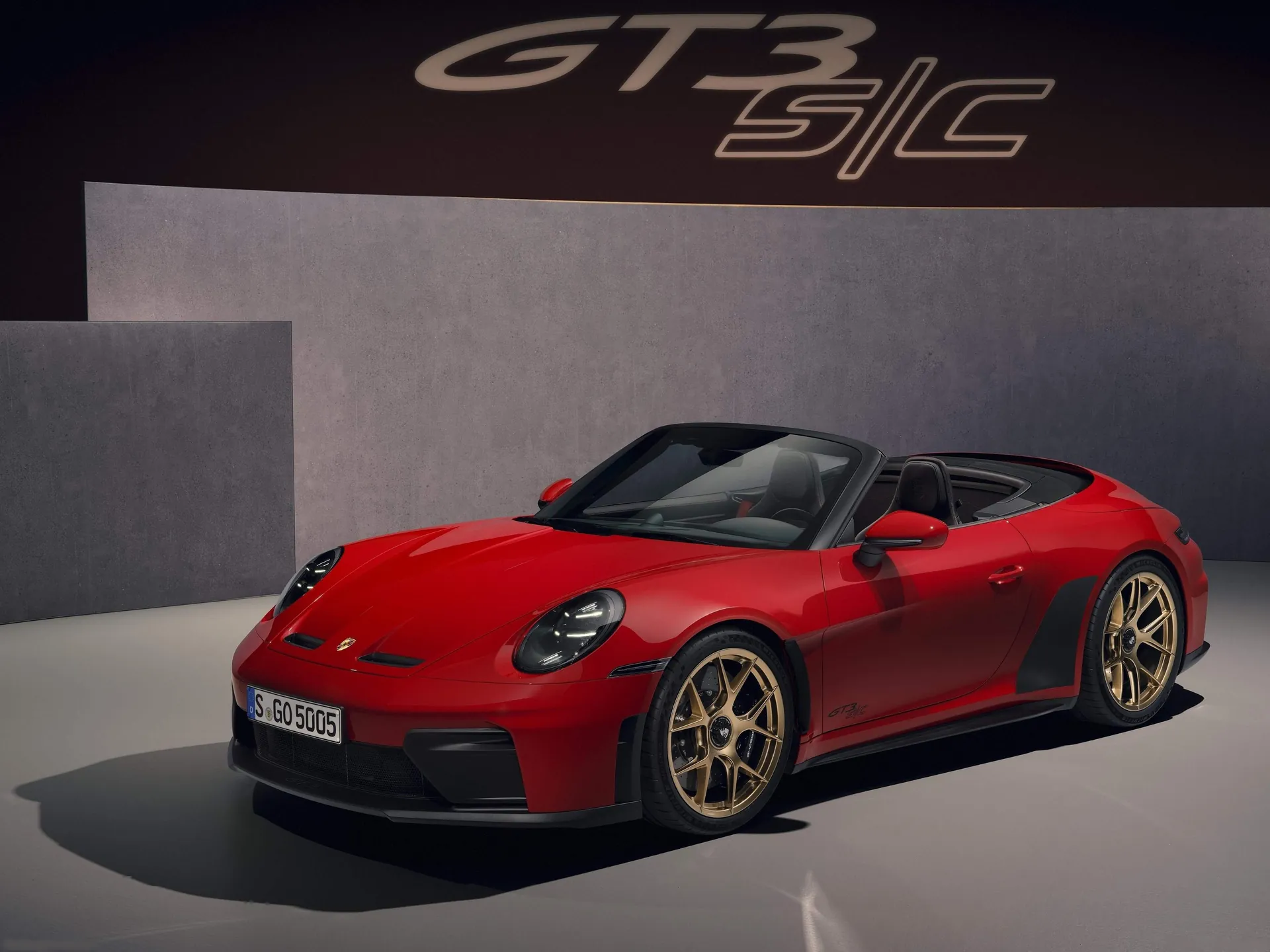
The new Porsche 911 Turbo S is following in big footsteps. Its predecessor was already considered the benchmark in the sports car world when it came to the combination of superior performance, long-distance comfort, exclusivity and everyday usability. Now the 911 Turbo S has once again raised the bar significantly in all areas. The sports car, which is available as a coupé and Cabriolet, debuts with significantly increased performance, a more muscular design, more intelligent aerodynamics, an optimized chassis and even more exclusive equipment.
"The 911 Turbo S is the most complete and versatile way to drive a Porsche 911. Whether in daily use, on long motorway drives or on the racetrack - we have been able to make the new 911 Turbo S even more comfortable, more individual and significantly faster than its predecessor," says Frank Moser, Vice President of the 911 and 718 model line.
Innovative performance hybrid system with twin turbocharging
At Porsche, the Turbo S model designation signifies more than just a form of air intake. It represents the flagship within the model series, and stands for exceptional performance and technological innovation. Which is why, for the 911 Turbo S, Porsche has significantly further developed the innovative design of the exceptionally lightweight T-Hybrid system that was first introduced in the 911 Carrera GTS. While one single electric turbocharger (eTurbo) is fitted in the 911 Carrera GTS, the new 911 Turbo S features a system with two specially designed eTurbos. The powertrain develops a system output of 523 kW (711 PS). This equates to a power increase of 61 PS compared to the predecessor model. The maximum torque is 800 Nm. With this power, the flagship sports car accelerates from 0-100 km/h in 2.5 seconds, two tenths of a second faster than its predecessor.
The extensively revised 3.6-litre six-cylinder boxer engine is based on the recently introduced engine generation that also powers the 911 Carrera GTS. Compared to its predecessor, the engineers reduced the bore by 5 mm to 97 mm and increased the stroke by 4.6 mm to 81 mm. The lightweight crankcase features enlarged ventilation chambers. Stiff roller cam followers are used in the cylinder heads, to aid efficiency. This technology originates from motorsport and reduces friction while optimising strength. Porsche also uses the tried-and-tested VarioCam technology in the lightweight valvetrain. It controls the camshaft timing precisely for all engine speed and load conditions, thereby guaranteeing optimum performance and reduced fuel consumption. Thanks to an optimised combustion process, the boxer engine also achieves a higher degree of efficiency. In this new generation of engine, the belt drive from the predecessor has been omitted. Instead, an electric motor integrated into the PDK housing takes over the tasks of both the starter motor and alternator, and the air conditioning compressor is driven electrically. This results in a compact design that creates space above the engine for a pulse inverter and DC/DC converter. In addition, the new, particularly compact starter battery is installed there. With an energy capacity of 40 Ah, the lightweight lithium iron phosphate battery (LiFePO4) measures just 90 mm in height and weighs seven kilograms. A newly developed, dual-flow tract for the intake air, including a charge-air cooler and four air filter elements, is located above the boxer engine. This makes optimum use of the available space. Even without its hybrid system, the combustion engine in the new 911 Turbo S develops a power output of 471 kW (640 PS) and a maximum torque of 760 Nm. In order to withstand the resulting loads, Porsche has equipped the engine with new, strengthened cast pistons, which provide a compression ratio of 9.2:1.
For the first time, Porsche is using eTurbo technology in a 911 Turbo S. Unlike conventional turbochargers, eTurbos are each equipped with an integrated electric motor, which is located between the compressor and turbine wheels and drives the shaft of the turbocharger directly. As a result, it spools up the turbo at lightning speed, regardless of the engine load. Full boost pressure is always available within a very short time. The eTurbos therefore make a significant contribution to the responsiveness, performance and efficiency of the drive system. In addition, the turbochargers are designed in such a way that their electric motors can be used to regulate the boost pressure. They generate electrical energy from the rotation of the shafts. While reducing the turbine speed in the process, they reduce the charge pressure as required. The recovered electrical energy is either fed into the high-voltage battery or passed directly to the electric motor in the PDK housing. In this way, excess boost pressure is not blown off, as is normally the case, but instead used to generate energy. Wastegates to limit the boost pressure, or turbo designs with variable turbine geometry to optimise responsiveness are therefore not necessary.
The twin-turbo layout makes it possible to reduce the size of the individual turbochargers, which have been specially designed to meet the specific requirements of the 911 Turbo S. Reduced diameters of 65 mm for the turbine wheel and 73 mm for the compressor wheel bring even greater responsiveness. In addition, the use of the second turbo increases the capacity of energy recuperation from exhaust gases. At full throttle, the electrical power gained in this way is deployed by the electric motor in the PDK housing, significantly improving overall performance. The maximum combined system torque of the new 911 Turbo S is 800 Nm and is available over an extremely wide rev range from 2,300 to 6,000 rpm. The maximum power output of 523 kW (711 PS) is delivered from 6,500 to 7,000 rpm.
During development of the hybrid system, the focus was on optimum performance with minimal additional weight. To achieve optimum weight distribution, the engineers placed the high-voltage battery of the new 911 Turbo S at the front. It has 216 round cells and a gross energy capacity of 1.9 kWh. It is roughly the same size and weight as a standard starter battery. Continuous water cooling and efficient thermal management ensure that the battery delivers consistently high performance, even during dynamic driving. Its control unit is located under the driver's seat, the pulse inverter and DC/DC converter are located above the boxer engine, which is around 11 cm shallower than its predecessor. The hybrid system operates at a voltage of 400 volts.
In addition to the electric motors in the eTurbos, the new Porsche 911 Turbo S is fitted with a motor integrated in the PDK housing. The permanent magnet synchronous motor, which is fully integrated into the transmission housing, is coupled to the crankshaft via the dual-mass flywheel. It measures just 286 mm in diameter and 55 mm in length, delivers a drive torque of 188 Nm even at idle and contributes up to 60 kW to the overall system output. The sophisticated yet highly simplified cooling system, which features an increased radiator fan output, a new centre radiator and a new water pump, is optimised to suit the car's increased cooling requirements.
Operation of the hybrid system varies depending on the driving situation. During highly dynamic driving, the high-voltage battery supplies energy to the eTurbos or the electric motor as required to build up boost pressure more quickly or to apply supplementary torque directly to the drivetrain. While driving at high-speed, the exhaust gas recuperation of the e-turbos feeds the electric motor. This limits the boost pressure and reduces exhaust gas temperature as the drive power increases. When high levels of performance are demanded, the high-voltage battery supplies energy to further increase the system output.
To withstand the torque generated, Porsche has developed a separate PDK specifically for its performance hybrid models. It is based on the transmission from the previous model, but the clutches, gear sets and bevel gear are reinforced. In addition, a taller final drive ratio reduces engine revs at high road speeds. In the new 911 Turbo S, up to 500 Nm of torque is fed to the water-cooled front axle differential via a transfer box.
Pure emotion: the sound of the 911 Turbo S
The most powerful 911 to date is also the most dynamic Turbo S ever. This uncompromising performance can be experienced to a new extent thanks to the careful tuning and the sophisticated overall design of the sports car.
As well as the driving experience, the sound of a sports car contributes significantly to the overall experience. Internal engine modifications are another factor contributing to the even more emotive sound of the new Porsche 911 Turbo S. Asymmetric valve timing adds additional frequencies to the sound of the boxer engine, creating a particularly powerful, distinctive sound experience. A new, twin-tip sports exhaust system with rear silencer and tailpipe trims made of titanium also contributes to the unmistakable sound. It is featured on the new 911 Turbo S as standard and ensures maximum performance with minimum weight. In order to protect adjacent components from heat, Porsche is using a new type of heat shield for the first time. It features a three-layer design and consists of two thin sheets (each with a thickness of just 0.25 mm), which enclose an extremely effective insulating material based on environmentally friendly cellulose.
All-rounder with an impressive Nordschleife time
The new Porsche 911 Turbo S combines the best of all worlds, as is typical of this model. It is perfectly suitable for everyday use, comfortable, exclusively equipped, and offers impressive performance on track. During development and tuning of the suspension, the focus was on optimum driveability despite the significantly increased power output. The power-to-weight ratio is 2.43 kg/PS. The requirements of the model included predictable, comfortable driving dynamics; intuitive and precise power delivery; uncompromising high-performance braking; and optimum grip. The high level of responsiveness and driveability of the powertrain is carried through to the suspension - it is confident, controllable, calculable.
Despite its performance hybrid system, the extended list of standard equipment, and upgrades to the suspension and body, the kerb weight of the new 911 Turbo S has only increased by a total of 85 kg compared to its predecessor. This increase in weight was more than compensated for in all areas relating to performance and driving dynamics - as is demonstrated by the car's on-track performance. On the Nürburgring-Nordschleife, the new 911 Turbo S recorded an official lap time of 07:03.92 minutes, beating its direct predecessor by about 14 seconds. The 911 Turbo S completes the sprint from 0-100 km/h in 2.5 seconds. It takes just 8.4 seconds to accelerate from 0-200 km/h, and its top speed is 322 km/h.
The noticeable leap in performance is the result of a finely tuned overall package comprising powertrain, aerodynamics and suspension. The power supply for the active electro-hydraulic roll stabilisation system (ehPDCC) was specially developed for vehicles with the new, beltless boxer engine and was further optimised for the new 911 Turbo S. It increases both agility at lower speeds and stability at high speeds, making a significant contribution to the improved performance and comfort of the 911 Turbo S. The electro-hydraulic PDCC system is fitted as standard in the 911 Turbo S.
A motor/pump unit, which consists of a high-voltage permanent magnet synchronous motor and an internal gear pump, generates a flow of oil. A valve block distributes this to the front and rear axles. There, it reaches active anti-roll-bar drop links which, depending on the driving situation, use the available pressure in the system to exert a targeted torsional force on the anti-roll bars. This generates support forces along the vehicle's longitudinal axis, which reduces roll and enables the car to takes corners with exceptional stability.
The system is equipped with a pressure accumulator which, in normal operation, maintains a pressure of 10 bar and reliably compensates for any natural fluctuation. A filter cleans the returning oil flow and ensures the long-term operation of the valves and oil pump. Demand-based control reduces energy consumption by more than 80 per cent compared to the previous system. The introduction of this technology leads to noticeable advantages in terms of comfort, driveability and precision. The sports car can achieve higher speeds both on corner entry and exit, which significantly contributes to improved lap times on track.
In addition, the ehPDCC controls the optional front-axle lift system. Its operation also benefits from this change in technology: it reacts more quickly and is able to achieve an approach angle that is 2.4 degrees greater than with the previous system.
Porsche has comprehensively optimised the standard Porsche Active Suspension Management (PASM) system of the 911 Turbo S. It offers significantly enhanced performance while also offering improved ride comfort. This is achieved by adapting the spring rates, damper hydraulics and damping map, as well as newly developed engine mountings, which enable increased precision and more accurate feedback from the road surface thanks to their higher stiffness. At the same time, they offer a weight advantage over their predecessors. The geometry and elastokinematics of the rear axle of the 911 Turbo S have also been adapted to the increased weight from the T-Hybrid drive system. A PASM Sport Suspension system, with a 10 mm lower ride height and an even stronger focus on performance, is optionally available for the 911 Turbo S.
For the new Porsche 911 Turbo S, Porsche has extensively further developed the Porsche Composite Ceramic Brake (PCCB), which is fitted as standard. The flagship 911 model is equipped with the largest brake discs that Porsche has ever fitted in the ceramic brake system of a two-door model. Fixed 10-piston callipers and 420-millimetre brake discs are fitted at the front. The rear brakes feature four-piston brake callipers and new, larger discs with a diameter of 410 mm.
The cross-drilled discs used in the ceramic brake system are 50 per cent lighter compared with cast iron discs. Porsche has proven the car's high level of braking performance during extensive real-world testing on the Nürburgring-Nordschleife. In addition, the new pads offer a particularly natural brake pedal feel. Revised brake ventilation and the integration of piston inserts into the callipers ensure optimal thermal management, preventing the brake fluid from overheating. The callipers are painted yellow as standard. Callipers painted black are available from Porsche Exclusive Manufaktur, on request.
In addition to improved braking performance, Porsche has also further enhanced the mechanical grip of the 911 Turbo S. The sports car is fitted with 325/30 ZR 21 tyres at the rear, which are 10 mm wider than those of the previous model, and 255/35 ZR 20 tyres at the front. The result is even better handling in dry conditions while excellent performance in the wet is also maintained.
Another exclusive highlight of the Porsche 911 Turbo S are the 20/21-inch 911 Turbo S centre-lock wheels. Finished in the distinctive Turbonite colour, they are a striking unique feature of the flagship model. Other wheel choices are optionally available: the 20/21-inch 911 Sport Classic wheels and 911 Turbo Exclusive Design wheels with carbon blades. The innovative carbon blade design feature serves to optimise aerodynamics. A total of seven colours is available from Porsche Exclusive Manufaktur for the Sport Classic wheels and four for the Exclusive Design wheels.
The chassis of the new 911 Turbo S has also been adapted to suit the enormous power of the new drive system. At the front end for example, the engineers have adapted the suspension turrets, the high-voltage battery tray and the front cross member. At the rear, the impact absorber mounts, the rear carriers, and the floor, among other things, have been modified. New engine mounts have also been introduced. The conventional mounts outperform their active predecessors in every aspect, while also being lighter and more compact.
The car's widened body and track width are further examples of traditional design features of the Turbo model series. The front wheel arches are 45 mm wider than those of the 911 Carrera models. The large rear wheel arches, which are a well-known distinguishing feature of the 911 Turbo models, widen the rear by 20 mm. Striking air vents in the newly designed rear section further emphasise the additional width.
The car's appearance from the front is also even more striking thanks to new functional design elements. The integration of all frontal lighting functions into the main headlight units, which come tinted as standard on the 911 Turbo S, is also about more than just lighting and aesthetics. It creates space in the front section for the larger, more effective cooling-air intakes. The four-point light signature typical of all Porsche models is active in all light modes on the 911 Turbo S, even when the dipped beam or main beam are switched on.
Active aerodynamics with extended functions
The various aerodynamic components of the Porsche 911 Turbo S are both visual hallmarks and key performance-enhancing elements. The active rear wing, typical of the Turbo, reduces lift at high speed and minimises drag when in its most efficient position. It is one of several active aerodynamic features on the 911 Turbo S, which together provide optimal aerodynamic performance based on the power demand, driving situation and ambient temperature. As with the predecessor model, the overall aerodynamic system includes an active front spoiler lip. Depending on the driving mode, it can be either fully retracted, partially extended or fully deployed, which results in reduced drag or increases downforce, as required.
The five vertically arranged, visible cooling-air flaps at the front of the car are shaped for optimal flow of high volumes of air, accounting for the increased cooling-air demand of the powertrain. When power requirements are low, the flaps remain virtually closed, reducing drag and therefore fuel consumption. When power demand is high, for example when driving on track, the flaps open and direct additional air to the cooling system.
New in the 911 Turbo S are the adaptive front diffusers located in the underbody panelling. They open and close in tandem with the cooling-air flaps. If the diffuser flaps are open, air flows through the duct and into the wheel arch. This reduces lift on the front axle, compensating for the impact of the increased cooling-air supply on the lift forces. The system also cools the brakes. In wet mode, the diffusers close to protects the front brake discs from excessive moisture. When closed, the aerodynamic advantages of the diffuser and cooling air flaps are combined. When each active aerodynamic element is in its most efficient position, the drag coefficient of the 911 Turbo S Coupé is reduced by up to 10 per cent. The optimised passive aerodynamic components also contribute to this.
New Turbo design language featured in the 911 for the first time
A Turbo S is always recognisable as a Turbo S. This is what Porsche's cross-model-series Turbo design language stands for, and it now features in the 911 for the first time. Its defining characteristic is the anthracite colour Turbonite, which is reserved exclusively for Turbo models. Porsche uses the colour in the 911 Turbo S as a contrast tone on the slats of the rear wing, as well as the side window surrounds. The Porsche crests on the front luggage compartment lid and the wheel centre caps are also finished in Turbonite. All these features, available for the first time in a series-produced 911, combine with the classic, unmistakable 911 Turbo features to form a harmonious overall package. These include the widened body and track as well as the active rear wing. Another stylish design feature is the adaptive front spoiler, which bears the 'Turbo S' lettering. At the rear, the 911 Turbo S is identified by a new pearl structure on the trim beneath the taillight cluster band. It rises dynamically at the pagoda. The sports exhaust system with rear silencer and tailpipe trims made of titanium also underline the car's position as the top-of-the-range model . The exhaust system saves 6.8 kg of weight compared to the predecessor. Oval-shaped sports titanium tailpipes are also optionally available. The 911 Turbo S is equally distinctive from the side. The lower covers of the exterior mirrors, the rear side air intakes, and the side skirts are all painted in elegant high-gloss black. Overall, the exclusive, purposeful, and modern appearance of the 911 Turbo S clearly differentiates it from other 911 models.
Colour range: individuality virtually without limits
An extensive selection of exterior paint colours is available for the Porsche 911 Turbo S. The range of colours is divided into the familiar Legends, Dreams, Shades and Contrasts colour worlds. For this model, Legends comprises four classic Porsche shades, while Dreams bundles particularly colourful, expressive tones such as Guards Red and Lugano Blue. The Shades colour palette brings together muted, elegant colours, while the Contrasts colour world consists of White and Black.
More than 130 additional body colours are available from Porsche Exclusive Manufaktur in the Paint to Sample and Paint to Sample Plus ranges. The Paint to Sample category includes predefined colours that have already been technically approved. These include, for example, Maritimeblue, Rubystar and Mintgreen. Some of these colours enjoy true cult status in the Porsche community.
Porsche Exclusive Manufaktur also offers the Paint to Sample Plus programme. Customers can provide their local Porsche Centre with a sample of their desired colour, which Porsche then uses to determine the technical feasibility. If fundamentally viable, the sports car manufacturer then develops the matching paint colour to be used on the customer's vehicle. Depending on complexity, this process takes about nine months. For Paint to Sample, the lead time can increase by three months.
The Porsche 911 Turbo S Cabriolet is available with various roof colours. As well as black, blue, brown and red, there is also a black option featuring grey stripes.
Additional details can be customised with the range of design packages available. The SportDesign Package 911 Turbo Carbon, for example, offers Exclusive Design rear lights with a Turbonite accent. The upper covers for the exterior mirrors and the window triangle trims are made of carbon, as are the air inlets in the rear side panel. The package also includes black brake callipers for the Porsche Ceramic Composite Brake (PCCB) system.
The new Porsche 911 Turbo S features the updated interior design of the 911 model series. The Porsche Driver Experience operating concept, which focuses on the driver's axis, allows the sports car to be operated even more smoothly and intuitively, especially during spirited driving. As the flagship model, the Turbo S boasts particularly luxurious and sporty equipment. The seats, headrests, dashboard, door panels and optional rear seat are upholstered in high-quality smooth black leather with contrasting Turbonite decorative stitching.
The rim of the standard GT Sports steering wheel, which is heated and also features a mode switch, is upholstered in perforated smooth leather. The seat centre panels and the door panels feature an exclusive decorative stitching pattern. Various styling details, including the embossed 'Turbo S' lettering on the headrests of the 18-way electrically adjustable Sports Seats with memory function, emphasise the status of the flagship 911. The standard two-seater configuration of the 911 Turbo S Coupé is a reflection of Porsche's focus on lightweight construction. On request, the rear seating system can be added at no extra charge. Porsche always equips the Cabriolet with four seats.
Porsche extends the use of the contrast colour Turbonite to the interior of the 911 Turbo S. Across all model series, it is the Turbo model with the most extensive use of Turbonite in the interior. The elegant anthracite shade is found in the door panels, accent areas of the steering wheel and instrument cluster, the dashboard and centre console surround, the climate control switches, and on the gear lever. The backing of the perforated Race-Tex headliner also features the colour Turbonite. The Turbo-exclusive colour is also found on the Porsche crests, the seatbelts and selected buttons on the centre console. Depending on the interior colour selected, this also applies to the floor mats. As part of the Sport Chrono package, the dial of the Sport Chrono stopwatch is also finished in Turbonite.
For the first time, Porsche is offering carbon-weave trim panels with decorative thread in Neodyme as an option with the Carbon Interior Package, which has been specially designed for the Turbo S. If this package is selected, the decorative trim panels of the dashboard, door panels and centre console are finished in matt carbon fibre.
Alongside the standard interior package in black leather, Porsche also offers various two-tone leather packages for the 911 Turbo S, as well as single-colour leather variants with decorative stitching in the colour Crayon instead of Turbonite. In addition, particularly luxurious club leather is available in Basalt Black, Truffle Brown and in the two-tone combination of Basalt Black and Classic Cognac. The Porsche Exclusive Manufacture range enables the 911 Turbo S to be even further customised. For example, decorative stitching, seatbelts, the dial of the Sport Chrono stopwatch and the digital tachometer can be finished in Racing Yellow on request.
Personalised floor mats are also available from Porsche Exclusive Manufaktur. The vehicle documentation folder, the door sill trims and the vehicle key can also be personalised as desired to personal taste. Customers can also request individualised embossing on the storage compartment lid from Porsche Exclusive Manufaktur.
Extensive range of standard and optional equipment
The Porsche 911 Turbo S underlines its special status as a flagship model with motorsport genes via numerous standard features derived from motorsport. These include active aerodynamics, various lightweight construction measures, rear-axle steering, the eight-speed PDK, ceramic brakes (PCCB), centre-lock wheels, and all-wheel drive. The electro-hydraulic Porsche Dynamic Chassis Control (ehPDCC) is also fitted as standard. As an alternative to the standard Porsche Active Suspension Management (PASM), PASM Sports Suspension with a 10 mm lower ride height is also available. Porsche Torque Vectoring Plus (PTV Plus), which ensures maximum traction and agility during highly dynamic driving, and the Sport Chrono package with integrated Porsche Track Precision app and tyre temperature display are included as standard.
The 911 Turbo S is designed as an exclusive, luxurious all-rounder for the racetrack and the road. It can be ordered with a wide range of comfort features, driver assistance systems and infotainment options from the current 911 range. These include the ioniser of the innovative air quality system with GPS function, the Porsche InnoDrive driver assistance package including adaptive cruise control with active lane guidance at speeds of up to 210 km/h, Night Vision Assist and the front-axle lift system with enhanced functionality. Remote Park Assist is also one of the optionally available systems. With this wide range of equipment and outstanding performance, the new 911 Turbo S covers an even broader range between comfort and performance than its predecessor.
Porsche equips the 911 Turbo S with HD-Matrix LED headlights as standard. With more than 32,000 pixels per headlight, this innovative lighting system produces a high-resolution light pattern that covers the entire high beam area and the main area of the dipped beam. Each pixel is controlled individually. As a result, the light pattern is able to adapt to any driving situation within milliseconds. The additional functions provided by the system include, for example, lane illumination, roadworks and narrow space illumination, as well as special lighting modes for driving in rain or fog, at crossroads, when taking motorway exits or while cornering. The automatically activated additional main beam increases the amount of light from 1,400 to 2,500 lumens, provided that no vehicle is detected in front or oncoming. The 911 then illuminates the road ahead for a distance of up to 600 metres.
With the extensively modernised Porsche Communication Management (PCM) system, the 911 Turbo S also offers the best possible performance in terms of digital experience. Introduced in June 2025 with the turn of the model year, the new generation of PCM responds faster, provides access to numerous popular third-party apps via the App Centre, and integrates the Amazon Alexa® digital assistant. In addition, Dolby Atmos® provides a particularly immersive sound experience. The premium Bose® Surround Sound System, which features 12 speakers and 570 watts of power and is included as standard in the 911 Turbo S, supports this innovative spatial sound technology. Audio tracks are selectively placed in three-dimensional space in such a way that they seem to surround the listener from all sides.
This enables listeners to feel as if they are sitting in the centre of an orchestra, or right at the heart of a film or radio play, for example. In addition to the standard sound system, the optional Burmester® High-End Surround Sound System with 13 speakers and a total output of 855 watts further enhances the sound experience. In order to take advantage of this spatial sound technology, Dolby Atmos®-enabled audio sources are required. Most of the best-known artists already release their music in a compatible format. Dolby Atmos-enabled® applications are available in the App Centre.
The App Centre is part of the Porsche Connect package and is included in the 911 Turbo S for 10 years. It gives Porsche customers access to a large number of third-party apps that can be installed and used directly within the PCM system. Depending on the market, the offering includes popular apps for news services, music, video and podcasts such as Spotify® and Apple Music®. Media libraries and weather apps are also featured, as are applications that enable users to search for places of interest and interesting driving routes.
Alongside the well-established Porsche Voice Pilot, the third-party digital assistant, Amazon Alexa®, is available via Porsche Connect. This service can be used to control individual vehicle functions as well as smart home functions such as automatic garage doors or home lighting. Alexa® can also be used to search for information or to create to-do lists or shopping lists, as well as for checking the latest news and weather reports. The feature is activated via the Voice Pilot button on the steering wheel.
The new Porsche 911 Turbo S can be ordered at prices starting at 271,000 euros, including VAT and country-specific equipment. The 911 Turbo S Cabriolet costs from 285,200 euros.
![Mercedes-Benz S680 Maybach [US] (2027)](/media/d1/bb/d1bb570f5e7920bd9f3ac5034c34214122e8e9513f994dfe82772330d740132b.webp)
![Mercedes-Benz GLC53 AMG [US] (2027)](/media/f1/42/f14232bb0bedce6ae16bd36bb04f66bbf0e5a5691a283644129fc13a254368b7.webp)
![Mercedes-Benz S580 4Matic [US] (2027)](/media/ce/95/ce951b10e0ccdade872ebf7235f7ab026266787993b94a88992869ff43f74d04.webp)