Ford Ka
The exciting new Ford Ka is stylish, modern and great fun to drive. It replaces the iconic original Ka , which brought new levels of style and enjoyment to the small-car market when it was launched in 1996.
The new Ka retains all of the qualities which made the Ka brand so popular - compact size, great looks, lively dynamics and fun personality - but presents them in a fresh new package.
With its striking interior and exterior design, outstanding dynamics and unique character, the Ford Ka sets a new standard for affordable small cars. Practical, safe, cheap to run, and friendly to the environment, this bold new model starts a new chapter of the Ford Ka success story.
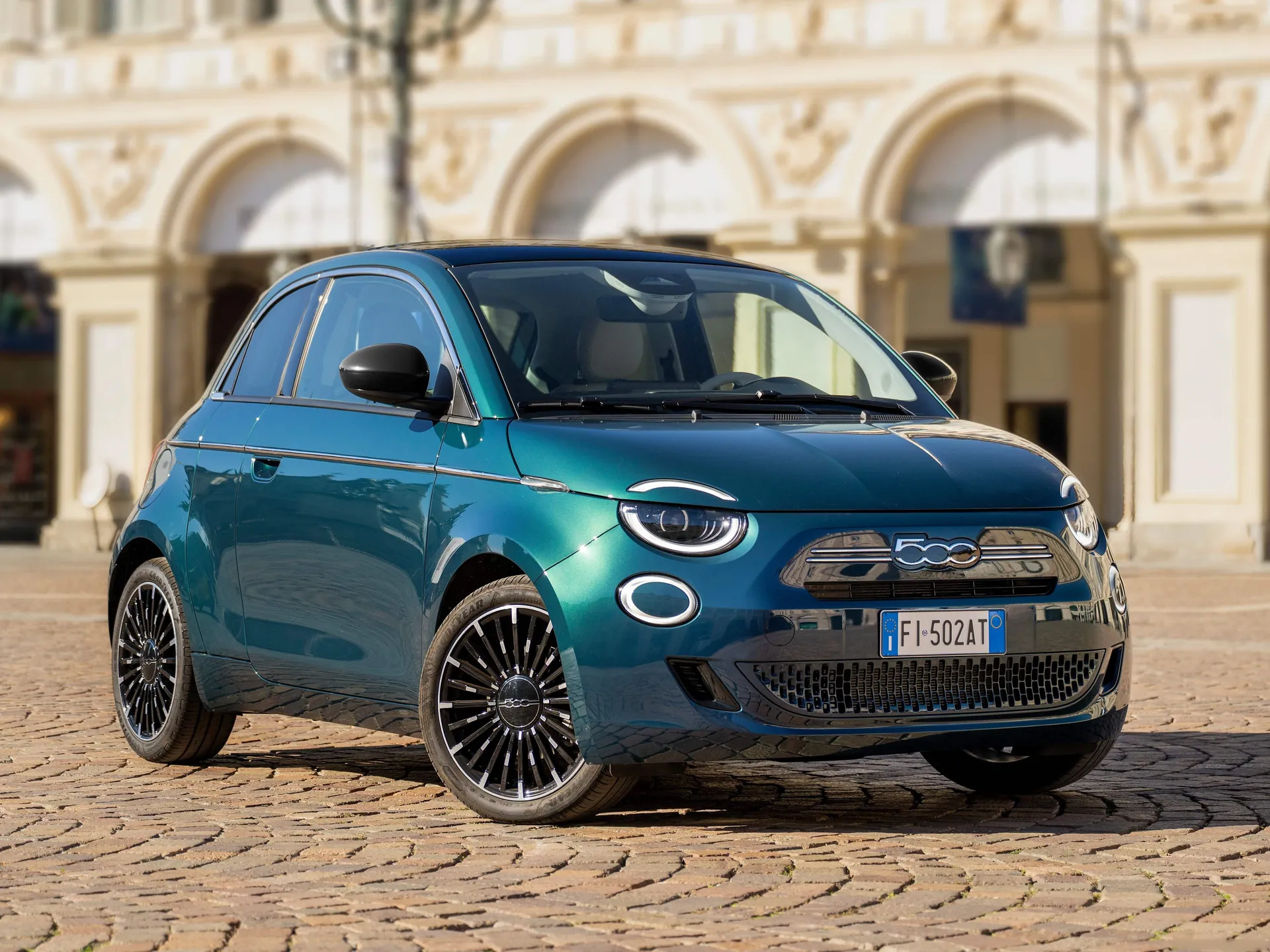
With the introduction of new Ka, Ford has extended its kinetic design language to the smallest car range.
The new vehicle has a stylish, fashionable appearance which combines Ford's latest design thinking with some of the youthful and cheeky spirit which made the original Ka so popular.
Designed for a young target audience who enjoy making a bold statement in their choice of car, the new Ford Ka has the same compact proportions as its predecessor, but with a chunky and expressive style all of its own.
A number of visual cues from the outgoing car ensure that the new design is recognisably a Ka, yet it has the dynamic qualities which mark it out as a member of the kinetic design family.
The interior of the new Ford Ka has a stylish, dynamic design, just like the exterior. The same kinetic design philosophy used to shape the body is applied inside the vehicle, ensuring that the fresh and modern character of the external design is matched by the interior style.
Bold contrasts and expressive colours have been deliberately chosen to reflect the more adventurous tastes of the typical Ka customer. These are combined with some imaginative design details to give the interior a fashionable and fun personality which is quite unique in the B car segment.
The new Ka is practical too, with generous interior space and comfortable accommodation for four adults and their belongings. The high seating position, carefully placed controls and excellent visibility make the Ka a pleasure to drive for drivers of all ages.
The young target audience for the Ford Ka enjoy making bold, personal statements through their choice of vehicle. A major effort was put into developing a series of fresh and colourful personalisation options to allow customers to express themselves in their own unique way.
Three striking option packs offer a combination of exciting interior and exterior design treatments based on some highly original design themes.
These packs are complemented by a tempting collection of individual items - from brightly coloured grille surrounds to luxurious leather seats - so that customers can have fun customising their Ka, inside and out.
The original Ka was renowned for its go-kart like handling, and the new Ka has been designed to be just as fun and rewarding to drive, with the most exciting driving dynamics of any small car.
Ford's own chassis engineering experts have tuned the suspension, steering, and chassis, with the same meticulous attention to detail which has made Ford a leader in vehicle dynamics.
Final testing was conducted using a combination of public roads, proving grounds and race tracks - including the legendary Nürburgring.
During the engineering process, information was exchanged with the team developing the new Fiesta , and certain components, such as the tyres, were jointly developed for both models.
The affordable new Ford Ka is designed to be both cheap to run and kind to the environment. It uses two economical, low emission engines: a 1.2-litre 69 PS Duratec petrol engine and, for the first time on Ka, a 1.3-litre 75 PS Duratorq TDCi turbodiesel.
Both petrol and diesel models are available with sub-120g/km CO2 emissions.
The 1.2-litre petrol model, which is expected to be the largest seller in the new range, has cut fuel consumption by 21 per cent compared to the previous 1.3-litre Ford Ka.
The diesel model - available on the Ka for the first time - improves economy still further, achieving a combined fuel consumption of 4.2 litres/100km.
The new Ka may be a small vehicle, but it has been engineered to meet Ford's strict in-house safety design guidelines.
At the heart of the vehicle is the bodyshell, which has been developed to provide an incredibly strong, stable crash structure to protect passengers in case of an accident.
The bodyshell is combined with an Intelligent Protection System (IPS), which integrates airbags, restraint systems and seating technologies to provide a highly effective occupant safety system.
The new Ford Ka is available in two series - Ambiente and Titanium - each offering an outstanding combination of value and equipment. To complement these two models, there are a number of carefully tailored option packs to provide customers with maximum choice when specifying their vehicle.
Specify the Bluetooth®-enabled Connectivity Kit, and the Ford Ka comes equipped with Bluetooth® mobile phone connectivity, a USB port to play music files through the sound system and steering wheel controls.
Combine this with one of the superb six-speaker CD sound systems, and the new Ka provides all the necessary equipment to keep its passengers connected and entertained.
Unique among vehicles in the small-car segment, the new Ka also offers heated windscreen and heated seats, invaluable for safe and comfortable driving in cold winter conditions.
The new Ford Ka has been developed as part of a joint venture agreement with Fiat. The vehicle is produced at the modern Fiat manufacturing plant in Tychy, Poland, sharing the production line with the Fiat 500 model.
The original Ford Ka was launched at the Paris Motor Show in 1996. It was immediately acclaimed for its exciting "New Edge" styling and for bringing new levels of driving enjoyment to the class.
Sales soon took off across Europe, and the Ford Ka gained the popularity which has stayed with it throughout its lifetime, with a total of over 1,460,000 vehicles produced. In the UK alone, the Ka has found 500,000 customers, and has been segment leader since 2000.
New derivatives, such as the exciting StreetKa and SportKa models expanded the Ka family, and helped to broaden and reinforce the model's appeal.
The Ka has inspired tremendous loyalty amongst its customers, with many owners coming back to the model time and time again.
Widely acknowledged as an automotive style icon, the Ka has attracted plenty of attention for its bold, engaging design.
In 1998, then United Kingdom Prime Minister Tony Blair named the vehicle as one of the first Millennium Products chosen by the Design Council. The Ford Ka was chosen for its forward thinking, challenging, creative and innovative design.
At the other extreme, the Ka was a great hit with the goldfish which inhabited the vehicle in its unusual role as a fish tank at the entrance of the London Aquarium!
With the introduction of new Ka, Ford has extended its kinetic design language to the smallest model in its passenger car range. The new vehicle has a stylish, modern appearance which combines Ford's latest design thinking with some of the youthful and cheeky spirit which made the original Ka so popular.
Designed for a young target audience who enjoy making a bold statement in their choice of vehicle, the new Ka has the same compact proportions as its predecessor but with a chunky and expressive style all of its own.
A number of visual cues from the original vehicle ensure that the new design is clearly a Ford Ka, yet it has the dynamic qualities which mark it out as a member of the kinetic design family.
A primary objective for the design was to maintain the friendly and fun character of the original Ka, and graphical elements are combined at the front and rear to create an identifiable face for the vehicle.
At the front, the prominent trapezoidal lower grille - a key kinetic design feature - forms the Ka's mouth, while the large swept back headlamps are its expressive eyes; the button nose is provided by a large Ford oval above the grille. Together these elements give the new Ka an attractive, smiling face which welcomes drivers to the vehicle.
A similar approach is taken at the rear. Here, the bold tail lamps form wide, open eyes, the tailgate handle effectively becomes the nose, and the bumper - with a trapezoid set into its centre - represents the mouth.
While its distinctive face and chunky proportions give the new Ka its own unique personality, the vehicle embodies elements of the same kinetic design form language already seen in recent Ford products such as the Mondeo , Kuga and Fiesta.
With full surfaces spanning taut, dynamic feature lines and a confident, athletic stance, the design of the new Ford Ka sends a clear message about the vehicle's excellent driving dynamics.
Important elements of the kinetic design language featured on the vehicle include bold wheel lips, wide rocker panels and strong shoulders supported by a spear-shaped undercut line which sweeps up through the door handles towards the rear lamps.
The characteristic shape of the kinetic design window line - the daylight opening graphic - is also featured, although in this case the shape has been adapted to incorporate the bold window graphic from the previous Ka, with its distinctive curve of the glass at the C pillar.
At the rear of the vehicle, kinetic design graphics such as the tailgate glass with chamfered lower corners are combined with some other powerful visual cues from the original Ka. These design cues include the softly curving shape of the tailgate and the sculpted shape of the roof with a spoiler integrated into its trailing edge.
The youthful, cheeky character of the new Ka is also reflected in the range of exterior colours which have been selected for the vehicle.
The choices include a number of bold solid and metallic colours which are unique to the Ford Ka, and which are in tune with the car's fashion-driven target audience. The colour palette was developed around a series of strong pastel shades, and also features two striking pearlescent colours: the sparkling white "Piste" and the luscious magenta "Blush".
The interior of the new Ka has a stylish, dynamic design, just like the exterior. The same kinetic design philosophy used to shape the body is applied inside the vehicle, ensuring that the fresh and modern character of the external design is matched by the interior style.
Bold contrasts and expressive colours have been deliberately chosen to reflect the more adventurous tastes of the typical Ka customer. These are combined with some distinctive design details to give the interior a fashionable and fun personality which is quite unique in the small car segment.
The new Ka is practical too, with generous interior space and comfortable accommodation for four adults. The high seating position, carefully placed controls and excellent visibility make the Ka a pleasure to drive for drivers of all ages. Convenient stowage for everything from iPods and mobile phones through to coins and sunglasses ensures that the interior has a place for everything.
The kinetic design approach is reflected in the contoured forms, strong dynamic lines and full surfaces evident on the main interior features. The upper instrument panel has a slim, wing-like section, and flows into the centre console with its bold graphic elements and distinctive Ka badge.
Strong trapezoidal shapes are incorporated throughout the interior as a recurring design theme, featuring on the centre console, steering wheel, seat fabric and door trim.
The most striking aspect of the design is the glossy white finish of the centre console bezel and door pulls. This finish provides a strong contrast to the surrounding interior trim, and is an interpretation of the modern materials used in many popular consumer items. On Titanium models the treatment is extended to the instrument cluster shroud and steering wheel spokes, and the parts have a stylish pearlescent white colour.
Design details, some with an almost cartoon-like quality, add to the personality of the interior. Features like the distinctive, exposed instrument cluster surround complement the attractive contouring at the top of the centre console.
The simplistic swivelling air vents are a prominent feature of the dash panel. Shaped like the top of a juice squeezer, they need to be held much like a bowling ball to adjust their direction.
The bold use of colour and contrast extends to the wide choice of interior trims and fabrics. Two interior environment colours are available - a dark blue-grey and a lighter khaki colour - complemented by a broad range of seat designs tailored to match both the interior environment and the different exterior colours.
The seats feature bright fabric inserts using contrasting colours, including some vibrant pastel shades. Ambiente models have patterned inserts using contemporary graphics; the Titanium series uses plain colours to emphasise the strong contrast with the other interior finishes.
This attention to detail is extended to the quality and texture of the materials used throughout the cabin. The main upper instrument panel moulding has a surface texture which simulates a natural fabric like linen, while the material is specially designed to retain its attractive matt finish through the life of the vehicle. Trim gaps have been minimised in all places to reinforce the impression that the interior belongs to a much more expensive vehicle.
The young target audience for the new Ford Ka enjoy making bold, personal statements through their choice of vehicle, so a major effort was put to developing a series of fresh and colourful personalisation options which would allow every customer to express themselves in their own way.
For the vehicle's launch, a series of factory-fitted "Ford Individual" option packs have been introduced, which offer a combination of exciting interior and exterior design treatments based on three very different themes.
Each of the three personalisation packs provides its own distinctive exterior design, along with a matching set of interior features such as seats with unique fabrics and colour combinations, colour-coded interior finishes, and special steering wheels, gear knobs, and floor mats.
Each pack is designed to complement a certain combination of exterior paint colours. The interior and exterior packs can be ordered separately. The interior packs, however, are only available to customers ordering a Titanium model.
There are also a full range of personalisation items that can be ordered individually, and these include:
The new Ford Ka is designed to be both affordable to run and kind to the environment. The 1.2-litre petrol model, which is expected to be the largest seller in the new range, has reduced fuel consumption by 21 per cent compared to the previous 1.3-litre Ka, with a combined consumption of 5.1 litres/100km.
For the first time, the Ford Ka is also now available with a thrifty 1.3-litre diesel, which improves fuel economy still further, achieving combined fuel consumption of 4.2 litres/100km.
With low fuel consumption follows reduced CO2 emissions, and sub-120g/km versions of the new Ka are available with both petrol and diesel engines. For the petrol derivative, this represents a 21 per cent reduction in CO2 emissions compared to the outgoing car, which makes it eligible for the financial incentives that have been introduced in many European markets for sub-120g/km vehicles.
The reduction in CO2 output is complemented by low overall levels of exhaust emissions. Both petrol and diesel engines meet Euro Stage IV standards. The diesel engine can be specified with a diesel particulate filter (DPF) which almost totally eliminates particulate emissions (selected markets only).
Ownership costs are reduced through careful attention to features which minimise maintenance and repair bills, such as bumper systems which withstand the regular minor knocks which are common for city-based vehicles.
The new Ka may be a small vehicle, but it has been engineered to meet Ford's strict in-house safety design guidelines. At the heart of the vehicle is the bodyshell, which was developed using the latest computer simulation tools and engineering techniques to create an incredibly strong, stable crash structure which protects the occupants even in severe impacts.
The bodyshell is combined with an Intelligent Protection System (IPS) which integrates airbags, restraint systems and seating technologies to provide a highly effective occupant safety system.
Driver and passenger front airbags are standard fitments, while pelvis and thorax side airbags and curtain airbags are available as options.
To enable child seats to be fitted safely and easily, ISOFIX mounting points are fitted to the rear seats either as standard or as a zero-cost aftermarket fit option (depending on market).
Headlamp Courtesy Delay lighting provides additional safety and peace-of-mind for the occupants by illuminating the headlamps and side lamps after the car has been locked. The feature allows the lights to the activated for up to three-and-a-half minutes so that passengers can make their way safely to their destination.
Vehicles with central locking also have a "greeting" feature, which activates both exterior and interior lights when the car is unlocked to illuminate the surrounding area and reassure the driver that it is safe to approach.
Special attention has also been given to ensuring the vehicle is well protected against thieves. The new Ka is designed to pass the stringent UK "Thatcham" security tests, thanks to a range of features such as high-strength locks, carefully designed shielded locking systems in the doors and an electronic immobiliser system.
Mobile phones and music are an essential part of every young person's lifestyle, so the new Ka comes ready to provide all the necessary equipment to keep its passengers connected and entertained.
Specify the Bluetooth®-enabled Connectivity Kit, and the Ford Ka comes equipped with Bluetooth® mobile phone connectivity, a USB port to play music files through the sound system, steering wheel controls to operate the key features, and a high-series instrument cluster with information presented via the trip computer display.
The Bluetooth® system provides full hands-free capability with voice control, so that the driver can make, receive or refuse mobile phone calls using either steering wheel controls or voice commands. The system can be paired with up to three mobile phones, can play your own personalised ring-tone through the audio system, and will even support a conference call between three friends.
Passengers can listen to hours of their favourite sounds using the USB port located at the foot of the centre console. MP3 players, iPods, mobile phones or USB flash drives can all be connected to the system, which accepts a variety of digital formats, including MP3, WMA and WAV.
Ka customers have the choice of two Music Packs, each of which includes a six-speaker sound system and a Radio-CD with MP3 compatibility with aux-in connector. The Advanced Music Pack - available on the Titanium series - includes higher specification speakers and head unit, plus a 100W subwoofer and a 4 x 30W power amplifier.
The expressive, fun personality of the new Ka interior has not been achieved at the expense of comfort and practicality. The vehicle's high roofline means that there is ample space for even the tallest of drivers, and there is comfortable seating for four occupants. The design of the dashboard, and the treatment of the front and rear cabins, emphasises the feeling of space for all passengers.
The driver has a high seating position with excellent visibility, and with all major controls - such as the high-mounted gear lever - located close to the steering wheel, even inexperienced drivers will feel confident behind the wheel.
The steering wheel itself is height adjustable, and light, responsive Electric Power Assisted Steering (EPAS) is fitted as standard.
The instrument cluster has four main dials with bright, clear graphics, and a trip computer centrally-mounted within the display. Minor switchgear is ergonomically positioned on the centre console, with the radio-CD in the highest position to allow easy adjustment with minimal distraction from the road. This careful attention to detail helps make the new Ka simple and enjoyable to drive.
There is convenient stowage space in the cabin for personal items, including a generous glove box, handy door pockets and a small compartment at the bottom of the centre console which is ideal for portable music devices or mobile phones.
The main luggage compartment provides a generous 224-litre capacity, which can be extended to over 700 litres using the conveniently folding rear seats.
Driving comfort is enhanced by the quiet, controlled ride, while interior noise levels in the new Ka are impressively low, following intensive analysis of the Sound Quality & Vibration (SQ&V) within the vehicle.
Customers in colder climates face special challenges during winter, and the Ka offers some comfort and convenience features which are unique in the small-car segment.
Heated seats and a heated windscreen are both available as options, so that drivers can be confident in starting their journeys safely and comfortably, even on the coldest of mornings.
The new Ford Ka is available in two series, each offering an outstanding combination of value and equipment. To complement these two models, there are a number of carefully tailored option packs to provide owners with maximum choice when specifying their vehicle.
Combine this with the exciting exterior and interior personalisation packs, and it's clear that every Ka customer will be able to create a stylish and individual vehicle to call their own.
The Ambiente model provides small-car buyers with a highly affordable and stylish package, combining excellent comfort and safety with generous levels of equipment. Standard features include:
The high-series Titanium model is distinguished from the Ambiente by its body-coloured door mirrors and door handles, and by its comprehensive selection of standard comfort and convenience features. Additional equipment fitted to the Titanium includes:
Ka customers can specify a wide range of attractive option packs and individual features to tailor the vehicle to their own personal requirements. Some of the key packs and features are:
When the original Ford Ka was launched, it was immediately praised for its go-kart like handling and its lively driving experience. The new Ka is true to that heritage, and has been designed to be fun and rewarding to drive, and deliver the most exciting driving dynamics of any small car.
Ford's own vehicle dynamics experts tuned the suspension, steering and chassis to ensure that the new Ka embodies Ford's DNA, delivering the same acclaimed driving quality as the larger models in the Ford range.
The car's ride, handling and steering all benefitted from the meticulous attention to detail which has made Ford a leader in driving dynamics.
To achieve the natural, responsive steering which plays a key role in making the new Ford Ka such fun to drive, the engineers made a series of important changes. These included adding a rear anti-roll bar, updating the front anti-roll bar, stiffening the suspension bushes and mounting points, and modifying the responses of the steering system components.
Springs and dampers were then selected and tuned to suit these new chassis settings, so that the precise steering would be complemented by balanced, sporty handling and a taut, well-controlled ride.
Final testing was conducted using a combination of public roads, proving grounds and race tracks - including the legendary Nürburgring.
During the engineering process, information was exchanged with the team developing the new Fiesta, and certain components, such as the tyres, were jointly developed for both models.
The new Ford Ka is available with a choice of two powertrains: the responsive and economical 1.2-litre 69 PS Duratec petrol engine, and the refined and efficient 1.3-litre 75 PS Duratorq TDCi diesel engine. The engines are mated to a smooth-shifting five-speed manual gearbox.
Both petrol and diesel engines are ideally suited to the cut and thrust of city driving, with a broad spread of torque and lively performance.
Ford powertrain engineers have tuned the calibration of the engines to ensure they respond swiftly and accurately to throttle inputs, providing the driver with precise control and an excellent performance feel.
For customers who prefer an even more responsive and entertaining drive, the petrol version of the new Ka can be specified with a shorter final drive ratio (3.73:1 instead of 3.43:1).
The revised gearing boosts acceleration in all gears, providing the driver with more eager responses and a sportier feel, and making an ideal match for the vehicle's agile and confident handling.
Active safety was given equal priority to passive safety during the development of the new Ka, and the vehicle's outstanding handling and road-holding characteristics are supported by a comprehensive range of braking, traction control and stability systems.
An advanced ABS anti-lock braking system is fitted as standard on all Ford Ka models, and is complemented by an Electronic Brake-force Distribution (EBD) system which controls the amount of braking on the rear axle to maintain the balance of the vehicle and prevent the wheels locking.
To further improve active safety performance, Ka customers can specify an Electronic Stability Programme (ESP) system which provides a number of functions to enhance vehicle stability and safety. These include:
Ford engineers worked with the system suppliers to calibrate the ESP system in line with the Ford DNA so that it suits the excellent handling characteristics of the new Ka. This ensures that the system is only activated when required, so that drivers can enjoy the vehicle's outstanding dynamics without unnecessary interference from the stability program.
To help achieve its class-leading driving dynamics, the new Ka employs chassis systems that have been meticulously tuned by Ford engineers to deliver the same acclaimed driving quality as the larger models in the range. The vehicle also uses advanced braking and stability systems to help achieve outstanding levels of active safety.
All new Ford Ka models are fitted with speed-sensitive Electric Power Assisted Steering (EPAS) as standard.
The phasing of the steering system components have been carefully refined by Ford engineers to ensure that the Ford Ka has the natural, quick steering responses and precise feedback which help make the vehicle so enjoyable to drive. The steering is also pleasantly light and easy to use at low speeds.
A major advantage of the EPAS system is that it delivers significant benefits in fuel economy and CO2 emissions. The system only operates when steering assistance is required, thereby reducing the power it consumes from the engine and the fuel it requires. This compares favourably to a traditional hydraulic pump, which operates continuously once a car's ignition is engaged.
The steering is a rack and pinion design requiring 3 turns lock-to-lock; the new Ka has a turning circle of just 9.2 metres, providing outstanding agility and manoeuvrability in city driving.
While the new Ka uses a conventional suspension design with MacPherson struts at the front and torsion beam axle at the rear, it has been comprehensively tuned by Ford vehicle dynamics specialists to deliver class-leading steering, handling and ride.
The primary focus was on the rear suspension, which features a lightweight folded sheet steel torsion beam with double acting telescopic hydraulic dampers located beneath the floor of the bodyshell. To achieve their objectives, Ford engineers significantly increased rear roll stiffness by adding a new anti-roll bar to the rear axle, while also stiffening the bushes in the attachment points.
The front suspension was also modified to complement the changes at the rear. The MacPherson strut system has a transverse lower control arm anchored to an auxiliary crossbeam, and an anti-roll bar connected by rods to the shock absorbers. To help achieve quick, precise steering responses, Ford engineers uprated the anti-roll bar and utilised stiffer bushes at the front and rear of the lower control arm.
Working closely with equipment suppliers, Ford engineers then tuned dampers and springs to match the revised chassis settings, so that the precise, responsive steering would be complemented by balanced, sporty handling and a taut, well-controlled ride.
The characteristics of the damper top mounts and spring bump stops were also uprated, using the same detailed approach which has made Ford a leader in vehicle dynamics.
During the engineering process, information was exchanged with the team developing the new Fiesta, and certain components, such as the tyres, were jointly developed for both models.
The braking system on the new Ka features front disc and rear drum brakes, with an advanced ABS anti-lock system fitted as standard to all models. Both petrol and diesel vehicles use 240mm diameter front discs, with ventilated discs specified for the diesel version; 180mm drum brakes are fitted to the rear of all models.
The braking system features two independent crossover hydraulic circuits with servo assistance to provide safe, consistent braking with short stopping distances.
The ABS system has four active sensors, four channels and a hydraulic control unit with eight solenoids, helping the vehicle to maintain the maximum braking effort even with each wheel close to locking.
ABS is supplemented by an Electronic Brake-force Distribution (EBD) system, which distributes the braking force between the front and rear wheels, taking account of the available grip and brake pad efficiency. The EBD system helps to prevent the rear wheels from locking and maintain the balance of the vehicle under heavy braking.
As part of a comprehensive approach to active safety, the new Ka offers a comprehensive range of braking, traction control and stability systems to complement the vehicle's outstanding handling and road-holding characteristics.
In addition to the braking systems described above, Ford Ka customers can specify a sophisticated Electronic Stability Programme (ESP) module which provides a number of functions to enhance vehicle stability and safety.
The body structure and safety equipment in the new Ka were developed using the same Ford safety design guidelines that are applied to all of the company's passenger cars worldwide. These guidelines set stringent requirements for the testing and performance of safety systems which go significantly beyond any legal standards.
Key areas covered by the design guidelines are safety belt and airbag systems, pedestrian protection, and vehicle performance in a wide range of crash situations including full frontal, offset frontal, dynamic side and rear impacts.
At the heart of the vehicle is the bodyshell, which was developed using the latest computer simulation tools and engineering techniques.
Key objectives for the body were to minimise weight, achieve maximum torsional stiffness and to create a robust safety cell for crash protection. The body design was also developed to achieve optimum pedestrian protection.
To achieve the best combination of light weight and structural performance, high-strength and Boron steels were employed in the critical load-bearing parts of the structure, such as in the main pillars and crash zones. High-strength and Boron steels can be used in thinner gauges than conventional steels, reducing weight while providing improved strength and rigidity.
Extensive computer simulations helped to optimise the structure's crash performance, ensuring that the energy of the impact is channelled through specially designed load paths through the body, minimising any deformation to the main passenger cell and cabin floor.
In frontal impacts, the new Ka channels energy through the two side rails, with a third load path through the suspension subframe. For side impacts, the B-pillars, rocker panels and doors feature carefully designed reinforcements to ensure that the body sides retain their structural integrity and minimise intrusion into the passenger compartment.
The result of the development work is an incredibly strong, stable crash structure which can protect the occupants even in the event of a severe collision.
While the bodyshell forms the first line of defence, it works together with an Intelligent Protection System (IPS) which integrates airbags, restraint systems and seating technologies to provide optimum protection for the occupants.
All of the IPS features were developed through intensive testing with computer analysis, individual component and subsystem tests, simulations with the sled crash rig, and full vehicle crash tests to ensure that the systems worked effectively together and the highest possible levels of safety were achieved.
Driver and passenger front airbags are standard fitments on the new Ford Ka, while pelvis and thorax side airbags and curtain airbags are available as options.
Airbag operation is managed by an electronic control unit which evaluates crash severity via a number of sensors located throughout the vehicle, and which has been carefully calibrated to suit the vehicle's particular crash characteristics.
If a customer wishes to carry a rear-facing baby seat in the front of the vehicle, the front passenger airbag may be deactivated. In line with Ford's corporate policy, this functionality needs to be enabled with the help of a Ford dealer.
The Ford Ka IPS includes the following features:
The new Ka has been developed to achieve optimum pedestrian protection. The bonnet and engine compartment have been carefully designed to protect pedestrians from impacting hard surfaces and sharp edges.
The bumper also includes energy-absorbing features which act as another key pedestrian safety element. It has been engineered with specific deformation properties to avoid causing pedestrian lower leg injuries to the tibia and the knee joint.
Safety engineers and designers worked hand in hand to shape the fine detail of new Ka's distinctive headlamps for pedestrians, particularly children. The location and dimensions of the headlamps - a key design element of the front end - were carefully chosen to minimise exposure to direct contact with the head in an impact.
The new Ford Ka goes on sale with a choice of two powertrains: the responsive and economical 1.2-litre 69 PS 8-valve Duratec petrol engine, and the advanced 1.3-litre 75 PS 16-valve Duratorq TDCi diesel.
Both petrol and diesel models are available as environmentally friendly low carbon sub-120g/km CO2 versions, so that they can benefit from the financial incentives available in many major European markets.
The two engines satisfy Euro Stage IV standards. The diesel engine can be specified with a diesel particulate filter (DPF) which almost totally eliminates particulate emissions (selected markets only).
Both the 1.2-litre petrol engine and 1.3-litre turbodiesel are fitted with a 5-speed manual gearbox.
The engine calibrations and overall driving quality and smoothness of the powertrains were optimised by a team including Ford 'performance feel and driving smoothness' specialists.
The 1.2-litre Duratec petrol engine is designed to deliver spirited performance, without any compromise to fuel economy. The engine is an 8-valve SOHC design that has been tuned to deliver high torque at low engine speeds, providing excellent responsiveness and driveability.
The engine incorporates advanced technologies to further enhance efficiency, including phased sequential multipoint injection and a drive-by-wire, electronic throttle control system; an active knock sensor optimises ignition advance under all operating conditions.
The ignition coils are grouped together in a single block with very short high voltage cables, resulting in a reduction in spark plug wear, improved cold starting, and a reduction in the risk of disturbance to on-board instruments.
Engine performance has also been enhanced through the use of a high-turbulence combustion chamber, together with convergent/divergent intake ports and revised camshaft profiles.
Operating refinement and 'Sound Quality and Vibration' (SQ&V) has been improved by optimising the performance of both intake and exhaust systems, reducing crankshaft vibrations through computerised selection of the main bearings, and by adopting a special engine mounting system which minimises the transfer of engine vibrations to the body.
To minimise exhaust emissions, particularly during cold starts or on short journeys, the catalytic converter is welded to the side of the exhaust manifold within the engine bay. This allows the catalyst to reach operating temperatures more rapidly, thus reducing emissions before the engine warms up.
The 1.3 litre 16v Duratorq TDCi engine delivers outstanding fuel economy, smooth torque delivery and refined performance.
The engine is an advanced direct-injection design using second generation common rail fuel injection. It uses a Borg-Warner fixed geometry turbocharger with waste gate and intercooler, with an electronically controlled Exhaust Gas Recirculation (EGR) and cooling system.
The engine is compact and light, with an overall weight of just 130 kg. It features four valves per cylinder operated by twin overhead camshafts with maintenance-free hydraulic tappets. The cylinder head is equipped with highly efficient directional intake ports to ensure an optimum fuel mix despite the engine's small bore.
To achieve smoother, quieter combustion, reduced emissions and increased performance, the common rail injection system divides the main fuel injection into multiple smaller injections. Its electronic control unit adjusts injection strategy continually in relation to the current engine rpm, torque demand and coolant temperatures.
The 1.3-litre diesel delivers excellent environmental performance thanks to an emissions control system which features an electronically triggered EGR valve managed directly by the engine control system, a heat exchanger to cool re-circulating exhaust gas, and a close-coupled catalytic converter.
The Duratorq engine can also be specified with DPF, which almost totally eliminates particulate emissions, and which requires no maintenance during the vehicle's life (selected markets only).
Both the 1.2-litre Duratec petrol and 1.3-litre Duratorq TDCi engines are mated to a reliable and robust 5-speed manual gearbox.
The compact transmission offers a light, smooth gear change through careful attention to minimising the inertia of the driven clutch plate and the introduction of new seals. The gearbox casings, developed using advanced computer analysis, are light yet display high noise absorption efficiency.
The gearbox features a dual-cable shift mechanism that provides a swift, accurate gear shift, and which prevents engine vibrations from being transmitted to the dashboard-mounted gear lever. A collar mechanism on the gear lever is used to prevent reverse gear being selected inadvertently.