Volkswagen e-Golf
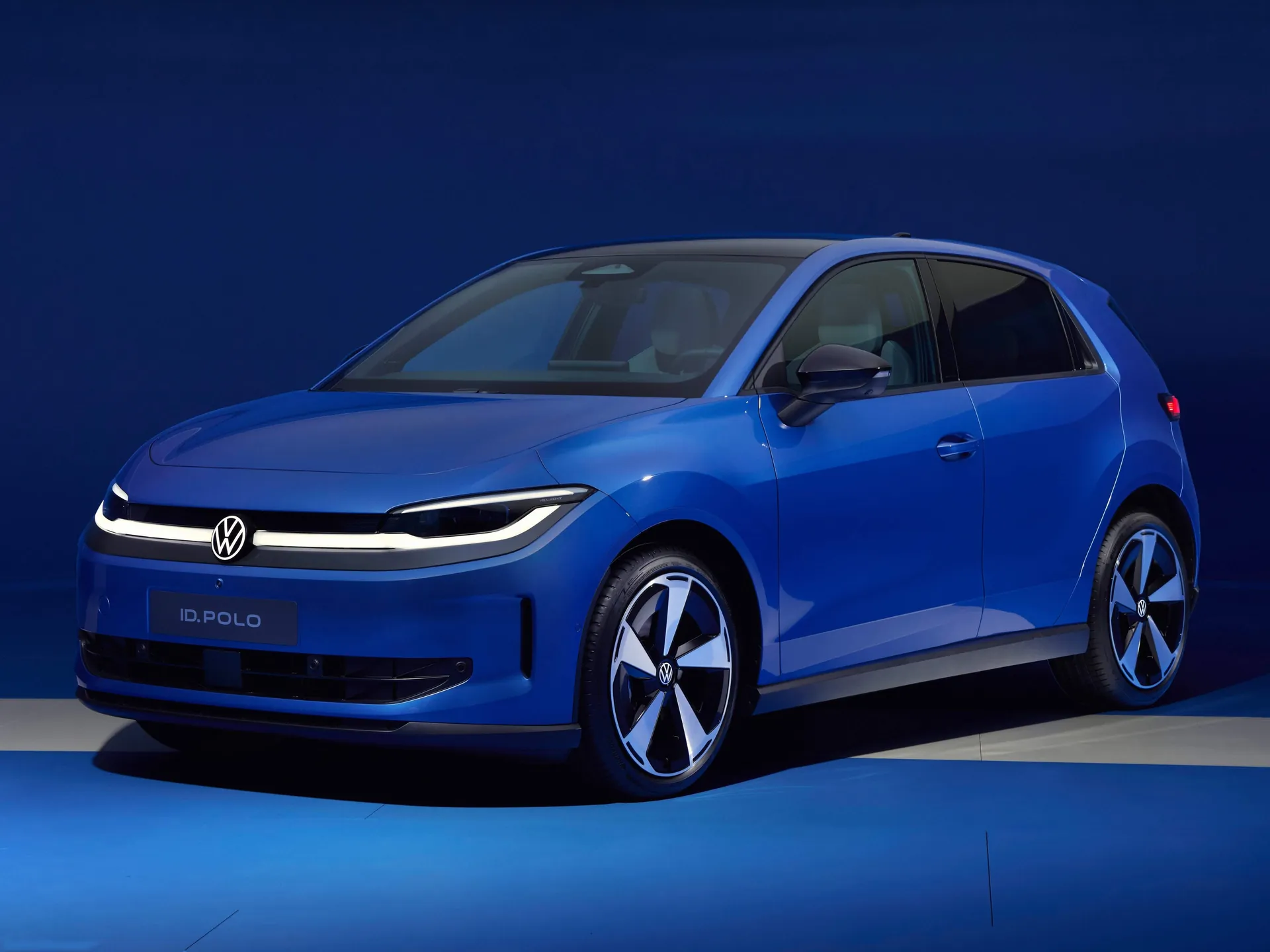
The most popular car in Europe has also been available as a zero emission vehicle since 2014: the Volkswagen e-Golf. Now comes the second generation of the electric car. The new e-Golf offers significantly increased driving range, higher power output, new design details and a digitalised interior world. The most important aspects first: the driving range in the New European Driving Cycle (NEDC) is now 300 kilometres - previously this figure was 190 kilometres. In terms of an annual average that is relevant to customers, driving range is around 200 kilometres - depending on driving style, weather and the use of air conditioning. This makes the new e-Golf a highly eco-friendly alternative for nearly all commuters. Take Germany, for example: around 80 per cent of all car drivers drive less than 50 kilometres daily according to a study by the German Federal Ministry for Transportation and Digital Infrastructure. The e-Golf is a perfect fit for this use profile.
The new generation of technology in the Volkswagen e-Golf is, of course, also beneficial for personal use. In addition, all owners of the sustainable four-door car will be ideally equipped even for very long journeys and transport tasks thanks to Volkswagen's "supplemental mobility" programme. That is because all e-Golf (or e-up!) buyers get a rental car from the latest Volkswagen passenger car line-up (except Touareg) for up to 30 days annually, free-of-charge, for the first two years after first registering their car. The free kilometre allowance depends on the duration of the rental. For instance, if a person sets out on a four-week holiday, they can cover 4,000 kilometres at no additional cost. This is sufficient for practically any trip in Europe.
An essential component is the new lithium-ion battery. Its energy capacity has been increased from 24.2 kWh to 35.8 kWh compared to the previous model. Not only have the e-Golf's battery capacity and driving range been improved, so has its agility. The new electric motor has an output of 100 kW (136 PS) instead of 85 kW (115 PS), and its torque has been increased as well. As is usual for electric vehicles, their maximum torque output is available immediately - that is, it does not depend on rev levels. In the e-Golf, the torque figure is 290 Nm (previously 270 Nm). To put this into perspective, the zero emission Golf even bests the torque level of today's Golf Alltrack 1.8 TSI with 132 kW/180 PS. Its high level of agility is especially noticeable when pulling away; the e-Golf accelerates to 80 km/h in just 6.9 seconds. After 9.6 seconds the Volkswagen is moving at 100 km/h (previous model: 10.4 s). The electronically governed top speed is 150 km/h (gain of 10 km/h). Despite the added power and driving range, combined electrical consumption has remained constantly low at 12.7 kWh per 100 km.
A new assistance function (Eco driving tips) helps the driver to save energy by adopting an predictive style of driving. The system does this by utilising the predictive route data of the standard navigation system and data on the vehicle's longitudinal dynamics from the engine controller. Via the multifunction display (MFD), the driver gets a message to release the accelerator pedal as soon as the e-Golf is in a driving situation in which it is moving fast enough without more "electric acceleration" - such as just before a reduced speed limit or before a bend. The MFD also communicates the message "take foot off of the accelerator pedal" by means of a graphic symbol - in the case of a bend, junction, intersection, speed limit sign or roundabout.
To optimise driving range in the winter despite the continuous use of heating, Volkswagen offers an optional heat pump for the e-Golf. Available as an add-on module for the electric heating (high-voltage heater) and the electric air conditioning compressor, the heat pump utilises both the heat from the ambient air and the heat given off by the drive system components. In this way the high-voltage heater's consumption of electric power is significantly reduced. When the heat pump is used, the range of the e-Golf improves by up to 30 per cent under winter weather conditions compared with a conventional heating system.
The time needed to charge the battery depends on the electrical power source. When connected to a normal 230- V mains socket (at a power level of 2.3 kW), it takes 13 hours 15 minutes to charge the battery to 80 per cent of its capacity, while a charging station at 7.2 kW takes around 4 hours 15 minutes. When connected to a CCS (Combined Charging System) station at 40 kW, it takes just 45 minutes to reach an 80 per cent charge.
In Germany, Volkswagen Leasing GmbH offers the Charge & Fuel Card for all Volkswagen brand electric and plug-in hybrid models to make battery charging on the road as easy and economical as possible. Charging is at a transparent uniform gross price rate of €11.90 per hour for direct current (DC) or €0.95 per hour for alternating current (AC) with billing that is accurate to the minute. In addition, not only can the card be used to purchase electrical charging and fuel at more than 10,800 filling stations; it can also be used for other vehicle-specific services such as car washes. There is no base fee. Costs are billed in a monthly invoice. For the most part, the nearly 4,000 charging stations available today offer electricity that is generated CO2-neutrally. The charging stations can be found via the Charge & Fuel app. At some stations, charging can be started by app as an alternative to the Charge & Fuel Card.
Using the Car-Net e-Remote app it is also possible to use a smartphone or the Car-Net website to configure many settings, e.g. to start a charging process or auxiliary air conditioning, and request information. Car-Net e-Remote is also available for the Golf GTE.
Like the exterior, the interior of the e-Golf has also been modified and further customised. The electric Golf model is also characterised by very extensive standard equipment. The second generation of the Volkswagen e-Golf is also equipped with the all new 9.2-inch Discover Pro flagship infotainment system that includes gesture control. In addition, the electric car has special instruments tailored to the electric drive system. For the first time, the e-Golf is also being offered with an Active Info Display as an option in place of analogue instruments. Together with the Discover Pro, the Active Info Display creates a new world of digitalised displays and controls. The interior specification for the e-Golf includes comfort front seats, leather-trim for the multifunction steering wheel and gear shift grip with blue stitching and newly designed decorative inlays.
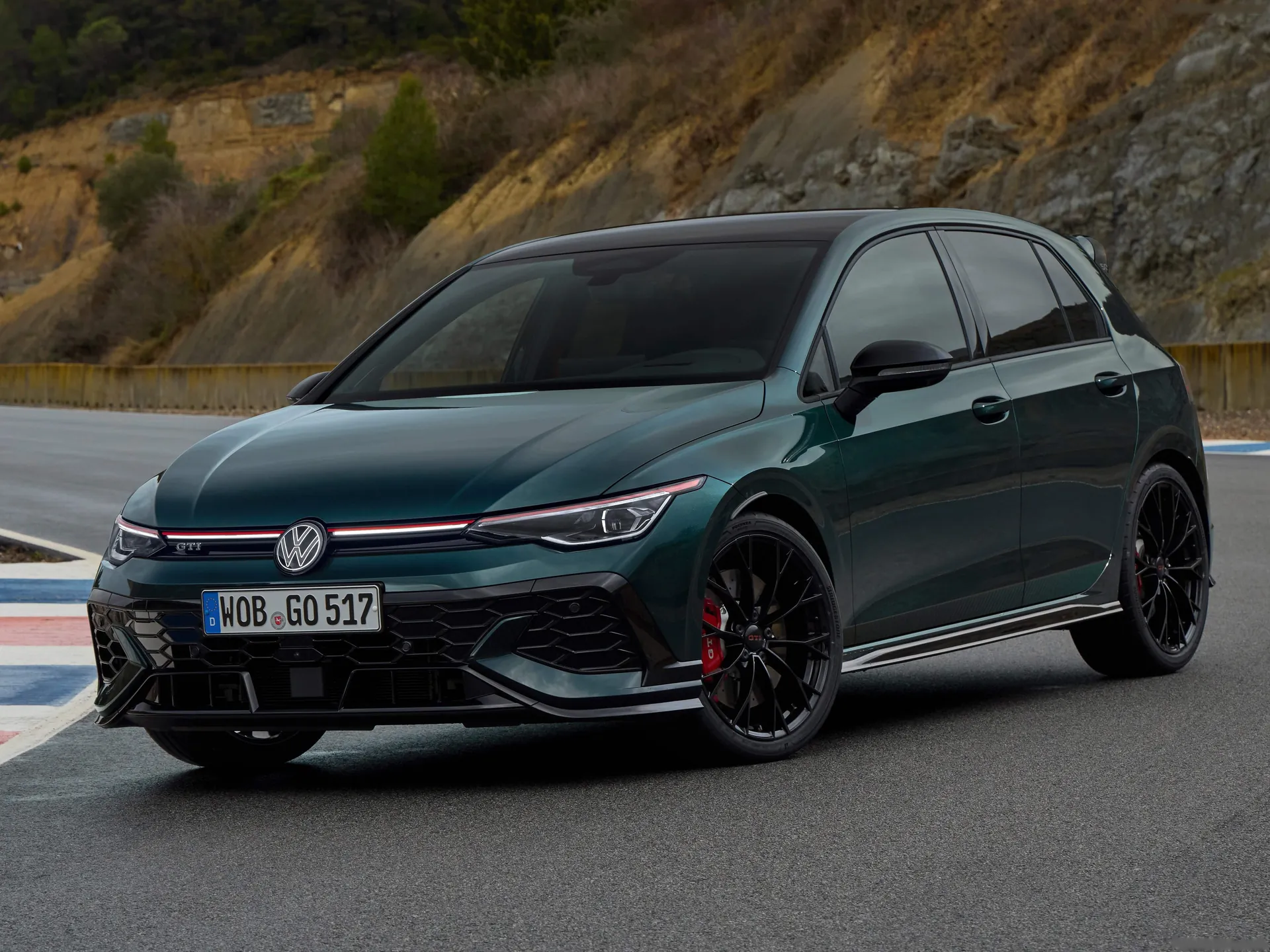
The Volkswagen e-Golf, like the Golf GTE and the sports cars of the model series (Golf GTI and Golf R), assumes a special independent status within the model range. This status is also reflected in its very extensive standard features content.