Suzuki Baleno
When Suzuki set out to create a hatchback like none before, it first established a key guideline - hold back on nothing. The result is the Suzuki Baleno, a harmonious combination of styling that flows, superb performance achieved through ground-breaking technologies, and smart packaging.
To create a new, bar-raising hatchback that is fun to drive and engineered to meet today's consumers' needs, Suzuki wanted to take the compact car to the ultimate level. Baleno chief engineer Kunihiko Ito explains: "We set our sights on developing the ideal hatchback, one that makes no compromises, giving it an elegant, sophisticated and grown-up character. The Baleno perfectly embodies all the elements expected in a car of this size-design, utility, comfort, manoeuvrability, superior driving performance, and fuel efficiency."
With its "Liquid Flow" design theme, compact body, spacious interior, and efficient powertrains-all on a new-generation platform- the Baleno offers style, utility, manoeuvrability, driving performance and fuel efficiency. It also offers comfort, including on long-distance journeys, with plenty of space for adults in both the front and rear, as well as generous luggage space.
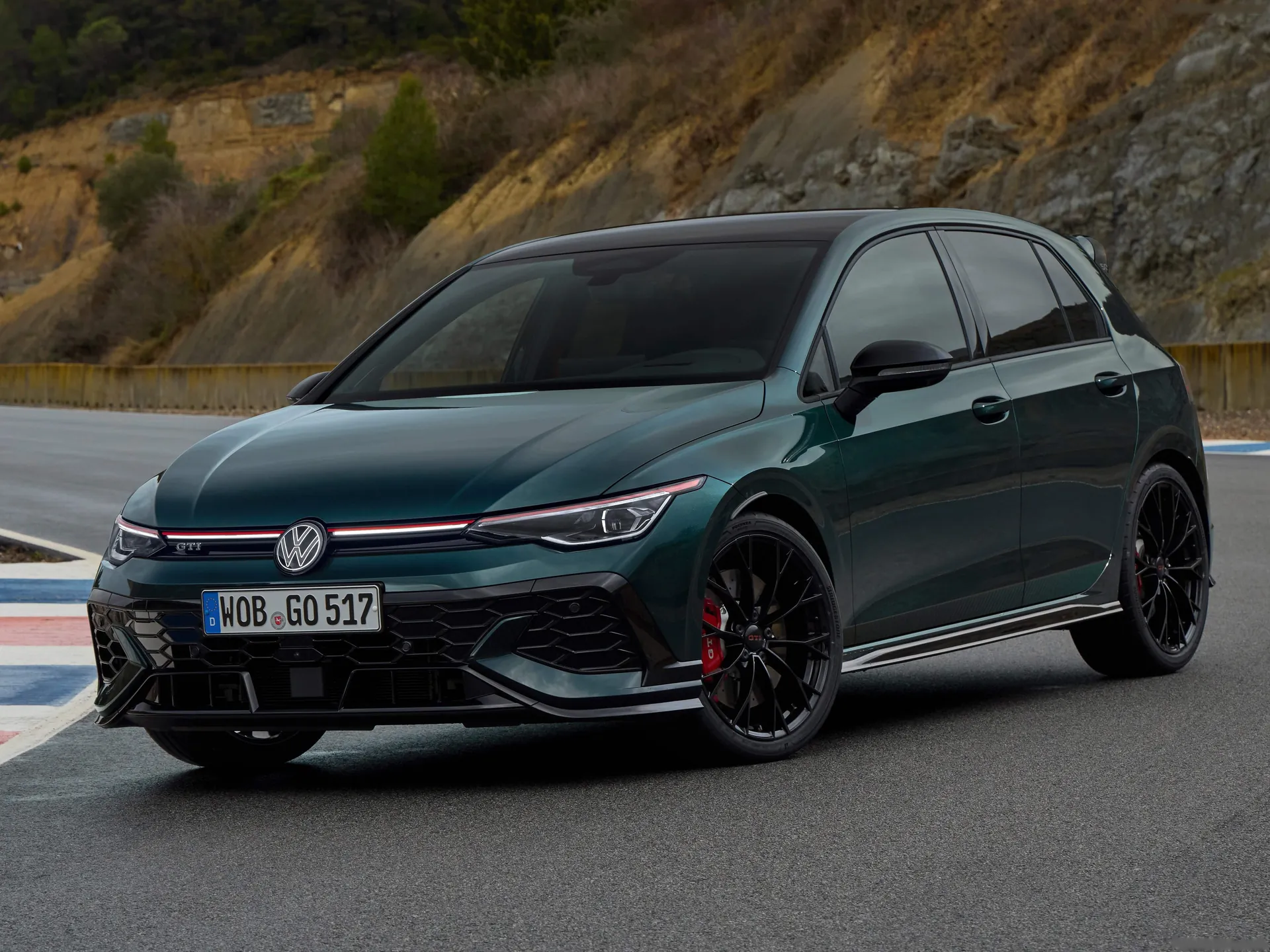
The "Liquid Flow" design theme-suggestive of an energetic mass of liquid in motion-permeates throughout, articulated by curving lines and expressive surfaces. Meanwhile, a low and wide silhouette helps underline a strong and sporty look.
Seen from the front, the body graciously flares outward from the cabin, resulting in a low, wide and sporty yet elegant profile that is complemented by a wide bumper, grille, distinctive LED positon lamps, and wraparound windows with blacked-out A-pillars. From the side, character lines that begin at the front and sweep toward the rear create flowing highlights, while a forward-sloping rear hatch suggests the moving forward of dynamic energy, and gently contoured, continuous surfaces create the impression of power amidst elegance.
The instrument panel is flared at each end for a sense of breadth and is characterised by curving lines. Silver accents stand out against the restrained black of the cabin, and reddish-amber illumination for the audio, air conditioner, gear shift indicator, and other controls underline the cabin's stylishness.
Beyond elegant styling, interior innovations that make vehicle usage informative, comfortable and easier:
The new Baleno features three new technologies for achieving better driving performance and better fuel efficiency: a new-generation platform, the new BOOSTERJET direct-injection turbo engine and the SHVS mild hybrid system.
A new Suzuki platform was developed by radically reviewing the basic structure of the vehicle underbody in pursuit of achieving lighter weight and enhancing fundamental vehicle performance. Compared to the platform currently used in the same vehicle class, body rigidity has been enhanced by approximately 10 per cent and, due to the use of a continuous skeletal structure that creates a smooth form, total vehicle weight has been reduced by approximately 15 per cent. Additionally, by aiming for optimisation of the entire vehicle including components attached to the underbody, Suzuki has been able to keep vibration and noise in check, while maintaining riding comfort.
New 1.0 BOOSTERJET direct-injection turbo engine
The 1.0 BOOSTERJET is a newly developed direct-injection turbo engine that achieves both good fuel economy and driving pleasure, which is made possible by using a small displacement, high torque turbocharger.
By controlling the wastegate valve, which closes to create higher boost pressure during heavy-load operation and remains opened during normal driving, the BOOSTERJET reduces pumping loss, thus achieving high levels of both power performance and also fuel-efficiency.
The Baleno features the 1.0 BOOSTERJET engine, which has a maximum output of 82kW and a maximum torque of 170Nm.
The Baleno is also available with a new 1.2 DUALJET, a dual-injection petrol engine with improved thermal efficiency that strikes an excellent balance between power performance and fuel efficiency.
Regarding transmissions, the 1.0 BOOSTERJET can be paired with either an optimally geared five-speed manual incorporating a specially designed convergent gear locating system that helps reduce frictional losses and improve shift feel or a six-speed automatic transmission that enables high performance at low speeds and optimum fuel-efficiency at high speeds. The 1.2 DUALJET can be paired with either the same five-speed manual transmission as the 1.0 BOOSTERJET or with a continuously variable transmission.
An intuitive suspension has been developed for direct-response handling with MacPherson struts and coil springs up front and a torsion beam and coil springs in the rear. Reduced rolling resistance tyres improve fuel efficiency without sacrificing directional stability, ride comfort, and braking performance.
Fine-tuned over repeated test runs in Europe, the Baleno offers a driving experience achieved by Suzuki's pursuit of the best balance between nimble performance and refined riding comfort.
The SHVS is a mild hybrid system by Suzuki that uses an ISG (Integrated Starter Generator) to assist the engine during acceleration and also generates electricity through regenerative braking, which it does more efficiently than systems using conventional alternators.
Using the electricity stored through regenerative braking, the electric motor function of the ISG improves fuel efficiency by partially assisting the engine, which it does by making up for the additional added portion of fuel usually required during the high-fuel-consuming actions of starting from a stop and accelerating. It also allows for a smooth and quiet restart after an automatic engine stop, thanks to the use of an ISG belt-drive start, rather than restart by a conventional starter motor.
Furthermore, the SHVS uses a compact, high-charging-performance lithium ion battery, making possible frequent engine assists. In the Baleno, the system aims to lessen the footprint on the environment with a CO2 emissions target of 93g/km.
The common difficulty of achieving both a stylish design and a spacious interior has been overcome by ensuring maximum space through repeated revisions down to a single millimetre. The result is smart packaging that not only achieves spacious comfort, but also best-in-class luggage space. A key element in achieving this within an overall body length of less than four metres is a new-generation platform that enables efficient use of space plus a more-compact engine design with a less-tilted mounting position that also frees up more interior room.
The front seats come with ample shoulder room due a wide space between the driver and passenger seat positions. Both seats feature an optimised shape and spring position for ride comfort and high-tensile materials for lightness and strength.
The rear seats feature ample legroom, due to a substantial front-rear-seat tandem distance of 805mm. They can be easily folded by a single action and come in various bench or split configurations with three separate-type head restraints. Also, ingress and egress in the rear is facilitated by generous rear door apertures.
The luggage space boasts 355 litres, making it the largest among B-segment hatchbacks. To accommodate long or wide items, the shape of the suspension has been optimised to free up space on both sides at the back of the boot.
Flexibility is another key asset of the luggage space. The space can be enlarged by folding down the rear seatbacks, sliding the front seats forward, and using the luggage board in either its upper or lower position.
Safety performance for assisting the driver and mitigating injury in accidents is enhanced by a number of safety technologies, chief among which is Radar Brake Support (RBS). With RBS, when the vehicle is travelling at a speed greater than approximately 5 km/h, millimetre wave radar detects any vehicle that might be directly in front. Upon detecting a potential collision, depending on the situation, the vehicle 1) alerts the driver, 2) increases braking force, or 3) automatically applies the brakes.
Other safety features include ESP®, six SRS airbags and an impact absorbent body. Various components have also been designed to lessen injuries sustained by pedestrians in vehicle-to-person collisions.