Peugeot 206 SW HDi
The Peugeot 206 is a supermini car that was produced by the French manufacturer Peugeot from 1998 to 2010. Even though the 206 had finished production in most markets by 2010, in Europe it was available as the 206+, with front and rear styling that resembles the Peugeot 207, until 2012, whereas in South America it continues to be offered under the 207 nameplate, and furthermore in China, both under the 207 nameplate and as the Citroën C2.
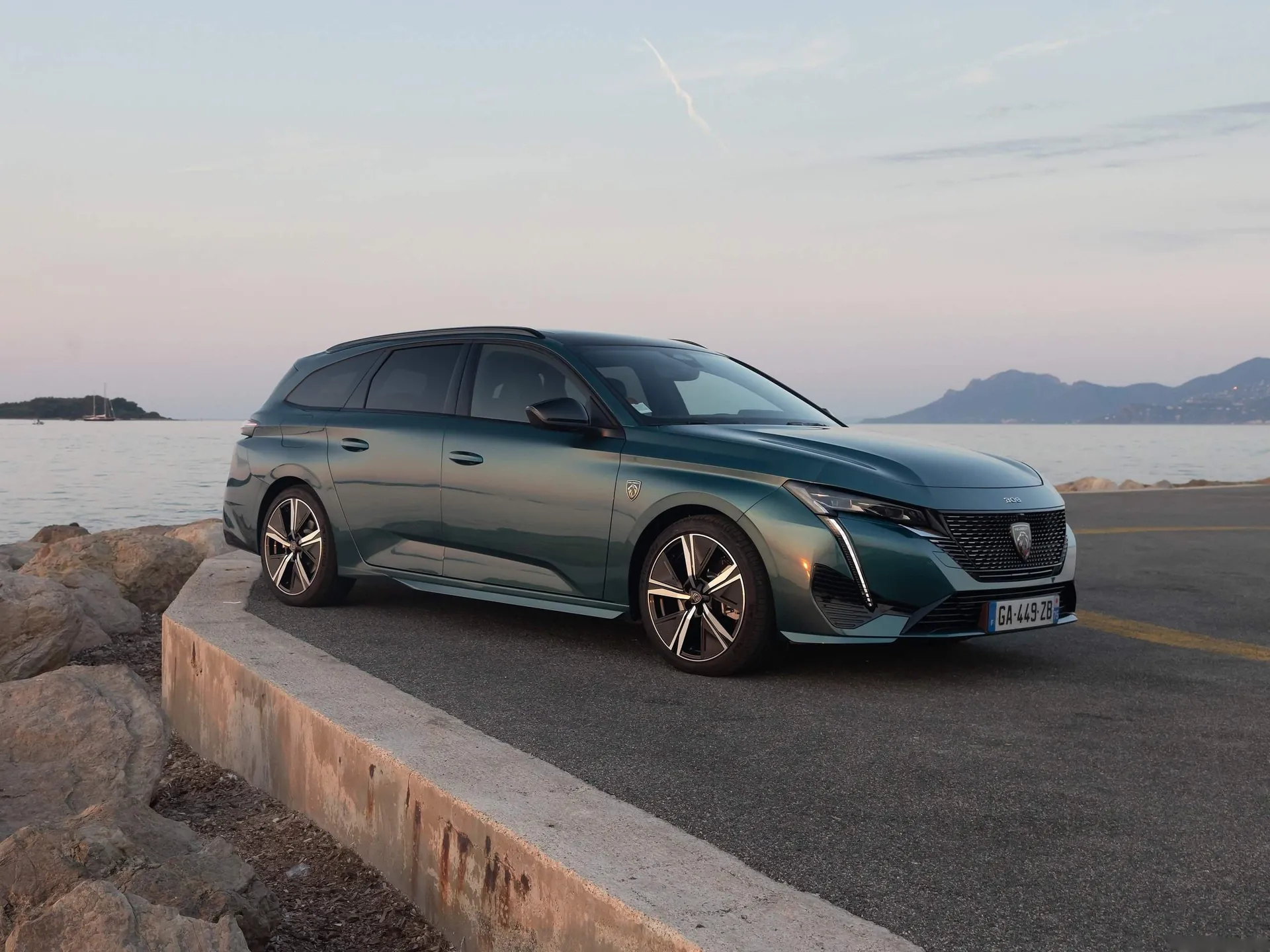
It was officially launched on 10 September 1998, in hatchback form, which was followed by a coupé cabriolet (the 206 CC) in September 2000, a station wagon (the 206 SW) in September 2001, and a sedan version (the 206 SD) in September 2005.
Its facelifted version was initially launched in South America in September 2008, and in China in November 2008, in hatchback, sedan and station wagon body styles,and known as the 207 Compact, and as the 207 respectively. This version was subsequently launched in Europe in February 2009, only in hatchback form and marketed as the 206+.
In November 2006, the Chinese joint venture Dongfeng Peugeot-Citroën launched a derivative version of the Peugeot 206 known as the Citroën C2, but not technically related with the European-market model.
During the early 1990s, Peugeot decided not to directly replace the Peugeot 205, citing the reason that superminis were no longer profitable or worthwhile. Instead, Peugeot followed a unique strategy and decided that its new, smaller, supermini, the Peugeot 106 (launched in 1991) would take sales from the lower end of the 205 range while the lowest models of the Peugeot 306 range, launched in 1993 to replace the Peugeot 309, would take sales from the top-end 205s. Between the 106 and 306, Peugeot hoped that the 205 would not need to be replaced, and could be phased out slowly, while customers who would normally plump for the 205 would continue to have a choice with either a smaller or larger car. Unfortunately for Peugeot, this strategy did not work. With the 205 phased out, other superminis like the Ford Fiesta and Volkswagen Polo continued to sell well and even increased in popularity, and without a direct competitor to these cars Peugeot was losing sales fast. A new supermini was required, and the 206 was launched in 1998 as a somewhat belated replacement for the 205.
With no larger in-house rival from Citroën to base its new supermini on (the Citroën Saxo shared its platform with the 106), Peugeot developed an all-new front drive platform for the 206. It was built in France, and in the United Kingdom until the end of 2006. The end of British production coincided with the closure of the Ryton plant which Peugeot had taken over when buying Chrysler's European division in 1979.
From April 2010, the Peugeot 206 was no longer listed on Peugeot's current UK model range. LHD production finished in June 2010. Its eventual successor, the Peugeot 207, was launched in 2006. As of 2010, the twelve-year-old 206 was Peugeot's best-selling car of all time.
The 206 was originally launched as a hatchback with 1.1L, 1.4L, and 1.6L petrol engines and a 1.9L diesel engine, a HDi version with common rail coming later. In 1999 a 2.0L GTi capable of 210 km/h (130 mph), and in 2003 a tuned version of the GTi called the Peugeot 206 RC (GTi 180 in the UK), were added to the range. It did 0-100 km/h (0-62 mph) in 7.4 seconds and it reached a top speed of 220 km/h (137 mph) with 177 PS (130 kW). In 2001, two more versions of the 206 were launched - the 206 CC (coupé convertible) with a folding steel roof and the 206 SW station wagon. A 4-door notchback sedan version, developed by Iran Khodro, was unveiled in late 2005, and it is available in the Iranian, North African, Chinese, Russian, Romanian, Turkish and Bulgarian markets.
The Peugeot 206 was mainly manufactured in Peugeot's Poissy and Mulhouse factories in France, as well as in Ryton, United Kingdom, whereas outside Europe it was produced in Iran (Iran Khodro), Chile (for the Mexican and Colombian markets, French made 206s were cheaper than Chilean-built ones, in Chile), Argentina (PSA), Brazil (PSA), Uruguay (Oferol), China (Dongfeng), Indonesia (Gaya Motor) and Malaysia (Naza). In 2003, it received a minor facelift, getting clear headlights, different rear clusters, new side repeater lamps, chrome badges, a new range of colors, as well as other subtle interior revisions.
The Peugeot 206 was also built at Ryton in Coventry, England, however, with the introduction of the 207 to the range, Peugeot decided to close the Ryton factory and move production to Slovakia with EU funding, due to the fact that they could produce their vehicles with same or better quality for a lower price there.
The Peugeot 206 proved to be a sales success all over Europe. It was the best-selling car in Europe from 2001 to 2003 and it was the best car of the year in UK for three consecutive years, between 1998 and 2001. The 1.4-litre XR was the best-selling model. On 26 May 2005, the 206 celebrated the five millionth unit produced since its commercial launch on 10 September 1998. Sales in the United Kingdom were strong from the start, with the 206 regularly being among the nation's five most popular new cars during its first six years on sale. Second hand examples of the 206 traditionally hold their value well, due to high demand.
Production in Brazil took place in Porto Real, Rio de Janeiro, starting in 2001 with the hatchback, followed by the station wagon version in 2005. The models produced there featured 1.0-litre 16-valve, 1.4-litre 8-valve and 1.6-litre 16-valve engines, the last two of which are flexible fuel engines (petrol/ethanol). The 1.0-litre version used a Renault-sourced engine and was produced until 2006.
The Peugeot 206 has also been produced in Villa Bosch, Buenos Aires, Argentina, since 1999. The trim levels manufactured are XR, XRD, XS, XT and XTD. The diesel powered versions use the naturally aspirated DW engine. Some of these versions are equipped with local-made engines in Jeppener, Buenos Aires.
In May 2006, the Malaysian car manufacturer Naza launched a locally assembled version of the model with the name of 206 Bestari. In 2006, Peugeot started production of the 206 in China. In September 2006, Dongfeng Peugeot-Citroën Automobile launched a slightly modified Peugeot 206 called Citroën C2 (this car was not related to the European-market Citroën C2).
This article is licensed under the GNU Free Documentation License . It uses material from Wikipedia .