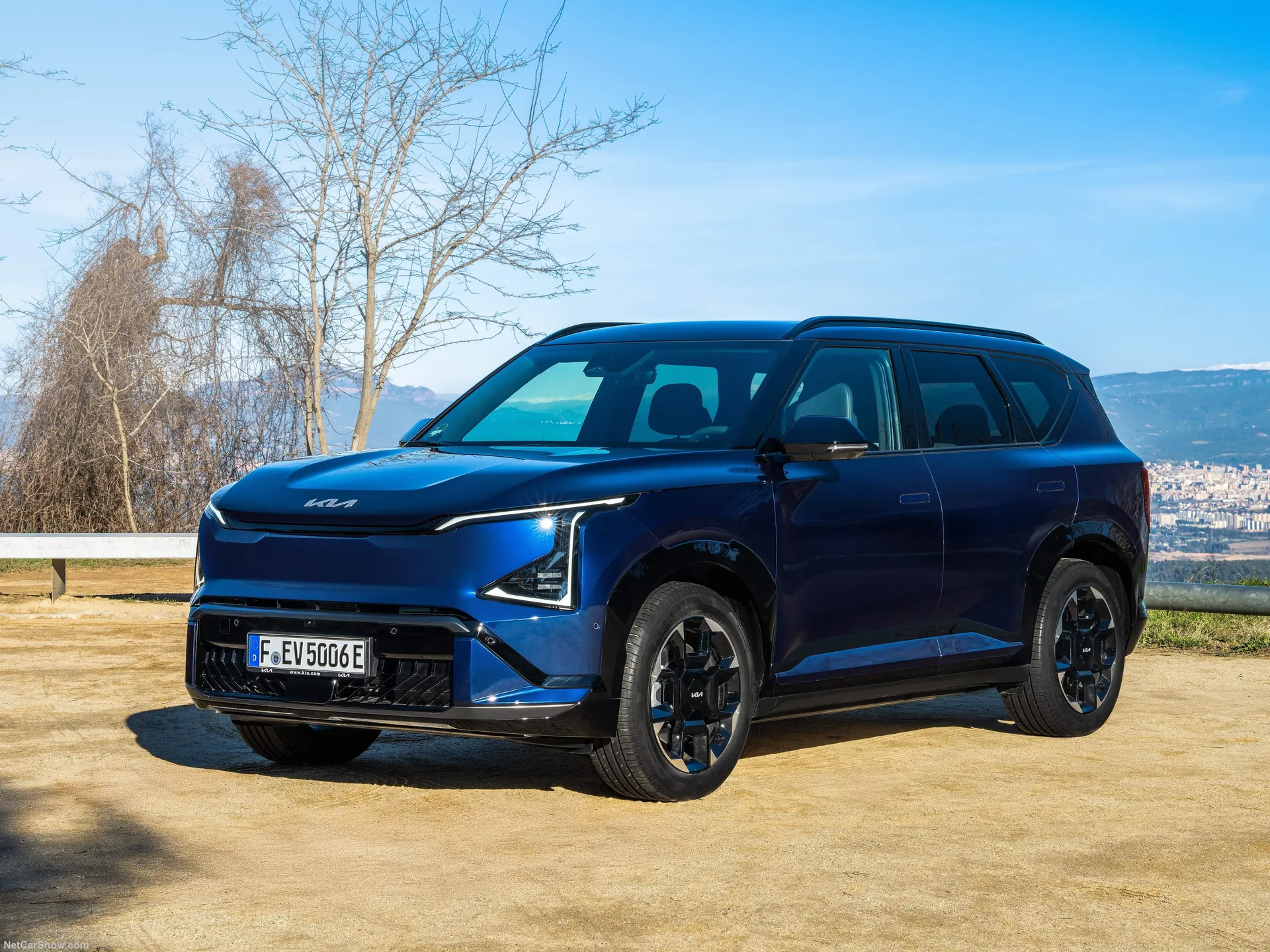
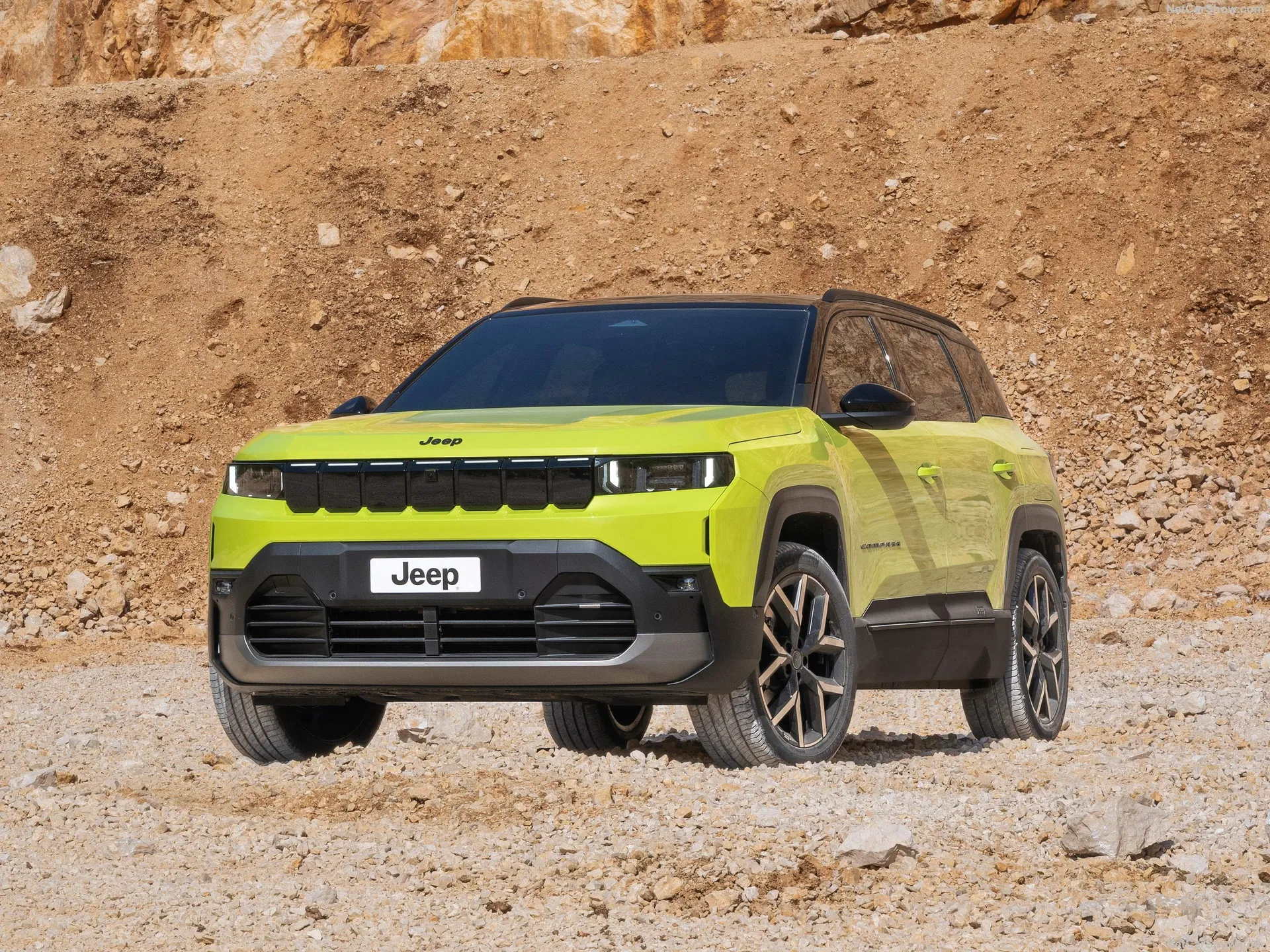
Jeep Renegade
The all-new Jeep® Renegade expands the brand's vehicle lineup, entering the growing Small sport-utility vehicle (SUV) segment, while staying true to the adventurous lifestyle and 4x4 capability Jeep is known for.
Determination, skill and desire to be part of one, solid team: these are the most important ingredients in the making of the new Jeep Renegade, the first vehicle of Fiat Chrysler Automobiles to be jointly developed by Italian and American designers and engineers and the first model in the brand's history to be built in Italy, at the renewed SATA plant in Melfi (Basilicata). An all-new Jeep, resulting from the combination between the design, functionality and off-road expertise belonging to the U.S. brand - that since 73 years is synonymous with freedom and 4x4 driving - and the style and the dynamic features that are signature cues of the Italian cars all over the world.
Jeep Renegade is a model packed with a strong stylistic personality . Agile and spacious, it is perfect for errands across town and with its off-road capabilities it is ready to explore new off-road trails. It boasts best-in-class interior roominess, excellent on-road driving dynamics and unsurpassed off-road capabilities.
Two new, advanced 4x4 systems - Jeep Active Drive and Jeep Active Drive Low - incorporate a category-exclusive rear axle disconnect system that seamlessly switches between two- and four-wheel-drive for reduced energy loss when 4x4 capability isn't needed and improving fuel efficiency in the process.
The first in the segment nine-speed automatic transmission ensures benchmark performance both on-road and off-road. A range of fuel-efficient engines available in twelve powertrain combinations make sure the new Renegadecansatisfy every customer's needs.
In EMEA (Europe, Middle East and Africa), the new Jeep Renegade will be available with a full-range comprising four different trim levels - Sport, Longitude, Limited and Trailhawk - a total of 12 fuel-efficient powertrain combinations and a choice of turbo diesel and petrol engines that will be available in four-wheel drive or front wheel- drive configurations. Sales of the new model will start on the main European markets in the fourth quarter of 2014.
The engine range offering in the EMEA region comprises two MultiAir2 and one E.torQ petrol engines and two MultiJet II diesel engines . The gearbox offer includes a choice of two manual, one dual-dry clutch transmission (DDCT) and the first in the segment 9-speed automatic gearbox.
With the new Renegade, Jeep will be entering one of the automotive industry's fastest growing vehicle categories - the Small SUV market.
The new Jeep® Renegade offers the open-air freedom and iconic styling Jeep is known for in an all-new efficient, trail and urban-friendly size - designed to take the growing global Small SUV segment head-on with its boxy proportions and purposeful design elements. Inside, the Renegade features high-quality materials, useful features and thoughtful storage to maximize versatility and capability.
From the start, Jeep designers knew the Renegade would need to deliver best-in-class off-road capability with city-sized proportions that exuded the brand's rugged, versatile and functional styling. Secondly, designers knew that this new Jeep would symbolize American design and ingenuity as it marks the brand's first entry into the Small SUV segment in more than 100 markets around the globe. Last, this new Jeep vehicle must provide these youthful and adventurous customers with world-class levels of craftsmanship and efficiency and, more importantly, the open-air freedom of the legendary Jeep Wrangler.
Jeep Renegade builds on the Wrangler's powerful stance, rugged body forms and aggressive proportions that include best-in-class approach and departure angles purposely designed to deliver best-in-class capability.
At the front, Renegade is decidedly Jeep with its signature seven-slot grille. Large circular headlamps on the top of the front convey the typical Jeep look to the Renegade . Below the grille, a two-piece front fascia is aerodynamically tuned and features a body-color upper and molded-in-color lower.
Short overhangs, trapezoidal wheel arches and a sculptural blend of fluid shapes interrupted by strong chamfers create Renegade's rugged bodyside form. Inheriting Jeep Wrangler's DNA, the Renegade features beefy tires, wide fender forms, and a raised belt line that recalls the icon's half-doors. Adding to the Renegade's contemporary look is an optional daylight openingwhich nods to Wrangler's classic hardtop. At the sill, this new Jeep SUV features lower molded-in-color accent cladding that adds protection, all while lightening the weight of the vehicle by visually placing more painted body above the wheel centers.
Linking the side profile to the rear is the familiar Jeep shield-shape that ties in the rear backlight and Wrangler-like square tail lamps with black accent surround. For added detail, the tail lamps feature a new "X" form design theme inspired by military equipment (gas can) - exuding strength and playing on Jeep brand's roots.
Just like the first Willys MB Jeep vehicles produced in 1941, the new Renegade offers open-air freedom with two optional open-air roof systems: a large electric dual pane sliding glass roof or the unique to segment 'My Sky'.
With its two lightweight panels -front and rear - that can be easily and conveniently removed and stowed in the rear cargo area, 'My Sky' introduces segment-exclusive panoramic open air experience with the characteristic Renegade X" design theme.
Jeep Renegade interior features a rugged and energetic appearance that builds upon the Jeep brand's legendary heritage. It's precisely crafted details, innovative and high-quality color and material appointments, state-of-the-art technology, and clever storage features draw inspiration from contemporary extreme sports gear and active lifestyles.
The Jeep Renegade interior was designed using four key principles:
When the Jeep designers began the interior design process, they started with a fresh canvas and simple design brief: create a Small SUV that they themselves would aspire to own. This objective is strikingly apparent in the Renegade's dynamic lines, hand-sculpted forms, and emotional character.
The interior of the new Renegade has a distinctive form language which Jeep designers have titled "Tek-Tonic." The Tek-Tonic design theme is defined by the intersections of soft and tactile forms with rugged and functional details. Major surfaces such as the sculpted soft-touch instrument panel are intersected with bold functional elements like the passenger grab handle. Indispensable for off-road adventures, the robust handle is borrowed from its big brother, the legendary Jeep Wrangler. It cleverly integrates into the passenger air vent to create a unique sculpted element. The unique center vent and the anodized bezel accents draw inspiration from performance goggles and boots used in extreme sports. Unique protective clamps that surround the UConnect touchscreens, shifter bezel, and front-door speaker bezels exude strength and precision. The clamp surrounding the touchscreens is embossed with "Since 1941," paying homage to the Jeep brand's legendary history.
Jeep Renegade features a unique steering wheel with a thick, substantial rim section. Integrated audio, voice, and vehicle controls add a new level of convenience and sophistication. For added driver's comfort, a segment-exclusive heated steering wheel is available.
In front of the driver, the instrument cluster design includes a large analog speedometer and tachometer. For an added sense of adventure, Renegade's gauge cluster features a mud-splatter design graphic that originated from one of the Jeep design team's weekend paintball adventures. Straddling both gauges is a 3.5" monochrome display or a state-of-the-art 7" TFT display that provides full-color vehicle information and allows the driver to enjoy a customized user experience. Both screens provide vehicle information and feedback through intuitive design, all to keep the driver's hands on the wheel and eyes on the road.
The lower part of the dashboard neatly integrates climate controls, a dampened glove box and the media center with USB, auxiliary input and 12-volt power connectivity for mobile devices. Proudly touting its Jeep design DNA and capability is a rubberized mat in the storage compartment under the media center, molded with a topography map of Moab, Utah - a legendary off-road spot for Jeep enthusiasts. Similar to the X-shape inspired roof and tail lamps are the two front cup holders with the same embossed design detail that also helps to grip and secure different-sized beverage containers.
The Jeep Renegade's center console armrest is wrapped, providing a softer touch, and offers an adjustable position for improved comfort. For added detail, the protective clamp bezel surrounds the transmission shifter and is finished in an anodized accent color to match the frames surrounding the climate control vents, the cup holder and the speakers.
Passenger seats are ergonomically designed to support the contour of the body during longer journeys, and are trimmed with premium cloth or leather. The Renegade includes a second-row 60/40-split seats, or for added convenience, 40/20/40-split seats with cargo area pass-through is available.
In addition to its 351 liters of storage, or 1,297 liters with rear seats folded flat, the vehicle features as optional equipment a removable, reversible and height-adjustable cargo floor panel which can be used also to neatly stow the removable My Sky roof panels in the lower part of the trunk. A uniquely designed Jeep My Sky roof-panel bag is included to protect the panels and help keep the cargo area tidy. Maximizing versatility is a fold-forward front seat that enables the new Renegade to accommodate long objects.
Following the Jeep interior design team's philosophy for the Renegade, introduced and seen in the Jeep Grand Cherokee and Cherokee, a new approach for color and materials inspiration was obtained through different lifestyle adventures and locations around the world, creating invigorating color and material environments.
The new Jeep Renegade is available with several interior trim choices: each model of the new Jeep Renegade includes two color/trim combinations, which the exception of the Longitude and Limited, which offers three. The following color/trim options are available per model: Monotone Black with Metal Diamond bezel accents (Sport), two-tone Black/Sandstorm interior with Metal Diamond bezel accents, monotone Black with Metal Diamond bezel accents (Longitude), two-tone Black/Sandstorm interiors with Metal Diamond bezel accents (Longitude), two-tone Interior Bark Brown/Ski Gray with contrasting Anodized Orange bezel accents and stitching (Longitude), monotone black leather with contrasting Ruby Red bezel accents and stitching (Trailhawk), Black Leather (optional) with Ruby Red bezel accents and stitching (Trailhawk), Black Premium fabric with Metal Diamond bezel accents (Limited), Black Leather (optional) with Metal Diamond bezel accents and Beige stitching (Limited) and two-tone Bark Brown/Ski Gray Leather interiors (optional) with Anodized Orange bezel accents and stitching (Limited).
Jeep Renegade offers a choice of two innovative driveline systems - Jeep Active Drive and Jeep Active Drive Low - for best-in-class 4x4 capability in all driving conditions. The new model is also the first Small SUV to feature rear-axle disconnect system delivering 4x2 levels of fuel-efficiency and instantly engaging 4x4 when traction is needed. Both 4x4 systems incorporate rear-axle disconnect that automatically and seamlessly switch between 4x2 and 4x4 for full-time torque management and optimal traction when necessary and without requiring input from the driver.
Enabled by an innovative power-transfer unit (PTU), Jeep Active Drive is fully automatic and delivers seamless operation in and out of four-wheel drive, and at any speed. This system requires no driver intervention, delivers yaw correction during dynamic events and improves both understeer and oversteer conditions. Jeep Active Drive can provide up to 2,000 Nm of the engine's available torque to the rear wheels, enabling optimal grip in low-traction conditions. A fully variable wet clutch housed in the rear-drive module utilizes the Jeep brand's proprietary algorithms to provide the proper amount of torque for any driving condition, including low-traction surfaces, aggressive starts and dynamic driving.
Jeep Active Drive Low builds on the Jeep Active Drive system and affords a 20:1 crawl ratio for genuine 4x4 capability. This system in combination with the petrol 2.4 liter and diesel 2.0-liter with nine-speed gearbox and ensures best-in-class off-road capability in extreme off-road driving.
Jeep Active Drive Low adds Hill-descent Control to Selec-Terrain and the Trailhawk model features the "Rock" Selec-Terrain function to maximize wheel traction and improve grip.
Hill-descent Control (HDC) enables a smooth and controlled hill descent in rough or slippery terrain without the driver needing to touch the brake pedal. When on, the vehicle will descend serious grades using the ABS brake system to control each wheel's speed to ensure optimal pace and momentum.
Jeep Active Drive and Active Drive Low feature the brand's Selec-Terrain traction-control system. Selec-Terrain allows the driver to dial in the desired on- or off-road setting for optimum performance.
Up to five customized settings are offered: Auto, Snow, Sand and Mud modes, and exclusively on the Trailhawk model's Jeep Active Drive Low system - Rock mode. For even greater Trail Rated off-road capability, Selec-Terrain includes Selec-Speed Control with Hill-descent Control.
With Selec-Terrain, the driver can choose between five different driving programs to achieve the best driving experience on all terrains:
The new Jeep Renegade is the first Small SUV to feature a nine-speed automatic transmission. The new gearbox is equipped on the 170 horsepower 1.4-liter MultiAir2 Turbo engine, on the 140 and 170 horsepower 2.0-liter Turbo diesel engine and on the 2.4-liter Tigershark MultiAir petrol engine of the Renegade range.
The nine-speed automatic transmission enables the vehicle to optimize engine output and ensures aggressive launches and smooth, efficient power delivery at highway speeds.
Like the new Jeep Cherokee, the Renegade's nine-speed gearbox provides a more responsive driving experience with quicker acceleration and smoother shifting. The wide ratio spread delivers a bold first gear ratio of 4.71 for top performance at low rpm and small gear ratio steps affording luxury car levels of shifting refinement.
A unique set of four overdrive ratios improve highway fuel economy and reduce overall noise, vibration and harshness (NVH) levels.
The all-new, fully electronic nine-speed automatic features on-the-fly shift-map changing with Auto Stick manual shift capability. More than 20 individual shift maps for specific conditions optimize shift quality and shift points for improved fuel economy, performance and drivability.
To determine the appropriate shift mode, the transmission software takes into account variables such as employed torque, kick-downs, longitudinal and lateral acceleration and grade changes.
For improved driving comfort and refinement, the transmission control strategy closely monitors temperature, speed and electronic stability control activation. The result is automatic shifting ideally attuned to the performance requirements of almost any driving demand.
But a Jeep SUV isn't a Jeep SUV unless it delivers superior off-road performance. Uniquely suited to the requirements of the Renegade Trailhawk model, the nine-speed automatic transmission accommodates a 20:1 crawl ratio setting. The Trail Rated 4x4 rock-crawl ratio is enabled by a 4.71:1 first gear ratio coupled with a 4.334:1 final drive to deliver its class-leading 20:1 crawl ratio.
The advanced nine-speed automatic, it is mated with the 1.4-liter turbo on Limited models, the 2.0-liter turbo diesel on Trailhawk and Limited models, and the 2.4-liter Tigershark on Trailhawk models sold in Russia, the Middle East and South Africa.
Proven, fun-to-drive six-speed manual transmission
Jeep Renegade models equipped with the 140 horsepower 1.4-liter MultiAir Turbo, the 120 horsepower 1.6-liter MultiJet II and the 120 or 140 horsepower 2.0-liter MultiJet II feature a six-speed manual transmission with 6.68 ratio spread and a 4.438 final-drive ratio for fuel efficiency at faster speeds. And thanks to its first-gear launch ratio of 18.4:1, the gearbox delivers quick acceleration with smooth, precise shift quality. A tubular intermediate shaft with equal-length half shafts helps mitigate unwanted torque steer.
This six-speed state-of-the-art manual transmission is built and designed by Fiat Powertrain Technologies and belongs to a new group of transverse, three-shaft transmissions. These transmissions are more compact than transmissions with two shafts.
The six-speed is synchronized in all gears for smooth gear transitions. The shift cables are equipped with an adjust mechanism for enhanced shift feel as well as an enhanced start / stop sensor that picks up movement to the gear (i.e. out of neutral).
The clutch system features a dual mass flywheel with pendulum damper for enhanced noise/vibration characteristics at lower speed (i.e. reduced and/or eliminated "rattle). The clutch system is hydraulic for reduced operating effort and reduced pedal vibration.
Dual Dry-Clutch six-speed automatic transmission
A six-speed automatic Dry Dual Clutch Transmission (DDCT) -- mated with the 1.4-liter MultiAir2 Turbo engine - uses two clutches to connect the engine and transmission rather than one.
Using two clutches makes it possible to carry out "power shifts" without any break in power transmitted to the ground because the ratios of the second half-gearbox are synchronized while the first is in operation.
This means that the transmission of torque to the wheels is not interrupted - even during gearshifts, resulting in improved vehicle performance and driving comfort.
The DDCT uses dry clutches that makes it possible to achieve fuel economy ratings that are better than those achieved with a manual gearbox of the same capacity. At the same time, passenger comfort levels are comparable with those of a conventional automatic in many cases. Shifts are implemented by means of an electro-hydraulic actuator system that is managed by a dedicated electronic control unit. The clutches are controlled by means of hydraulic CSCs with sensors.
Designed to handle the turbocharged engine's output, the DDCT utilizes a tubular intermediate shaft with equal-length half shafts to mitigate torque steer.
Jeep Renegade models equipped with 110 horsepower 1.6-liter E.torQ engine are paired to a five-speed manual gearbox.
Developed for high-output applications, the proven C510 five-speed manual transmission has been upgraded for improved shift quality, and features a 3.929 final-drive ratio to deliver quicker acceleration and faster top speed without compromising fuel-efficiency. Designed to handle increased torque loads, this manual transmission includes an intermediate shaft with equal-length half shafts to mitigate torque steer; and oversized half shafts for increased strength and durability, and to reduce torsional stress in the driveline during performance driving.
In Europe, the new Jeep Renegade is powered by two petrol and two diesel engines and a total of nine different powertrain combinations.
The petrol engine offering includes the 140 horsepower 1.4-liter MultiAir2 Turbo engine with Stop&Start paired to both six-speed manual gearbox and DDCT (dual dry clutch transmission), the 170 horsepower 1.4-liter MultiAir2 Turbo engine with Stop&Start combined with the nine-speed automatic transmission and the 110 horsepower 1.6-liter E.torQ engine with Stop&Start paired to a five-speed manual gearbox.
The diesel engine range comprises the 120 horsepower 1.6-liter MultiJet II with Stop&Start and a six-speed manual gearbox, the 120 or 140 horsepower 2.0-liter MultiJet II with Stop&Start and six-speed manual transmission, the 140 and 170 horsepower 2.0-liter MultiJet II with Stop&Start and nine-speed automatic transmission.
A 2.4-liter Tigershark MultiAir L4 petrol engine is available in the Renegade lineup sold in Russia, Africa and the Middle East and it is paired only to the nine-speed automatic gearbox.
Two powerful MultiJet II diesel engines boast Stop&Start technology: 1.6-liter and 2.0-liter Turbo diesel Multijet II
A 1.6-liter and higher displacement 2.0-liter Turbo Diesel engine are offered of the new Jeep Renegade available in Europe. Both feature second generation, MultiJet technology developed and patented by Fiat Powertrain.
The MultiJet common rail injection system represents the most technologically advanced solution for independently controlling high injection pressures (1,600 bar) of the engine rotation speed and quantity of fuel injected. The engine management is capable of introducing small quantities of fuel (Pilot injections) in order to optimize engine noise and reduce pollutant emissions, and to manage with the Main injection the amount of fuel injected to provide the performance requested by the driver, thus allowing particularly smooth engine operation in all situations.
The 1.6-liter I-4 Turbo diesel MultiJet II delivers 120 horsepower at 3,750 rpm and 320 Nm of torque at 1,750 rpm and is paired with the six-speed manual transmission. Stop&Start technology helps reduce emissions and eliminates fuel consumption that would result from idling. Includes a close-coupled Diesel Particulate Filter (DPF) in order to ensure efficient DPF regenerations and as a concequence lower fuel consumption.
With output offerings of 140 and 170 horsepower, the 2.0-liter MultiJet II I-4 turbodiesel diesel delivers more power and performance, while still meeting Euro 6 emissions standards. An electronically controlled variable-geometry turbocharger improves transient response.
The 2.0-liter diesel engine is available with the nine-speed automatic or the six-speed manual to deliver respectively 140 horsepower at 3,750 rpm or 170 horsepower at 3,750 rpm and 350 Nm of torque at 1,750 rpm.
Lower engine friction reduces fuel consumption along with Stop&Start technology, which also helps cut emissions.
Balance shafts to reduce vibrations at high engine speed and NVH pack to ensure low noise emission.
The 1.4-liter "Turbo-MultiAir" I4 engine is the smaller displacement variant from Fiat Chrysler new family of four-cylinder petrol engines and it is applied on Sport, Longitude and Limited models.
The 1.4-liter MultiAir Turbo engine is designed to take full advantage of the exclusive MultiAir valve train system developed by Fiat Powertrain and includes a host of new engine components designed for reduced friction to enhance the performance and fuel efficiency of Jeep's first offering in the Small sport utility marketplace.
The 1.4-liter MultiAir2 will be coupled with the six-speed manual transmission, the DDCT (dual dry clutch transmission) and the nine-speed automatic gearbox.
The 1.4-liter MultiAir2 Turbo produces a maximum of 140 horsepower at 5,500 rpm and torque of 230 Nm at 1,750 rpm in combination with both six-speed manual gearbox and DDCT (dual dry clutch transmission). When paired with the 9-speed automatic gearbox and 4x4 the 1.4-liter MultiAir2 delivers 170 horsepower at 5,000 rpm and torque of 250 Nm at 2,500 rpm.
The 1.4-liter MultiAir2 engine also incorporates "Stop/Start" technology that improves fuel efficiency and reduces CO2 emissions and is a engineered to meet E6 emissions standards.
Structurally, the 1.4-liter MultiAir Turbo engine starts with a durable cast-iron block and a structural aluminum bedplate. The bore and stroke are 72 mm and 84 mm, respectively, for a total displacement of 1,368 cc.
Boost pressure is dynamically managed to provide a broad torque curve over a wide variety of ambient conditions, with a peak pressure of 22 psi at 4,000 rpm. Exclusive MultiAir valve-actuation technology controls intake air, cylinder by cylinder and stroke by stroke. The resulting precision reduces carbon-dioxide emissions and boosts fuel-economy up to 7.5 percent compared with engines equipped with conventional valvetrains.
At the bottom end, a forged-steel crankshaft with select-fit main bearings is supported across five main journals. The crankshaft and its counterweights are designed to reduce overall mass.
Durability is ensured with the use of lightweight forged-steel connecting rods that have been designed with a unique cross-section to minimize longitudinal and lateral rod-bending.
Lightweight cast-aluminum pistons contribute to the overall efficiency of the reciprocating assembly and the engine's high-rpm capability. Full-floating piston pins are used for added strength.
Piston cooling jets, located at the bottom of each cylinder, contribute to fuel economy by squirting oil on the bottom of the pistons. This helps maintain cylinder temperatures and reduce the possibility of hot spots along the cylinder walls or at the top of the piston that could lead to spark knock.
2.4-liter Tigershark engine with MultiAir2
Efficiency and refinement also are hallmarks of the 16-valve, 2.4-liter Tigershark I-4 engine with the MultiAir2 electro-hydraulic, fully variable valve-actuation system available in the Renegade range in Russia, the Middle East and Africa. This high-tech engine produces 185 horsepower at 6,400 rpm with torque of 232 Nm at 4,800 rpm and is mated exclusively with the segment's first nine-speed automatic transmission on Trailhawk models.
MultiAir technology uses a column of oil in place of the traditional mechanical link between the camshaft and intake valves. The resulting precision maximizes intake manifold pressure, significantly reducing pumping losses.
MultiAir2 takes the innovation further by simultaneously controlling both valve opening and closing events to more effectively manage combustion quality. This ensures the appropriate, effective compression ratio and efficient internal exhaust-gas recirculation (EGR) for improved fuel economy.
Refinement was a key consideration in the design of every Tigershark component, from its fully isolated aluminum head cover with integrated oil-separation system, to its high-pressure, die-cast aluminum block.
Sandwiched between the block and the steel oil pan is a lightweight, aluminum ladder-frame with integral oil filter and oil-cooler adapter. This lends additional structural rigidity.
The oil pan itself boasts refinement. Acoustic material is sandwiched between its outer and inner stampings.
The Tigershark's polymer-coated piston skirts and tighter piston-to-bore tolerances contribute to reduced NVH. The cast-aluminum piston, combustion chamber and ports align with the MultiAir2 system for optimal combustion and fuel economy.
Cast-aluminum pistons with a compression ratio of 10:1 are designed specifically for the engine and MultiAir system.
Each bore is fitted with individual oil-squirters in the block that spray oil on the bottom of the pistons and bore walls to maintain cylinder-wall and piston temperatures. This feature also helps prevent hot spots that could lead to knock, while improving performance and fuel economy.
Fitted to the forged-steel crankshaft are powder-forged-steel connecting rods that feature a full-floating piston pin with diamond-like carbon coating. This further reduces friction and improves fuel efficiency.
Vibration is minimized with the use of a balance shaft module. And to maintain adequate oiling at all engine speeds, the 2.4-liter MultiAir2 Tigershark features a two-stage oil-pressure relief system that reduces engine-oil pumping loads at low engine speeds for better fuel efficiency.
Other key features of the 2.4-liter MultiAir2 Tigershark I-4 engine include:
The 16-valve 1.6-liter E.torQ I-4 delivers 110 horsepower at 5,500 rpm and 152 Nm of peak torque at 4,500 rpm. Stop&Start technology helps cut emissions and fuel consumption. Unique components help the lightweight engine deliver high torque at low engine speeds while contributing to reduced fuel consumption. Graphite-coated pistons are optimized to reduce friction and weight. Forged connecting rods and an aluminum oil pan aid weight savings. For increased refinement, the E.torQ crankshaft features eight counterweights.
The new Jeep Renegade is equipped with standard Stop&Start technology on all other powertrain configurations. This system automatically shuts down and restarts the engine to reduce the amount of time the powerplant spends idling, thereby reducing fuel consumption and emissions. This is most advantageous for vehicles which spend significant amounts of time waiting at traffic lights or frequently come to a stop in traffic. As a result, fuel economy gains can range from five to ten-percent.
Designed and engineered to deliver legendary Jeep capability, the new Renegade is the first Small sport-utility vehicle (SUV) to use the all-new "small-wide 4x4 architecture." With its fully independent suspension, Renegade raises the bar in the Small SUV segment with best-in-class off-road capability, along with world-class on-road driving dynamics and passenger safety.
As the first Jeep vehicle built exclusively outside of the United States to target global markets, the development of Jeep Renegade was a global coordination of Jeep engineering and design, with Italian craftsmanship and execution.
As the first vehicle to use the small-wide 4x4 architecture, the Jeep Renegade's modular architecture means many models can be built using the same basic underpinnings. The result is better quality and reliability, less development time and improved tooling. The architecture that the Renegade is built on is comprised of common modular and interchangeable components, and allows for modularity of the wheelbase, front track, rear track, front overhang, and length and width across vehicle lines.
With extensive use of advanced steels, composites and advanced computer-impact simulations, the Jeep Renegade's architecture delivers world-class torsional stiffness for optimum control of body geometry. For passengers, the new architecture delivers off-road durability and up to 205 mm of rear wheel articulation and 210 mm of ground clearance - all while feeling tighter and stiffer, with an added sense of confidence and control during high speed on-road maneuvers.
Renegade features a unibody structure based on the all-new small-wide 4x4 architecture, with the upper body structure and frame engineered as a single unit for a stiff and more mass-efficient structure. Its rigid foundation can be credited to the extensive use of high-strength steel and liberal use of structural adhesives. The new Small SUV utilizes approximately 70 percent high-strength steel for maximizing vehicle dynamics and crash performance while optimizing weight efficiency - the first Jeep vehicle to use high-strength steel to this extent.
For additional weight and strength optimization, Renegade features an aluminum hood, front-cross beam and hybrid rear crash box.
One of the most notable body structure features is the application of advance high-strength and "hot-stamped" steels in the upper- and under-body, A- and B-pillars, front header, sills and rails. Combined, these structural attributes enable the Jeep Renegade's roof strength, as well as enhanced visibility via thinner pillar sections.
Enhanced chassis-to-body structure interfaces, including suspension brackets and cradle attachments, are designed to ensure high stiffness at those points and minimize low-frequency noise into the cabin. Additionally, this rigid body structure enabled engineers to dial-in the Jeep Renegade's chassis tuning. The overall result is Jeep Renegade's solid, confident and refined feel on the road or trail.
Go anywhere Jeep capability with on-road performance
To deliver best-in-class off-road performance with the dynamics and comfort expected in a Small SUV, Renegade features a MacPherson front-suspension design with exceptional rigidity for up to 170 mm of articulation, increased cornering performance and reduced weight. A specially designed front cross member serves two roles by providing rigidity to achieve greater acoustic comfort and to integrate a third-load line to improve energy absorption in the event of a crash. A new innovation is the adoption of a "split" type shock absorber mounting that transmits road vibrations to the body structure through two different routes for improved acoustics and better efficiency of the shock absorber.
Designed to dampen unwanted harshness into the cabin and help handle the driveline's torque, the Renegade's chassis architecture features an isolated rear cradle. Additionally, the rear cradle provides the attachment points for Jeep Renegade's lightweight Chapman suspension design's two lateral links and half-shafts. With its high-mounted strut-type shock absorbers and coil springs, this rear suspension design enables Jeep Renegade to maximize spring rates, improve its roll-steer for on-road performance and offer up to 205 mm of rear-wheel articulation for off-road adventures.
Premium Koni frequency selective damping system
Jeep Renegade is the first Jeep to integrate Koni's frequency selective damping (FSD) front and rear strut system. This damping system enables the Renegade to deliver world-class road-holding and handling characteristics. In addition, the Koni FSD system actively filters out high-frequency suspension inputs from uneven road surfaces and adjusts for comfort and smoothness while maintaining excellent ride control.
Jeep Renegade features precise steering, thanks to its electric power steering (EPS) and driving steering torque (DST) systems, which improve both handling and performance.
The vehicle features an advanced steering-column-mounted EPS system that utilizes the latest EPS system technology available, which delivers sporty handling by managing significant loads at all steering wheel operating speeds and power assist curves modulated according to driving conditions, and up to a 3 percent improvement in fuel efficiency when compared with a conventional hydraulic system. All of the power boost, or assist, is provided via an electric motor, and because the system is fully electronic, the driver experiences optimal steering effort at all vehicle speeds with improved fuel efficiency, since there is no parasitic loss from a power steering pump.
The Renegade's DST system improves both driving safety and handling performance by actively carrying out corrections, and automatically controls oversteer over surfaces with low grip in all driving conditions. Moreover, the steering system is fully integrated with the vehicle's electronic stability control (ESC) system to help compensate in split-traction, torque steer and pull-drift (crowned road) situations.
For Jeep Renegade to deliver a quiet interior cabin, engineers maximized the vehicle's structural design and tuned the interior environment for sound quality and sound level by isolating powertrain, wind and road noise.
This city-friendly sized Jeep features a noise, vibration and harshness (NVH) package that includes laminated acoustic windshield glass, body-cavity silencing foam, under-flush rolled-framed doors with triple seals and acoustic wheel-well liners to absorb road noise and quiet the cabin. Combined, these design improvements provide the Renegade high levels of interior sound quality.
Safety and security were at the forefront in the development of the new Jeep Renegade. The new Small SUV offers more than 60 available safety and security features, including the segment's first availability of Forward Collision Warning-Plus and LaneSense Departure Warning-Plus.
Standard safety features on the new Jeep Renegade consist of six standard airbags (advanced seats multistage air bags, all-row full-length side-curtain air bags, side bags,), ESC (Electronic Stability Control) with rollover mitigation (ERM). To ensure maximum protection, the complete offering of safety features available or optional on the new Renegade also includes Blind-spot Monitoring, Rear Cross Path detection, Adaptive Cruise Control and ParkView rear backup camera with dynamic grid lines.
One of the most innovative systems fitted on the new Jeep Renegade is the Forward Collision Warning-Plus braking assist system - a first in the category. This system utilizes radar and video sensors to detect whether the Renegade is approaching another vehicle or large obstacle in its path too rapidly and warn or assist the driver in avoiding/mitigating the incident.
The LaneSense Departure Warning-Plus system uses a camera-based vision sensor to establish the Renegade's position on the road. If an unintentional lane drift occurs, determined by trajectory change and the absence of turn-signal activation, the system will deliver a visual warning and a haptic warning - the subtle introduction of torque from the electric power steering (EPS) system. If the driver unintentionally drifts too far, the system provides a secondary visual warning.
The Blind Spot Monitoring uses dual ultra-wideband radar sensors to aid the driver when changing lanes or if being passed by or passing unseen vehicles. The system notifies the driver of vehicle(s) in their blind spot via illuminated icons on the side-view mirror and with a driver-selected audible chime.
Adaptive Cruise Control, when activated, decreases the vehicle's pre-set cruise-control speed when closing in on another vehicle in the same lane, or when another vehicle pulls into the same lane. ACC will accelerate to the pre-set speed when the vehicle in front speeds up or moves into another lane. The system will also maintain a driver adjustable distance between the vehicle and the one in front of it and is particularly useful when driving in adverse meteorological conditions or in situations of reduced visibility.
Beside these advanced and innovative safety features, Jeep Renegade's available safety and security equipment include:
Jeep Renegade offers a range of communication, entertainment and navigation features and the segment's largest full-color instrument cluster. Its thoughtful, state-of-the-art, high-tech features and amenities are intuitive, easy-to-use and provide on-board comfort and infotainment.
The new Jeep Renegade showcases UConnect's in-vehicle handsfree communication, entertainment and navigation.
The UConnect 5.0 system features a 5" touchscreen that enables handsfree calling via Bluetooth-equipped phones, as well as voice-command control of AM/FM. Compatible smartphones, equipped with Bluetooth and MAP, can receive text messages and send from a list of 18 pre-defined messages. The system announces receipt of the message, identifies the sender and then "reads" the message aloud. In addition, digital music can be streamed wirelessly from compatible Bluetooth smartphones or audio players supported by a media hub equipped with an auxiliary jack and USB port that enables recharging and seamless operation of portable devices.
UConnect 6.5AN model with a 6.5" touchscreen display, voice operation of AM/FM, mobile phones and navigation system will be available for Limited and Trailhawk trims.
UConnect 6.5AN's well-designed maps help drivers slip through traffic, while merging and turning using sensor assisted GPS.
Drivers can identify points of interest quickly and easily with stunning 3D graphics and detailed views of landmarks, cities and terrains. Audio directions and voice prompts provide turn-by-turn guidance. Sensor-assisted GPS helps ensure accurate positioning for the vehicle all while traveling through tunnels, indoor parking garages and other areas where GPS signals can become obstructed.
Additional features include handsfree calling, text messaging and audio streaming via compatible Bluetooth-enabled phones, personalization settings and a premium media hub with USB and auxiliary ports. The UConnect system is available with an optional ParkView rear backup camera.
Segment's largest full-color instrument cluster display
Filling the Jeep Renegade's gauge cluster in front of the driver is an available 7", full-color, premium multiview display, featuring a reconfigurable function that enables drivers to personalize information inside the instrument cluster. Information display is designed to visually communicate information, using graphics and text, quickly and easily.
The display offers drivers a wide range of customization options, from a basic speed readout to specific vehicle status information. Operation of the display is clearly communicated to users with easy-to-understand icons and instructions. Using buttons on the steering wheel, drivers can customize the screen with as much or as little information as they desire. Additionally, the four corners of the display can be customized to show information at a glance, including current fuel economy, outside temperature, time and compass direction. Vehicle concerns are instantly reported to the driver via pop-up warning messages on the display. And for added convenience, text message warnings are automatically stored so a driver can review them when it is safe.

![Kia EV3 [US] (2027)](/media/be/dc/bedc699abfc775eb964a5ca1f33a5381e9ea9e730d68c6f07d8c2976c8d286df.webp)