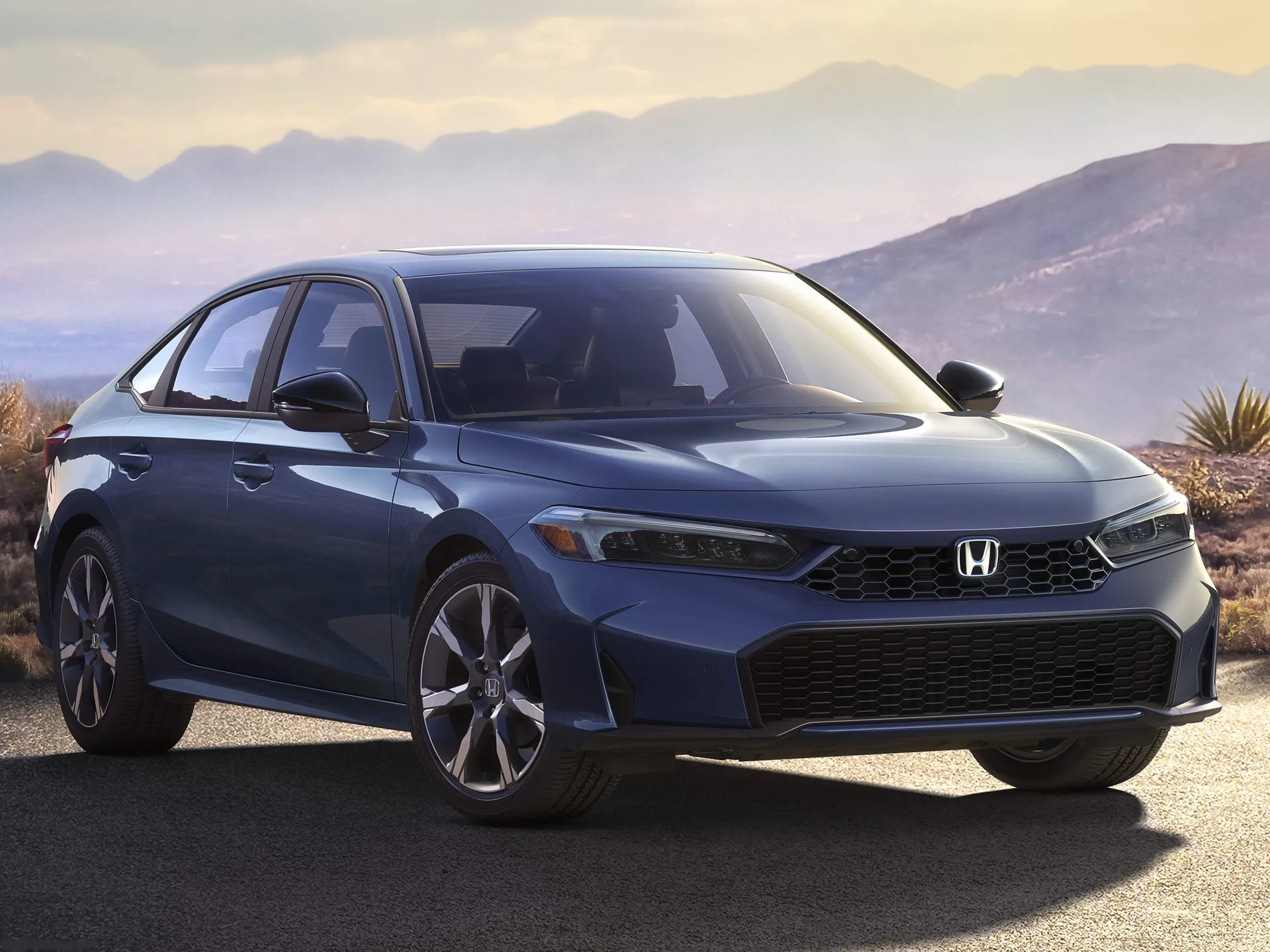
Honda Clarity Fuel Cell
Having identified hydrogen as a potential solution to the environmental issues faced by society, Honda began basic research on fuel cells as early as the late 1980s. In 2002, Honda became the first automaker in the world to receive approval by the U.S. government to sell fuel cell vehicles, and began leasing them in the U.S. and Japan. In 2008, Honda began leasing the FCX Clarity to consumers; it featured a dramatically advanced fuel cell stack, innovative sedan package, and a new dimension of driving feel. In 2016, Honda reached an even greater height with the next evolution of its fuel cell technologies.
The all-new 2017 Honda Clarity Fuel Cell is an even more compelling vehicle that offers greater practicality than previous fuel cell vehicles. The Clarity Fuel Cell can be used on a daily basis just like a traditional gaspowered vehicle, but provides much more driving enjoyment and zero emissions. Honda is stepping into a new era with the aim of popularizing fuel cell vehicles. Honda also wants to create a movement towards a hydrogen society. Honda has already built an array of hydrogen technologies - technologies to "produce, use and connect" hydrogen - through the Clarity Fuel Cell project and the development of hydrogen stations and external power export devises.
Honda continues to take on challenges to open the door to greater possibilities of hydrogen, to harness the joy of free mobility and realize a rich, sustainable society. On the way to realizing "the Joy and Freedom of Mobility" and "a Sustainable Society where People Can Enjoy Life," Honda is committed to advancing hydrogen technologies leading to a fully-fledged hydrogen society.
The Clarity Fuel Cell is the first in the Clarity series of all-new electrified vehicles from Honda. Built on a common platform, the Clarity series also will include the Clarity Electric (BEV) and Clarity Plug-in Hybrid (PHEV) as Honda works to evolve and popularize electrified vehicles. Every electric vehicle on the market today has at least one barrier to overcome, whether size, affordability, range or recharging/refueling. The strategy behind the Clarity series addresses these issues through its spacious five-passenger cabin, focus on increased affordability, and expanding infrastructure. To achieve mass-market appeal, Hondas product development pathway is aimed toward future full-scale mass production, rather than focused on a narrow group of users. To that end, Honda selected the "3-in-1 concept" that mounts the fuel cell powertrain under the hood like a conventional gasoline or hybrid vehicle, and realizes BEV and PHEV variants using the same platform, making Clarity the first vehicle in the industry to offer fuel cell, BEV and PHEV powertrain options on a single platform. This shared platform strategy will enable Honda to respond to infrastructure and market developments, provide customers nationwide with an ultra-low carbon vehicle that meets their lifestyle needs, and takes Honda toward higher volume sales of advanced powertrain products that will help to realize our dream for an ultra-low carbon mobility future.
The Clarity Electric will be geared toward commuters who desire all-electric performance in a spacious, comfortable and premium-contented five-passenger sedan that fits their daily driving needs.
Honda views fuel cells as the ultimate zero-emissions vehicle technology and the Clarity Fuel Cell offers early adopters the latest technology to be on the forefront of "what is next" while enjoying the convenience of short refueling times and the flexibility and confidence of a 366 mile EPA range rating, the longest of any zero-emissions vehicle.
The Clarity Plug-In hybrid will be the volume leader of the series, marketed in all 50 states, and having an anticipated all-electric driving range rating in excess of 40 miles and a total driving range comparable to that of a traditional gasoline-powered sedan.
What Honda Is Doing to Address Environmental Issues
Honda has long been at the forefront of research on environmental issues facing the automobile industry. For example, Honda was the first manufacturer to meet the Clean Air Act of 1972 without the use of a catalytic converter by developing the CVCC engine. Since then, Honda has introduced numerous cars and technologies to further reduce emissions.
In its fight against global warming, Honda is working to minimize CO2 emissions by pursuing greater thermal efficiency for engines, developing hybrid systems, and other fuel efficiency-improving technologies.
In addition to these efforts, Honda is also working to curb societys dependence on fossil fuels such as petroleum, one of the largest sources of harmful emissions. To this end, Honda is investing in the research and development of next-generation clean vehicles. They include plug-in hybrids (PHEVs) that minimize the use of gasoline, battery electric vehicles (BEVs) that use electric power instead of fossil-derived energy and fuel cell vehicles (FCVs) that generate electricity from hydrogen.
As emerging nations undergo a motorization boom and vehicle production increases around the world, the international society is imposing stricter requirements on environmental performance of vehicles every year. One projection based on the Energy Technology Perspectives (ETP) published by the International Energy Agency (IEA) forecasts the global CO2 emissions from transportation vehicles to nearly double from the 2010 level by 2050 due to growth in emerging nations, among others, and sets a target of reducing at least 60 percent of the CO2 emissions anticipated in 2050.
In light of this, the auto industry must introduce various types of next-generation clean vehicles fueled by diverse energy sources like FCVs, BEVs and PHEVs, to curb CO2 emissions.
Honda is working to develop various next-generation clean vehicles meeting the needs and usage requirements of todays consumers in order to reduce global CO2 emissions.
PHEVs drive like an electric vehicle when traveling short distance in cities, but behave like a conventional hybrid vehicle when the battery level drops or on expressways for example, thereby minimizing the use of gasoline. On the other hand, BEVs and FCVs are so-called "zero emission cars" that do not emit CO2 while driving.
Battery capacity has a direct impact on driving range. For short-distance driving, Honda believes BEVs with relatively small battery capacities offer the best solution in terms of cost to the customer and the environment.
Honda believes FCVs are the ultimate clean vehicles as they release no CO2 emissions. This is because they generate electricity from hydrogen energy while driving. Furthermore, hydrogen vehicles refuel quickly and offer similar range to a gasoline engine vehicle.
FCVs Generate Electricity from Hydrogen As They Drive
FCVs carry a hydrogen tank instead of a gasoline tank found on conventional vehicles, and generate electricity inside the fuel cells as the hydrogen reacts with the oxygen contained in the air. This electricity, generated within the vehicle, drives the motor to move the vehicle with no CO2 or other harmful emissions being generated. FCVs achieve ultimate clean performance as water is the only byproduct of electricity generation in the vehicle.
Virtuous Circle-type Energy Not Dependent on Fossil Fuel
Hydrogen does not exist independently on Earth, but is contained in various substances from which it can be extracted. Hydrogen can be produced from natural gas and biomass, and also through water electrolysis using electricity generated from renewable energy such as solar, wind and hydro power.
As hydrogen can be produced in many different ways reflecting the geographical characteristics and unique weather of each region, society can look forward to establishing an ideal hydrogen cycle that is not dependent on fossil fuel.
Hydrogen Energy Can Be Produced, Transported and Stored, ready for conversion into Electricity When Needed
Although electricity can be stored in batteries, storing a large amount of electricity is difficult. Normally electricity is generated at power plants and supplied continuously to cover anticipated usage; however, once hydrogen is produced, it can be compressed or liquefied and transported or stored in tanks. The stored hydrogen can then be converted to electricity through fuel cells to produce the necessary amount of electricity at the location where it is required. In other words, hydrogen energy offers much more flexibility in the way it can be used.
Honda Proprietary Technologies to Create a Hydrogen-based Society
Hydrogen for vehicle use can be produced using renewable energy and then transported or stored. Honda saw opportunities in these characteristics and built unique hydrogen technologies to realize a hydrogen society. Hydrogen is produced at a space-saving, easy-to-install smart hydrogen station using solar power and other methods. This hydrogen is then available to fuel FCVs that will use it to generate electricity as they drive. These FCVs can also function as small power stations, or mobile power supplies, and connect and supply electricity to portable external power export devices, homes or facilities. FCVs expand the possibilities of hydrogen energy, as they can also be utilized as an emergency power source in natural disasters.
Smaller, Higher-performance Fuel Cell Stacks
Honda began basic research on fuel cells in the late 1980s, which progressed to research on fuel cell vehicles a decade later. In the first prototype, based on an Odyssey minivan, the fuel cell system occupied most of the cabin space, barely leaving room for the driver. More research followed and in 1999, Honda premiered a test vehicle carrying a fuel cell stack (FC stack) under the floor. After that, Honda worked on improving the performance of fuel cells by increasing their efficiency output and in 2003 released the Honda FC Stack capable of starting at -20 degrees celsius. Making the fuel cell smaller while achieving these performance improvements remained a constant issue and Honda took on the challenge of meeting the mutually exclusive requirements of higher output and smaller size. The previous model FCX Clarity, a four-passenger sedan released in 2008, presented one such solution. It carried a dramatically smaller fuel cell stack which was able to be packaged within the center tunnel instead of under the floor. With the new Clarity Fuel Cell, Honda successfully reduced the size of the fuel cell stack by 33 percent (compared to the previous model) by increasing the output density.
Integrated Fuel Cell Powertrain Expands Package Flexibility
From the early development stages, Honda aimed at a creating an attractive sedan offering a traditional five-passenger pacakge. In the Honda Clarity Fuel Cell, this was accomplished by not only making the fuel cell stack smaller, but also integrating it with the FCVCU and drive unit. The result is the only fuel cell sedan with the powertrain packaged under the front hood. This gives the Clarity Fuel Cell greater packaging flexibility, opening the way to many possible variants in the future.
Low & Wide Sedan Form Allowing Comfortable Room for Five People
With Clarity, Honda aimed to achieve a balanced package meeting various situations from day-to-day driving to long-distance travel. The fuel cell stack, which was placed in the center tunnel in the previous model, was made significantly smaller and housed under the front hood, thereby achieving a highly efficient layout and larger cabin space. The benefits include the low roof line and driving position typical of a sedan, interior space that can comfortably accommodate five adults, and ample luggage space.
Driving Position Typical of a Sedan and Spacious Rear Seat
Carrying the battery under the front seat, the Clarity Fuel Cell achieves the driving position of a traditional sedan by reducing the height difference between the pedal and hip point through innovative battery shape and body structure. The rear seat boasts a tandem distance equivalent to that of the Accord Hybrid, more shoulder room than a Lexus LS, and ample leg room achieved by optimized front seatback shape and layout. The result is a spacious rear passenger area that can seat three people comfortably.
Luggage Space Accommodates Three Golf Bags
The double hydrogen tank configuration and multi-link rear suspension enabled the positioning of both tanks forward and low in the vehicle. Coupled with the high-deck rear styling, this resulted in 14.4 cu ft of luggage space, large enough for three 9.5" golf bags, and similar to the 2017 Accord Hybrid.
The Entire Fuel Cell Powertrain Now Fits Under the Front Hood Improving Design Flexibility
The powertrain, comprised of the fuel cell stack and drive unit (equivalent to the engine and transmission in a conventional ICE-powered vehicle), now fits under the front hood. This permits sharing of the same package designs with conventional models and boosts mass producability, as existing production lines can be used.
Same Compact Layout of Generation/Drive Functions Expected from a V6 Powertrain
The generation functions including the fuel cell stack and hydrogen/air supply systems, and distribution/drive functions such as the FCVCU and drive motor, are consolidated in a small space. Basic dimensions including the length, width and height are equivalent to that of a typical V6 powertrain.
Substantially More Compact Fuel Cell Stack Achieved by 1.5 Times Higher Generation Performance Per Cell
Greater gas diffusion resulted in 1.5 times higher generation performance per cell and 60 percent higher volume output density. This allowed us to reduce the number of cells by 30 percent and, by also taking advantage of the thinner cell unit design, made the stack 33 percent more compact (compared to previous model).
Improved Water Circulation within the MEA to achieve higher Electricity Generation Stability
The fuel cell stack produces water on the generation surface of the air (oxygen) electrode side through chemical reaction of hydrogen and oxygen. Draining this water is important because if it stays on the generation surface, the air passage narrows and the electricity generation efficiency drops. On the other hand, the electrolytic membrane that lets the hydrogen ions pass to the air electrode side exhibits higher transmission characteristics (generation efficiency) as it absorbs more moisture. Accordingly, Honda improved the Membrane Electrode Assembly (MEA), which is the core part of the cell, and adopted a hydrogen/air counterflow design for the Clarity Fuel Cell. As a result, the humidity distribution of the generation surface becomes uniform, while the internal circulation volume of generated water is controlled accurately to maintain an optimal humidification level of the MEA according to the generation load. The result is improved electricity generation stability throughout the low to high-load ranges.
20 percent Thinner Cells, Plus Higher Electricity generation Performance through Improved Gas Diffusion
The cell structure within the fuel cell is made of a MEA (polymer-based laminated type electrolytic membrane) sandwiched by hydrogen/air electrode layers and gas diffusion layers, with separators having hydrogen/air and coolant flow path. Among other original technologies, Honda's fuel cell stacks adopt a wave-type (shape) gas flow path that achieves improved gas diffusion, as well as a cooling structure where two MEAs and three separators constitute one two-cell unit, to achieve size reduction. For the Honda Clarity Fuel Cell, this structure was refined further. Improved MEAs, counterflowing gases and more uniform water distribution, which in turn allowed for shallower gas flow path and resulted in 20 percent slimmer cells with a thickness of just 1 mm per cell. The thinner separators not only made the gas flow path shallower, but narrower as well, allowing gas to diffuse better. The result is dramatically higher electricity generation performance per cell.
Further Improvement of Electricity generation Performance at Low Temps
The smaller fuel cell stack led to substantially lower thermal capacity, and the MEA improvement resulted in lower cell resistance. As a result, the time to reach 50 percent output after start was roughly halved in a low-temperature environment.
Cell Retention Structure Achieving Four Times Higher Impact Resistance
With the Clarity Fuel Cell, packaging the fuel cell stack under the front hood necesitates a higher impact resistance in a forward collision compared to the previous model, with the stack located in the center tunnel. Accordingly, a fastening bar was added to connect the left and right end plates of the fuel cell stack. The convex shape of the cells and matching concave cross-section of the fastening bar, prevent the cells from shifting upon impact and causing a hydrogen leak.
Improved Productivity and Lower Cost through Higher Material Utilization & Efficient Production
The use of resin frames (other than for the electricity generation part) and adoption of rectangular MEAs allowed for continuous coating of catalyst and fewer pieces wasted, reducing the usage of expensive materials by approximately 40 percent compared to the previous model. This contributes to the fuel cell stack production improvement and reducing cost. Adoption of resin frames also helped achieve an optimal gas distribution structure for both the hydrogen and air electrodes.
Dramatically Improved Productivity from Continuous Printing of Gas Diffusion Layers and Electrode Layers
The rectangular shaped electricity generation area of the MEA makes the cutting process of the gas diffusion layers and electrode layers simpler, which in turn improves productivity substantially. The hydrogen electrode is composed of a gas diffusion layer, a microporous layer and an electrode layer printed in succession for increased production speed. This eliminates the piece-by-piece cutting process, reducing man-hours, while substantially improving material utilization. All these contribute to a significant cost reduction.
Air (Oxygen) Supply System Adopting Electric Turbo Air Compressor also Contributes to Reduced Fuel Cell Stack Size
To obtain a lot of power from a more compact fuel cell stack, Honda needed to increase the amount of air supply. To achieve this, a new electric turbo air compressor was developed. The design objectives were a high air pressure, high flow rate, and low noise in a lightweight, compact body. The air compressor supplies about 1.7 times higher pressure than the previous model, contributing to improved electricity generation performance of the fuel cell stack.
Coaxial 2-stage Air Compression Process Delivers High Pressure in a Compact Body
Two impellers of different shapes share the same axis to provide a 2-stage compression process. The result is a high flow rate and high pressure from a compact body. The adoption of air bearings allows for rotational speeds of up to 100,000 rpm.
Low Noise Compressor Makes the System Smaller and Lighter
The electric turbo air compressor produces low sound pressure within a high frequency range that only requires a simple silencer, approximately 60 percent smaller. This combines with a roughly 40 percent smaller compressor body for an overall smaller and lighter air supply system.
Significantly More Compact and Lighter Hydrogen Supply System With Two Gas Injectors
Hydrogen in the tank, which has been compressed to 10,000 psi (70MPa), is decompressed to approximately 30 psi and supplied to the fuel cell stack. On the previous model, the hydrogen pressure and flow rate were adjusted using a regulator relief valve and ejector. This is replaced by two gas injectors allowing the accurate control of both pressure and flow rate. The result is a roughly 40 percent reduction in the volume of the hydrogen supply system.
Newly Developed Fuel Cell Voltage Control Unit (FCVCU) Makes It Easier to Position the Fuel Cell Powertrain Under the Front Hood
On the previous model, the motor was driven at a voltage of up to 330 V from the fuel cell stack and lithium ion battery. On the Clarity Fuel Cell, the newly developed FCVCU boosts this voltage to 500 V max., allowing 30 percent motor output improvement while reducing the number of cells in the fuel cell stack. The motor-PCU has been rotated 90 degrees to bring height down by 34 percent. In the space thus made available, the fuel cell stack now resides. The FCVCU itself adopts a slim design of less than 4-inches thick. Combined, all these changes allowed the engineers to efficiently package the fuel cell powertrain under the front hood.
Smaller, Slimmer FCVCU Designed for Ultimate Performance
This is the world's first FCVCU for a mass-production vehicle that adopts a Silicon Carbide Intelligent Power Module (SiC-IPM), and it also incorporates 4-phase interleaved control and magnetic coupled inductor. As a result, the FCVCU is approximately 40 percent smaller than a comparable unit.
World's First SiC-IPM for Mass-production Vehicles
The power semiconductor that controls the system s voltage adopts silicon carbide (SiC) instead of silicon (Si), thus allowing a 4-time higher switching frequency. At higher operating temperatures, silicon carbide offers higher performance with matchingly low heat losses, allowing for a smaller heat sink, and thus more compact overall dimensions.
Smaller Capacitor Made Possible by 4-phase Interleaved Control
The 4-phase drive, based on four SiC-IPM control phases staggered by 90 degrees, minimizes the ripple current by cancelling the current fluctuations generated by switching. This reduces the capacitance requirement for smoothing of ripple current, so a smaller capacitor is used on the primary side.
A magnetic coupling inductor increases voltage as the magnetic density of the coil changes. The integrated inductor, consisting of two inductors placed so that the coils are wound in the opposite direction, cancels out direct-current magnetic fluxes to reduce the ripple current. The design also made the inductor smaller.
Higher-Output Lithium-Ion Battery Neatly Accommodated Beneath the Front Seat
The lightweight, compact lithium-ion battery offers excellent assist at takeoff and during acceleration, along with superb recovery of deceleration energy. The increased output (1.5 times higher than the previous model) is the result of increasing the cell volume by 10 percent and the number of cells by 20 percent. The battery is housed in a sealed case designed so that it can be installed under the floor beneath the front seats to maximize legroom of both the front and rear passengers.
High-pressure Hydrogen Tanks Achieve Higher Packaging Efficiency and Greater Storage Capacity
The Clarity Fuel Cell features the world's first application of aluminum-lined hydrogen tanks meeting the Global Technical Regulation No. 13 and achieve zero hydrogen permeation at a charge pressure of 10,000 psi (70 MPa). In order to maximize overall package efficiency, two tanks of different sizes are used while increasing total hydrogen storage capacity by 39 percent.
Design that Protects Against Hydrogen Leaks and High Voltage Currents
The Honda Clarity Fuel Cell was developed to be comparable to a traditional vehicle in all ways, including safety performance. To achieve this, Honda incorporated design considerations to help protect against issues stemming from high pressure hydrogen storage and high-voltage currents generated by the FC and battery pack. To address issues resulting from high pressure hydrogen storage, the first step was to ensure hydrogen does not leak under possible stresses. If a leak does occur, hydrogen sensors at various locations make sure the shut-off valve in the hydrogen tank cuts the hydrogen supply off. In the event of a collision, a signal from the airbag sensor orders the shutting down of the hydrogen supply and the high-voltage circuits. The components that make up the hydrogen system are fully enclosed, and any leaked hydrogen is released away from the vehicle through a duct to the outside.
Powerful, Stately Look, Combined with Graceful, Futuristic Beauty
In styling its ultimate clean car, Honda wanted to propose exterior design that represented the dawn of a new era. To satisfy the FCV customer's desire to own a status symbol, the company focused on embodying stately proportions and a futuristic, beautiful sedan form. The graceful one-motion silhouette of the cabin, complete with tinted glass, converges from three directions at the front and rear to express a spacious, bright space that looks and feels like you are inside a glass dome canopy. The low, wide body is accentuated by the 18-inch aluminum wheels and large rear spoiler, adding sportiness to the Clarity. It was the integration of two key themes - stateliness and gracefulness - that signifies this stylish sedan of a new era.
Sharp, Futuristic Full-LED Exterior Lamps
The front of the Clarity is decorated with futuristic full-LED headlights (in-line type), each consisting of nine lamps including three high-beam and six low-beam, with wide L-shaped position lamps/DRL (daytime running lights) generating maximum attention. The linear front turn signal indicator lamps add to the intrepid look. At the rear, the wide signature rear combination lamps evoke emotion as the thick light-conducting lenses of the tail lamps create a sense of intimacy as if a big block of glass was illuminated with indirect light. The rear signal lamps provide deep light emission through the combination of line and surface light emissions.
Functional, Stylish 18-inch Aluminum Wheels
The 18-inch aluminum wheels feature spokes that enhance the dynamic look as they rotate and is combined with a lightweight and aerodynamic fin-shaped wheel cap. The plastic cap is lighter, and designed to radiate the heat from the brakes while achieving excellent aerodynamic performance, adding to the long cruising capabilties of the car. The futuristic wheel is a success story of how two different materials can be combined effectively.
Aerodynamic, Wide, Beautiful Exterior Style
The aerodynamic goal of the Clarity Fuel Cell was to maximize driving range, without compromising the spacious sedan package or forward-thinking styling. To this end, aerodynamic effect was a key consideration from the initial stages of styling. The idea was to reduce the vertical vortexes of air generated in the rear of the body - a phenomenon specific to sedans. On a typical sedan, the flow of air along the top face of the cabin to the trunk interacts with the flow of air on the side faces of the cabin. Depending on the velocities and directions, large vertical vortexes are generated in the rear of the body which is the main cause of air resistance, ultimately impacting fuel efficiency. With the Clarity Fuel Cell, these vertical vortexes were reduced by optimizing the body shape from the roof to the top of the trunk including the large rear spoiler, as well as the side face of the cabin, without sacrificing interior space. This allowed minimization of the air speed difference between the top and side surfaces of the body. The effort resulted in a graceful exterior styling that demonstrates excellent aerodynamic performance while maintaining a spacious interior.
The underfloor is entirely covered to let the air flow smoothly. The radiator grille has a duct structure inside for efficient cooling of the radiator, which helps minimize the opening area and thereby meet the aerodynamic requirement without compromising on cooling performance.
Air is guided to the front inner fender from under the front bumper to create an air curtain on the outer side of the front tire, eliminating air disturbances along the front tire wheel housing.
The top of the tire is covered with the body side panel to eliminate air disturbances along the rear tire wheel housing. This helps air flow smoothly to the rear and also contributes to the linear styling of the rear.
The Honda Clarity Fuel Cell is the world's first four-door sedan with an air curtain duct below the rear door. Air is guided through the duct rectifing disturbed air along the rear wheel housing to achieve aerodynamic effect. This is another example of an unprecedented marriage of functionality and styling.
The roof side is laser brazed to eliminate the familiar roof molding and thereby reduce the height gap, which increases the seamless look of the roof.
The side face of the tail lamp is stepped to prevent air from going around the side of the lamp and flowing to the rear.
Color design of the Clarity Fuel Cell began with the concept of a clean car with the look and feel of a luxury car, and was further refined by adding stronger gradation to emphasize the beauty of form. Instead of a standard clear top coat, a red tinted clear coat with high chromaticity was adopted to express vivid color and strong gradation. The resulting color is as deep as a gem polished carefully from raw stone.
Smart Clear Wiper with Built-in Washer Nozzle for Controlled Spraying
The newly developed wiper adopts an innovative mechanism that significantly improves the washing efficiency of the front windshield to ensure a clear view. The built-in washer nozzle at the supporting base of the wiper arm blade allows washer fluid to be sprayed efficiently near the blade. Furthermore, the spray direction and timing are controlled according to the operating direction of the wiper. As the washer fluid is wiped off immediately after spraying, the view is never obstructed by the washer fluid. What's more, how much the washer fluid will be sprayed is controlled according to the ambient temperature and vehicle speed, which achieves excellent washing efficiency while realizing water savings of approximately 50 percent.
To make traveling in the Clarity Fuel Cell an even more comfortable experience, Honda created a space where occupants can unwind and relax. The horizontal line that extends linearly and firmly from the center of the instrument panel to the right and left doors is the basis of the wide interior that feels more spacious than its dimensions. Furthermore, areas that are frequently touched and seen are carefully finished using materials that look inviting and feel soft and comfortable.
Instrument and Door Panel Pad Made of Ultrasuede®
The middle pad of the instrument panel and door trim adopt Ultrasuede® made of recycled polyester yarn. The quality material covers wide areas of the interior and envelops its occupants in comfort.
The generous decorative panel features dynamic rosewood grains throughout. The surface has an irregular finish corresponding to grain patterns to create the warmness of wood.
The seats use firm genuine leather for the center, and soft Prime Smooth for the sides. Elaborate upholstering and stitching of the two materials speak volumes about the quality of the seat construction and attention to detail.
Welcoming, User-Friendly Comfort Features
The fuel cell stack, which was built into the center console on the previous model, is stored under the front hood to achieve significant space savings. The high-deck console of the Honda Clarity Fuel Cell makes effective use of the resulting space below. The compact switch-type shift-by-wire control leaves large utility space under the console for easier access and operation. Other welcoming rear seat features like A/C vents, 12-volt power outlet and smartphone pockets in both front seat backs help make the interior of the Clarity a pleasant and inviting space for passengers.
Designers chose interior colors to help accentuate the simple form and texture of materials in the Clarity Fuel Cell. The options include a clean, attractive platinum gray and a chic, luxurious black. Both mono-tone color schemes create a sophisticated, tranquil space.
Digital Graphic Meters Intuitively Communicate How the FCV Is Driving
The graphical LCD meter panel with silver-frame zoning lets the driver instantly recognize various information, providing a human-machine interface that allows for intuitive operation. The speed indicator, fuel cell generation monitor and power/charge meter are graphically rendered at the center of the LCD. At the left and right of the meter panel are the high-voltage battery meter and fuel meter. The clear zoning allows information to be recognized instantly while driving. The driver can switch between the audio, navigation and other information screens using the steering-wheel mounted switches.
The monitor visually informs the driver of the generation level of the fuel cell. The size of the ball at the center changes according to the generation level.
The drive output and regenerative power of the motor are shown along the arc. For the drive output, the power source currently used for drivinghigh voltage battery only, high-voltage battery + hydrogen, or hydrogen only - is indicated by the needle that clearly shows the constantly changing source of power.
HondaLink® with Hands-free Smartphone Link
The 8-inch high-definition, wide-angle electrostatic touch-panel display is easy to see and supports Apple CarPlay™ and Android Auto™ allowing for compatible smartphones connected via a USB cable to be displayed and operated more securely and easily. The driver can also make calls from the address book displayed on the meter panel, change the audio source and select preset channels using the steering-wheel mounted switches. Moreover, the HondaLink® function allows the driver to get hydrogen station location and operating information. The energy management screen shows the hydrogen usage in real time.
Head-up Display with Useful Driving Information Projected on the Front Windshield
The head-up display projects information on the front windshield to reduce eye movements of the driver. Useful information such as road signs, current speed limit and route guidance are projected in a simple, easy-to-understand manner. The display brightness is automatically adjusted according to ambient light, and the display position can be adjusted as desired.
Advanced Functions Developed under the Concept of "Connected E-machine"
The Clarity Fuel Cell provides advanced functions that connect the car to its users whether near or far from the car. Simply download the HondaLink® app to your smartphone, and you can connect to your Honda Clarity Fuel Cell securely and comfortably.
HondaLink FCV Telematics App to Connect to the Car Remotely
The "Connect to Car" feature of the HondaLink app lets the owner display the remaining hydrogen level, drivable distance, drivable days and other vehicle information on a smartphone. With the app, the A/C can be turned on/off or set up to turn on at a specified time.
Total Air Quality Management Keeps Cabin Air Cleaner Than the Outside
The Clarity Fuel Cell adopts a number of technologies to improve air quality under the concept of Total Air Quality Management, where the goal is not only to consider the environment but also to support the comfort and well-being of users while traveling in the car.
The air quality sensor detects NOx, CO2 and other harmful substances in the outside air and if necessary, the system automatically switches to the internal recirculation mode to prevent harmful gas from entering the cabin.
A/C Filter (Allergen-free High-performance Deodorizing Filter)
The air conditioning system filter has a deodorizing function designed to prevent the smell of exhaust gas, while the anti-allergic agent permeated into the filter helps keep allergen activity under control.
Instrument Panel (Plasma Cluster® Technology)
Whenever the climate control fan is on, ions are generated (by the ion generator located within the IP) to break down/eliminate the bacteria suspended in air, to prevent bacterial growth and eliminate odor. The dedicated round-shaped, silver ringed air outlet located between the two air outlets above the navigation system display screen.
Floor Mat/Area Around Battery Cooling Vent (TRIPLE FRESH®)
The functional fiber adsorbs and breaks down formaldehydes and other sources smell such as pets or cigarettes.
Energy-saving A/C System Utilizes Exhaust Heat from the Fuel Cell System
On the previous model, cabin heating depended solely on a water heater that generated warm air by heating water with electricity. For the Clarity Fuel Cell, a new FCV A/C system was developed that utilizes exhaust heat from the fuel cell system. When the fuel cell stack is cold, warm water is supplied to the A/C from the water heater as before; however, once the fuel cell stack reaches operating temperature, warm water is supplied to the A/C from the fuel cell stack. This provides a cold weather energy savings of approximately 20 percent.
Environmentally Responsible Materials Cover Nearly 80 Percent of Interior Surfaces
Honda worked to further reduce carbon emissions by adopting plant-derived green materials, recycled materials, and aluminum dies for the Clarity interior. All plant-based materials are made of oils extracted from non-edible parts of plants, so as not to affect food supply. Prime Smooth® linings on the sides of the seat cover are made with bio-fibers. The genuine leather used in the main area of the seats has been confirmed to originate from cows used for food.
Prime Smooth® used for the roof lining and sunvisor, and also for the linings of synthetic leathers covering the seat and armrest, is woven with fibers that are made of oils extracted from non-edible materials.
Ultrasuede®, the soft pad cover material used for the instrument panel and front/rear door linings, is made of recycled polyester yarn.
Aluminum dies are used to make the rear tray, pillar garnishes, etc., in order to reduce the power consumption from metal processing and thereby reduce CO 2 emissions in the manufacturing process.
Linear, Powerful and Quiet Acceleration that Redefines the Meaning of Luxury
The exhilarating driving experience expected from a motor-drive mechanism was taken to the next level. The Clarity Fuel Cell's motor, which boasts higher output, produces maximum torque right from the start and accelerates the car powerfully and smoothly without needing to shift. Although full-throttle acceleration performance of the Honda Clarity Fuel Cell is similar to that of a mid-size sedan, immediate response to accelerator inputs and the corresponding feeling of acceleration reaches beyond the realm of internal combustion engine-powered vehicles in day-to-day driving situations.
SPORT Mode for More Direct, Responsive Driving
The newly adopted mode selector switch creates two different driving experiences: NORMAL mode emphasizes ease of handling in day-to-day driving, while SPORT mode makes the motor respond quicker to accelerator pedal operation to create a direct acceleration feel. In SPORT mode, motor regeneration response is also quicker when the accelerator pedal is released to affect the engine braking and to let the driver enjoy a sportier driving experience.
Evolutionary Drive Motor Achieves Higher Output, Higher Torque and Higher Rotational Speed
As the new FCVCU increased the maximum drive voltage of the motor from 330 V to 500 V and increased the stator stack size by 10 percent, the maximum motor output increased 30 percent to 174 hp (130 kW), while maximum torque increased 17 percent to 221 lb-ft (300 N•m).
The motor housing has additional ribs to increase rigidity, and the skewed rotor is split in four instead of two to reduce torque fluctuations. The stator is also set up to reduce vibration, making the motor quieter while producing higher output and motor speed. The result is a truly quiet, ultra-smooth driving experience.
366 Mile Range Achieved by Intelligent Energy Management and Lower Road Load
Honda wanted to improve the fuel efficiency of the Clarity Fuel Cell to make it easy to use in everyday situations like running errands but also driving long distance. By making the fuel cell powertrain more efficient and implementing intelligent energy management, while also minimizing road load (running resistance), Honda was able to reduce hydrogen consumption. Combined with an increase in the amount of hydrogen the car can carry, this helped push the driving distance per hydrogen charge dramatically higherto an EPA range rating of 366 miles, up 58 percent over the previous model.
Energy Management Maximizes Electricity Generation Efficiency
The amount of electricity the motor needs varies depending on the driving condition. If the electricity required by the motor is outside the efficient operating range of the fuel cell, fuel efficiency will be reduced. That is why Honda developed intelligent energy management control logic to keep the fuel cell in the operating range associated with the best generation efficiency. How the vehicle will be driven is predicted (using past data on driving patterns) and if the predicted pattern indicates that the battery will likely be charged by regenerated energy, the electricity stored in the battery is actively used. This prevents inefficient generation fluctuations of the fuel cell stack and improves the fuel efficiency even in driving situations where the vehicle accelerates and decelerates repeatedly.
In an effort to improve the aerodynamic performance of the Clarity Fuel Cell, Honda engineers began at the initial stages of exterior styling, resulting in an 8 percent reduction of the CD value compared to the previous model. Other improvements include the 235-mm tire with low rolling resistance despite its width, and a brake caliper designed to produce substantially lower running resistance. These are only a few examples of how careful engineering achieved dramatically lower road load.
Similar to Gasoline Refueling, Hydrogen "Charging" Takes Less Than Five Minutes
The Clarity Fuel Cell meets the charge standard of 10,000 psi (70 MPa). One hydrogen charge takes only about three to five minutes, which makes the Honda Clarity Fuel Cell as easy to refuel as any traditional gasoline vehicle.
Smooth, Flat, Stable Ride Facilitated by Low Center of Gravity and Lightweight Suspension
Carrying the hydrogen tanks, battery and other heavy items low in the vehicle, the Clarity Fuel Cell has a center of gravity approximately four inches lower than the Accord Hybrid. Combined with the low-roll, lightweight, low-friction suspension and amplitude-adaptive dampers, this helps the Clarity offer a smooth and flat ride. Honda also adopted a rear suspension boasting high alignment rigidity, dual-pinion assist EPS creating an excellent steering feel, and a precision-control electric servo braking system. These elements combine to endow the Clarity Fuel Cell with direct handling and supple ride comparable to, or better than, a conventional premium sedan.
Exceptional Ride Comfort and Steering Stability via Reduction of Suspension Unsprung Mass
The front strut suspension is structurally lighter than other types of suspension to begin with, while the forged aluminum lower arm is 30 percent lighter than a conventional steel-pressed arm, and the hollow knuckle is 10 percent lighter than conventional solid knuckles. All of the arms of the rear multi-link suspension are forged aluminum instead of steel as on the previous model, to achieve a 40 percent weight reduction. The tie-rod, manufactured by the world's first high-strength aluminum forging method, is 20 percent lighter than a conventional aluminum-forged type.
World's First Hollow Die-cast Aluminum Front Subframe for Automobiles
The subframe of the Honda Clarity Fuel Cell is die-cast from aluminum as one piece with a hollow interior, instead of the traditional welding together multiple members, to achieve a substantial weight saving of 20 percent versus conventional manufacturing methods. The result is one of the world's lightest aluminum subframes. The innovative aluminum die-casting method draws on technologies Honda has built through its experience with motorcycles which creates a seamless structure with hollow, closed sections that allows for thickness reduction. Since no welding flange is required, the resulting subframe is very rigid and light.
Lightweight, High-Rigidity Rear Subframe with Hydrogen Tank Retention Structures
The new high-rigidity aluminum rear subframe was developed to carry the heavy hydrogen tanks at positions closer to the longitudinal center of the vehicle and also to withstand the higher suspension inputs given the heavier vehicle. The squeeze-cast subframe is 27 percent lighter than the rear subframe on the previous model, while ensuring high rigidity and strength. Also, the rear beam is bent to hold the hydrogen tanks at low positions, which helps increase the trunk volume and lower the center of gravity. Stability is improved significantly by the rigid stiffeners that double as hydrogen tank protectors.
Substantially Lighter, but More Rigid and Stronger Exterior Aluminum Parts
With the Clarity Fuel Cell, Honda worked to reduce the weight of the body structure while also achieving exhilarating driving feel, long driving range, high interior comfort and superior crash safety performance, among others. To accomplish these goals, super-high-tensile materials (980-MPa and 1500-MPa class) were used for approximately 40 percent of the platform in addition to lightweight aluminum exterior parts and advanced composite materials. Thanks to these efforts, Clarity has a next-generation steel body that absorbs more impact, yet is approximately 15 percent lighter than a traditional mid-size sedan. Also, a more rigid body leads to greater handling stability.
World's First GFRP Hybrid-formed Rear Bumper Beam
Honda developed a new rear bumper beam using Glass Fiber Reinforced Plastics (GFRP) which is lighter yet still able to withstand the crash loads under various conditions at low to high speeds. Made by hybrid forming, using layered discontinuous glass fibers and continuous glass fibers, the bumper beam boasts higher molding efficiency, is extremely lightweight, and achieves high structural strength.
The front bulkhead is made of plastic, instead of commonly chosen steel, while the front bulkhead upper welded to the body is made of aluminum. This structure is an efficient way to ensure rigidity and reduce weight.
Extensive Use of High-λ 980-MPa Class High-tensile Material
Traditional 980-MPa class high-tensile materials were difficult to form and thus used only for members of simple section shapes such as front pillar stiffeners. The Clarity Fuel Cell is the world's first use of high-λ 980-MPa class high-tensile materials - advanced materials offering excellent formability - for automotive parts. The car also expanded the application of 1500-MPa class hot stamped materials. Extensive use of these super-high-tensile materials is the key to the efficient sedan packaging, superior safety performance, and substantial weight reduction.
Extensive Use of Aluminum for Interior and Exterior Parts
A number of exterior parts, including the front hood, fenders, doors and trunk lid, are made of aluminum. By adopting aluminum for the sash and many interior parts, the doors were made substantially lighter. Aluminum is also used for the rear parcel shelf separating the trunk and cabin, and for the rear bulkhead. The front bumper beam and door beam use 7000-series high-strength aluminum alloys.
Excellent Sound Insulation for a Peaceful Driving Experience
As a fuel cell vehicle, the Clarity is inherently quieter than other vehicles as it has no pistons or other reciprocating parts to produce vibration and no combustion noise. However, Honda engineers took quietness to the next level by effective use of sound-absorbing and sound-insulating materials, while also adopting acoustic glass for the front windshield and doors.
Straight-Frame Platform to Accommodate FCV Components
A key to the Clarity development was a dedicated platform able to protect the battery, hydrogen tanks and other components not found in a traditional gas-engine vehicle, while absorbing crash energy efficiently. Specifically, a subframe was developed that can also be used as a crashworthy structure in the rear, and connect the front side frame, front subframe, main frame, rear subframe and rear side frame along a straight line. The resulting structure effectively absorbs crash energy applied from the front and rear, with the battery robustly protected by the strong main frame. The hydrogen tanks are constructed in such a way that, in the event of rear-end crash, they are protected by the rear subframe, while load-path structure in which loads from crash energy are dispersed to the main frame. With the powertrain installed in the front and the battery at the center of the body, the straight layout allows the Clarity platform to be uniquely adapted to multiple electrified vehicles.
Structural Load Paths for Dispersing Crash Load and Efficiently Absorbing Energy
The Clarity Fuel Cell is designed with structural load paths that efficiently disperse crash load in the event of frontal crash, side impact or rear-end crash. Particularly in the case of frontal and rear-end crashes, the subframes are actively used as load paths.
Not only the front side frame and upper member but also the front subframe is used to effectively disperse crash energy. In addition, the linkage bracket located at the rear edge of the front subframe deforms to let the steering gearbox and other components, slide back in a downward slope, to protect the cabin in the event of frontal crash.
The center pillar, floor cross-member and roof cross-member form a strong circular structure that effectively disperses and absorbs crash energy.
The impact absorbing member provided at the rear edge of the rear subframe is effectively crushed to absorb crash energy with a limited stroke.
Honda Sensing Assists Secure, Comfortable Driving
Under the global slogan of "Safety for Everyone," Honda aims to achieve an "Collision-free Society" that promises safe living for every road user. Based on this philosophy, Honda has developed technologies to prevent collisions, crash safety measures to provide protection should a collision occur, and pre-crash safety measures to reduce the damage from a collision if it cannot be avoided. Drawing on the wealth of technologies to detect the outside world that Honda has built in pursuit of safety, Honda Sensing driver assistive technologies are designed to support secure, comfortable driving and are standard on the Honda Clarity Fuel Cell.
Millimeter-wave Radar and Monocular Camera Support Accurate Detection for Secure, Comfortable Driving
This system is comprised of a millimeter-wave radar in the front grille and a monocular camera inside the front windshield glass. The millimeter-wave radar can detect the position and speed not only of a distant target, but also of a pedestrian that does not reflect waves efficiently. The monocular camera can identify the attributes and size of a target as far away as 200 feet forward of the vehicle. Accurate detection functions realized by a combination of these two devices are cooperatively controlled with the brake, steering and other components of the vehicle to provide comprehensive driving assist.