Honda Accord
Crisply styled and aerodynamically efficient, the ninth-generation Honda Accord Sedan and Accord Coupe body designs and engineering features are the most sophisticated in the Accord nameplate's history. Every aspect of the body is tailor-made to improve every aspect of the Accord ownership experience, from more precise ride and handling to a quieter interior environment, along with enhanced visibility and increased fuel efficiency.
The Accord's unit-body uses a large percentage of high-strength steel, which gives the Accord high structural strength for improved ride quality and more precise cornering. The Sedan's body design is bold and decisive, sleek and fluid, while the Coupe body design is rakish, taut and athletic. In both body styles, extensive use of aerodynamic detailing, including expanded use of under-covers, improves the Accord's aerodynamic efficiency, which directly benefits fuel efficiency.
For 2016, development work on the ninth-generation Accord sedan body has centered on increased rear body rigidity in order to significantly improve both ride quality and handling. Particular attention has been paid to increased torsional rigidity with incremental improvements in bending and lateral rigidity as well. New rigidity-enhancing body features for 2016 include:
All 2016 Accord Sedan models also get a new all-aluminum hood, 18 pounds lighter than then steel hood on the 2015 model. For the coupe, further improved ride quality and handling were also targeted, with more rigid front shock tower bar, while taking advantage of the inherently more rigid couple body.
The more rigid body combines with numerous chassis upgrades - including higher performance dampers, retuned electric power steering and, on Touring models, new Amplitude Reactive Dampers and hydraulic subframe bushings - to deliver even more responsive steering and handling together with a more refined ride quality.
The Accord unibody uses a high degree of high-strength, high-tensile steel. For the Accord Sedan, fully 55.8-percent of the body uses high-tensile steel, with 17.2-percent of the steel being ultra-high strength (780, 980 or 1,500 megapascals). This contributes to higher body rigidity and reduced weight, which directly benefits ride and handling, interior quietness, performance and efficiency and long-term durability.
All 2016 Accord Sedans get a new all-aluminum hood, shaving approximately 18 pounds of weight compared with the steel hood it replaces. Taking weight out of the front end in this way contributed to improved handling feel and response.
For 2016, improved aerodynamic performance was an important development theme, with particular emphasis on drag reduction. Development work centered on how to further smoothen the flow of air both under and around the sides of the body.
Accord Sedan and Coupe models have under-body aerodynamic covers in front of the engine/transmission assembly and rear wheels and trunk. Accord V-6 models also have two more covers under the driver's and front passenger's floor areas. In addition, ground clearance is purposefully lowest just in front of the rear wheels, causing a low-pressure area in between the wheels. This low-pressure area pulls the airflow around the rear wheels instead of across them. Although seemingly small, the details add up, and result in meaningful gains in fuel-efficiency.
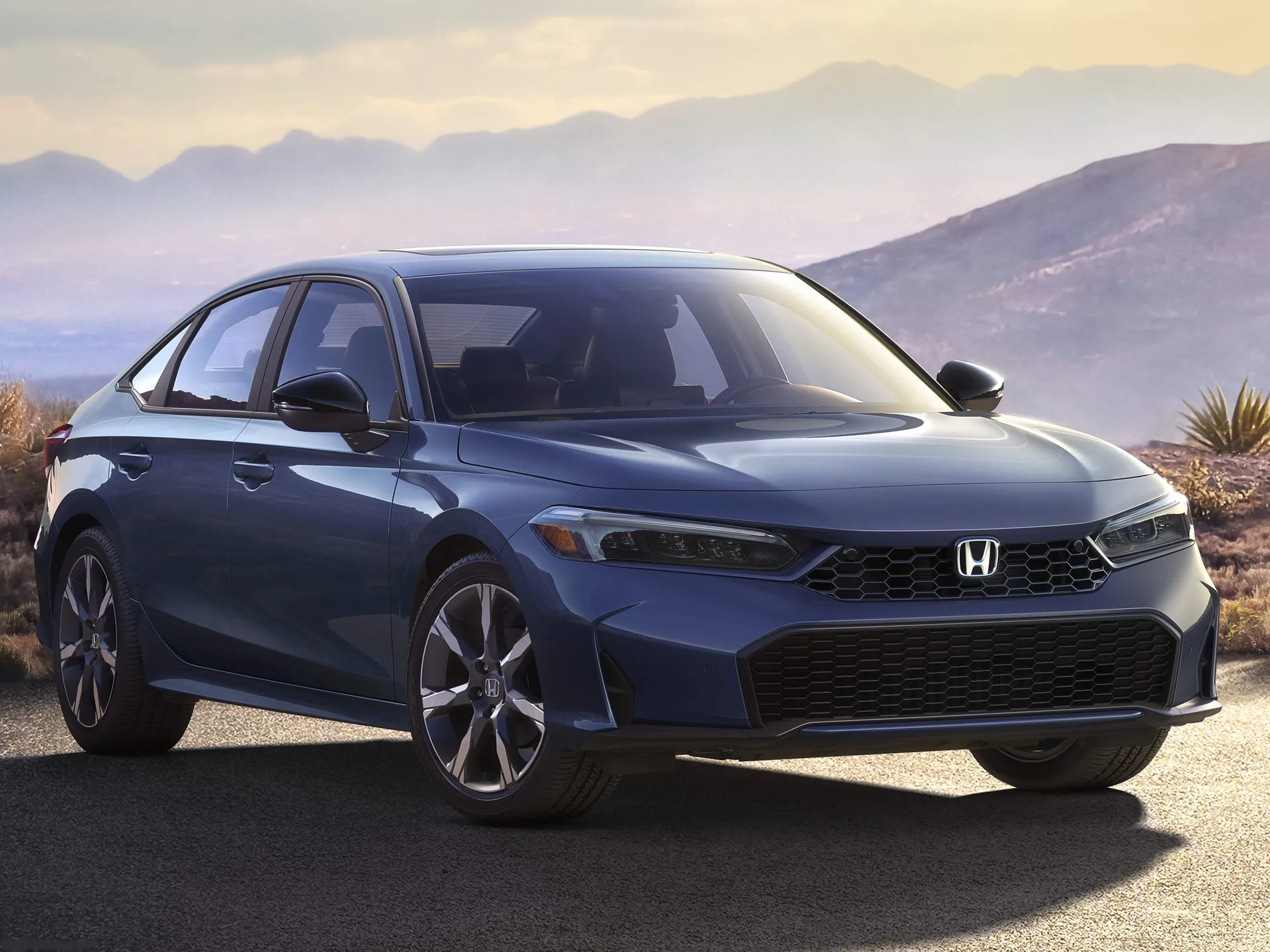
All 2016 Accord models feature sportier, more sophisticated and expressive styling cues, including restyled front and rear bumpers fasciae, a new grille and new taillight designs, as well as new aluminum wheels for all models and trims.
The Accord Sedan and Coupe both get a major facelift. In place of the previous wrap-around front bumper is a more sharply creased and intricately structured front fascia, the lower portion of which tucks into large side intake-like meshed areas that house new LED fog lights (Sport trim and above). On the sedan, a more sharply creased and contoured aluminum hood replaces the steel hood on earlier versions and meets up with a brighter, more pronounced front grille. The new more expressive face of Accord is complimented by a more sharply sculpted rear bumper fascia and new LED taillight design.
While all models feature restyled wheels, the Accord Sedan in Sport and Touring trims get larger 19-inch (+1 Sport, +2 Touring) wheels and tires and a new side-sill garnish. The Touring sedan also gets a new rear deck spoiler. For the Accord Coupe, EX and EX-L grades get larger 18-inch (+1 inch) wheels and tires, while and new line-topping Coupe Touring rolls on the same 19-inch tires as its sedan counterpart.
All models, Coupe and Sedan, feature the expanded use of LED lighting - LED taillights for all models, LED headlights for the Touring Sedan and Coupe, and LED daytime running lights (DRLs) for Sport and above trims.
The 2016 Accord Sedan is available in eight exterior colors: White Orchid Pearl, Champagne Frost Pearl, Lunar Silver Metallic, Modern Steel Metallic, Crystal Black Pearl, Basque Red Pearl II, Kona Coffee Metallic and Obsidian Blue Pearl. The Accord Sedan Sport gets a new San Marino Red (in place of Basque Red Pearl II).
The 2016 Accord Coupe shares seven colors with the sedan: Lunar Silver Metallic, Modern Steel Metallic, Crystal Black Pearl, and new San Marino Red. There are two colors unique to the 2016 Accord Coupe: Deep Blue Opal Metallic and Still Night Pearl.
The 2016 Accord cabin also features new fabric and color schemes, depending on model and trim, including:
All Accord LX and Sport Sedan models feature a convenient manual remote entry system, while Accord EX, EX-L and Touring models include a Smart Entry system with engine start/stop button. The Accord EX, EX-L and Touring models also include a power glass moonroof with tilt feature.
All Accord models have variable-speed windshield wipers and auto-on/off headlights-with the Touring trim receiving an auto high-beam feature-and a multi-angle rearview camera is standard on all Accord models. Aerodynamic advancements improve fuel efficiency while also reducing interior noise. These features include body A-pillars that are now nearly flush with the windshield glass, windshield wipers that are flush with the rear edge of the hood edge, and optimized windshield and side glass thickness.
Standard on all Accord models, body-colored power side mirrors allow the driver to adjust the mirrors position with ease. They can also be manually folded inward for tight parking spaces, if desired. Side mirrors on EX and above models are heated for all-weather driving convenience, and the passenger-side mirror includes an integrated Honda LaneWatch™ camera. The mirrors were specifically designed to be more aerodynamic, reducing wind noise. Every Accord EX, EX-L and Touring model has LED turn-signal indicators integrated into the side mirror housings for added visibility in traffic.
The Accord's Expanded View Driver's Mirror is integrated into the driver's side mirror. Standard equipment on all Accord models and trim levels, the mirror increases the driver's field of vision by 4.2 degrees to provide a better view of objects to the back and side of the vehicle.
The new Honda LaneWatch™ display, included on Accord EX, EX-L and Touring Sedan models and EX-L and Touring Coupe, uses a camera located below the passenger-side mirror to display an expanded rear view of the passenger side roadway on the intelligent Multi-Information Display (i-MID).
Included on Accord EX, EX-L and Touring models, a power glass moonroof with tilt feature includes one-touch control for both open and close functions. An auto-reverse feature reverses direction of the sliding moonroof panel if the operating system detects resistance to closing. A manually operated sliding sunshade improves comfort on bright or hot days.
All Accords feature an AM/FM radio antenna integrated into the rear window. This eliminates the need for a traditional mast antenna, improving the vehicle's exterior appearance and eliminating the possibility of damage in automatic car washes. Models equipped with XM Radio have a small fin-type antenna mounted at the rear of the roof.
Power Door Locks with Remote Entry and Programmable Auto-Locking Doors
All Accord LX and Sport Sedan models feature a convenient manual remote entry system, while Accord EX, EX-L and Touring models include Honda's Smart Entry system.
The manual remote entry system allows the driver to lock or unlock the doors and trunk with the press of a button on the integrated wave key. This system has a range of up to 50 feet and includes an emergency "panic" button that sounds the horn when pressed. In addition, the manual remote entry system features a security system that is automatically activated when the lock button on the remote is pushed. A beep of the horn confirms that the security system is set. Any unauthorized entry will then sound an alarm.
The Smart Entry system with engine start/stop button on Accord EX, EX-L and Touring models simplifies approaching, entering and starting the Accord - especially when the driver is carrying personal items. The Smart Entry system allows the driver to walk up to the vehicle, touch the door handle to unlock the door, start the engine and shut it off at the end of the trip using a push button ignition switch, and then get out and touch the lock button on the door handle to secure the car - all without ever touching a key. The system only requires that the driver has possession of the Smart Entry key. The Smart Entry key features a die-cast body with attractive chrome plating and acrylic covers that use "back side printing" for durability.
All Accord models also include a programmable auto-locking/unlocking system that is preset to automatically lock the doors when the vehicle reaches approximately 10 mph. Drivers can program the system to lock and unlock doors in several different ways, or else deactivate some or all of the system if desired.
All Accord models have variable-speed windshield wipers that automatically adjust the rate of operation according to vehicle speed. The result is the most efficient clearing of moisture from the windshield, and minimal wind noise at highway speeds. The design of the wipers also helps the blades press firmly against the windshield even at higher speeds, further assisting the clearing process. The windshield wipers are positioned at the same level as the Accord's rear hood edge when not in use, reducing aerodynamic drag and wind noise.
The 2016 Accord Touring Sedan and Touring Coupe include rain-sensing wipers that automatically activate if water is detected on the windshield.
All 2016 Accord models feature auto-on/off headlights for greater convenience. The headlights multi-reflector/projector-beam units on all Sedan and Coupe models except the V-6 Touring Sedan and Touring Coupe, which have auto-on/off LED headlights. The headlights are sculpted for maximum aerodynamic efficiency and to compliment the Accord's styling. All Accord models likewise feature Daytime Running Lights (DRL) - halogen on 4-cylinder models in LX trim, and LEDs on Sport Sedan (and LX-S Coupe) and above trims.
2016 Accord Touring trims receive a new auto high-beam feature. When the headlight switch is set in the Auto position, the system automatically illuminates the high beams until a dedicated camera detects oncoming traffic and automatically switches to low beams.
The Accord Sedan and Coupe in Touring trim feature Light Emitting Diode (LED) headlights. This dual-lamp LED projector array provides improved light distribution for improved visibility and enhanced nighttime driving performance, while requiring only half the electrical power of conventional halogen/projector headlights. The LED array also has a highly technical appearance that sets the Touring model apart.
LED tail lights and brake lights are standard on all Accord models. Compared to traditional incandescent bulbs, LEDs illuminate more quickly, use less power and have a longer service life.
The 2016 Accord Sport and higher trims get new LED front fog lights contained within the side air intake-like meshed areas.
Noise, Vibration and Harshness (NVH) Reduction
Generation after generation, the Accord's ability to filter out noise, vibration and harshness (NVH) from the ride experience has become measurably better. For the ninth-generation Accord the reduction efforts are even more impressive, beginning with structural improvements in the unit-body and the greatest use of high-tensile steel in Accord history. The exceptional rigidity of the unit body reduces bending and twisting, which directly improves NVH characteristics.
Aerodynamic tailoring of the body and undercarriage also contribute to reduced cabin noise levels as turbulence is reduced in the surrounding airflow. The strategic use of specific engine-, body-, door- and interior-insulation materials also contributes to an even quieter cabin in both Sedan and Coupe models. This directly increases passenger comfort and helps put the Accord near the top of its class for quietness. NVH countermeasures continue, even in areas that cannot be seen. These include under the hood, inside the doors and body openings, and in the technical properties of the interior carpeting and trim. Key Accord NVH countermeasures include:
The Accord Sedan has a trunk capacity of 15.8 cubic feet - 1.1 cubic feet larger than the previous-generation Accord Sedan's, and is spacious enough to easily accommodate four large golf bags. Meanwhile the Coupe trunk has a capacity of 13.7 cubic feet, 1.8 cubic feet larger than previously. In both models, the trunk area is easy to access and use, and the almost flat trunk floor allows easy placement and removal of items, with more secure storage. Integrated storage hooks allow securing cargo for safe transit. For 2016, all Accord Sedan models except the LX trim get a new 60/40 split and folding rear seat back, providing greater passenger and cargo carrying flexibility. The LX sedan and all coupe models feature a one-piece rear seatback that can be lowered to expand the cargo area when needed by pulling a convenient handle located in the trunk. The trunk is carpeted and lined, and a temporary spare tire is located in a well under a removable section of the cargo-area floor.
All Accords feature a standard multi-angle rearview camera with three viewing angles - wide view, normal view and top-down view. Drivers may select the preferred view according to driving conditions. All rearview camera systems also feature dynamic guidelines.
To give the Accord every advantage in the highly competitive mid-size class, a completely new interior was designed for the ninth-generation Accord, bringing with it a level of luxury and craftsmanship never before seen in the Accord. Available in Black, Gray and Ivory, the Accord's interior combines welcoming comfort with an impressive new range of standard and available technologies. Ergonomically designed seating and features like dual-zone climate control enhance passenger comfort inside the roomy cabin, and the operation and positioning of controls and instrumentation help the driver feel in command and control. For 2016 interior refinements include new wood grain, carbon weave and glossy piano black accents for the Sedan and glossy metallic black and glossy piano black finish accents for the Coupe. Both the Accord Sedan and Coupe interiors offer spacious accommodations for five passengers, upscale style and high-quality fit and finish. The capacious trunk also features a flat floor and plentiful cargo space.
The Accord audio and digital experience is also significantly upgraded for 2016 with the application of a new 7-inch Display Audio touchscreen interface (EX and above trims) featuring Apple CarPlay® and Android Auto, as well as newly available HondaLink Assist (e911) and HD Radio. Smartphone pairing is now simplified with a single USB cable connection, no longer requiring a separate HDMI cable connection. The new Display Audio system serves as the interface for new Apple CarPlay® and Android Auto, offering a multitude of new functions and features, including smartphone-linked navigation (Apple Maps or Google Maps), audio streaming, voice-controlled SMS text messaging and more.
Inside the Accord, all tactile surfaces, from the interior door handles to the seat controls to the instrument panel, steering wheel, and switchgear are designed to be pleasing to the touch - and easy to operate. The upper instrument panel is now one seamless piece of soft-touch material, the product of a new in-house Honda manufacturing process. This soft upper pad has an improved fit, a luxurious finish and an integrated passenger-side airbag cover. Cloth velour upholstery is standard in the Accord, while EX trims feature an upgraded tricot material. The Sport trim features cloth with leatherette bolsters for the front seats. The Accord EX-L and Touring grades have standard leather seating surfaces.
During the design of the 9th-generation Accord, the designers created a highly functional and intuitive interface between the vehicle and the driver. Key design features include large analog instrumentation complemented by the new upper 7.7-inch color "intelligent" Multi-Information Display (i-MID) positioned high in the central part of the instrument panel. Positioned beneath the i-MID on Accord LX and Sport Sedan and LX-S Coupe are the vehicles audio and HVAC controls. For EX and above trims, the hard key audio system is replaced by a 7-inch touchscreen Display Audio system. The final elements of the Accord's smart interface approach are its steering wheel mounted controls. By allowing the driver to operate a range of features without taking their hands off the wheel, the potential for driver distraction can be reduced in many situations.
The Accord has elegant analog instrumentation with a sophisticated and technical appearance. The centrally positioned speedometer is the largest feature in the instrument cluster. A Multi-Information Display (MID) is positioned in the center of the speedometer and provides a range of information and trip computer functions. The high-contrast white-on-black display can provide a wide range of information for the driver, including exterior temperature, trip information and much more.
Illuminated Eco Assist arcs on each side of the speedometer indicate when the vehicle is being operated efficiently. The speedometer is flanked by an analog tachometer, coolant temperature and fuel level gauge.
To provide more flexible shading from the sun, all Accords come equipped with sliding driver and front passenger sunvisors that can be extended four inches along their mounting shaft, a distance that provides perpendicular shade for the eyes even when the front seats are in their rear-most position.
Accord EX-L and Touring trims feature an electro chromatic interior rearview mirror that automatically dims during nighttime driving to reduce glare from the headlights of following vehicles.
A multi-angle rearview camera is standard on all Accords, with three viewing angles (wide view, normal view and top view). Drivers may select the preferred view according to driving conditions. The rearview image is displayed on the i-MID display. All rearview camera systems feature distance guidelines. EX-L and Touring Trims feature dynamic guidelines that project the vehicle's future path based on the driver's steering inputs.
For greater convenience, many of the controls that are most frequently used are positioned on the Accord's steering wheel within easy reach. An improved circular switch layout similar to the current Civic and CR-V models helps make operation simple and intuitive. Paddle shifters are included on a number of automatic-transmission Accord models, including the Sedan Sport, EX-L V-6 and Touring models, and available on all Coupe models. All Accord models feature a manually adjustable tilt and telescope steering column that allows drivers to easily adjust the steering wheel position to their liking. For greater comfort, the Accord EX-L and Touring steering wheels are wrapped in upgraded leather using fine chain stitching for improved comfort.
Ergonomic seats with a supportive internal structure and comfort padding are roomy and accommodating, the front seats are designed to help reduce the likelihood of neck injuries in rear collisions and have pronounced lateral support to help secure the occupant when cornering. Smoothly contoured shapes give the seating an appealing appearance, and help make entry and exit easier. The front headrests are of a size to afford rear passengers a better view forward, and the headrests have soft padding for greater comfort. The side airbag technology allows a seatback heater in the passenger's seat on EX-L and Touring models.
The Accord's interior is designed to offer excellent day-to-day livability, with plenty of storage space. A revised center console adds to the Accord's versatility, and offers ample internal storage space. A USB port and 12-volt power outlet are positioned in front of the console, and another 12-volt power outlet is positioned inside the console. The padded console lid serves as a comfortable armrest for the driver or front passenger.
A pair of large cupholders is positioned just ahead of the storage compartment within easy reach, and there is a bottle holder and storage bin in each door. The rear seating area of the Sedan has a fold-down padded center armrest with dual cupholders.
The Accord Sedan has a trunk capacity of 15.8 cubic feet. The Coupe trunk has a capacity of 13.7 cubic feet. To make loading and packing easier, the trunk floor of both the Sedan and Coupe is almost flat. Storage hooks on the left and right walls make it easy to secure cargo.
The trunk is carpeted and lined, and a temporary spare tire is located in a well under a removable section of the cargo-area floor. The rear seatback can be lowered to expand the cargo area when needed by pulling a convenient handle located in the trunk. On LX and LX-S trims of the Sedan and Coupe the one-piece seatback can be lowered, on EX and above trims each side of the 60/40 split or the entire seatback can be lowered.
All Accord models feature a dual-zone automatic climate control system with independent left and right temperature controls. A single temperature can be selected for the entire cabin, or the driver and front passenger can set different temperatures for their sides of the cabin. Dual adjustable vents located in the rear of the Sedan center console (EX and above) help keep rear seat passengers comfortable.
All Accord models come with an Eco Assist™ function. Located on either side of the speedometer, Eco Assist has illuminated arcs that show if the vehicle is being driven in an efficient style. The system operates in essentially the same manner as on other Honda models, in this case with white and green "coaching" arcs that illuminate on either side of the speedometer. A white color signifies inefficient driving, while green means a more efficient driving style is being used. The color changes gradually in response to overall driving style.
Every Accord with a CVT or automatic transmission is equipped with a green ECON button to the left of the steering wheel. When the button is pushed to activate ECON mode, several operating characteristics of the vehicle are modified for enhanced fuel efficiency. The Drive-by-Wire throttle system provides more gradual response, and to save additional energy, the climate control's fan speeds are lowered incrementally and other climate control system characteristics are altered based on the conditions. Another push of the ECON button reverts all systems to their normal mode.
Accord EX and above trims feature the HomeLink wireless remote system. Built into the overhead module, HomeLink can be programmed with the remote-control codes of up to three devices, such as a garage-door opener, a remote lighting system, or a home security system.
All Accord models have front and rear power windows with a one-touch auto-up/down driver's window. In the EX grade and above, the front passenger's window also has auto-up/down capability. In all models except the LX Sedan, illuminated controls allow for easy operation at night.
Power door locks are standard on all Accord models, and a customizable auto-locking feature can be configured using the i-MID and steering wheel mounted controls. Remote entry is standard equipment on all Accord models. The LX and Sport Sedan and LX-S Coupe have a wave key design that has an integrated transmitter in the handle with lock, unlock, trunk open and panic buttons. All other Accord models have the keyless Smart Entry system.
The Accord EX and above models have Honda's new Smart Entry and Push Button Start. The Smart Entry system lets the Accord owner gain access to the vehicle without having to unlock it with the remote transmitter or a conventional key. The Smart Entry remote has a unique digital identity and the Accord can be unlocked when the driver pulls one of the front door handles while the remote in his/her possession. When carrying the fob (or if all doors are unlocked), the trunk can be opened by pressing a button located on the underside of the Accord's trunklid.
Once the driver has opened the door and is seated, the Smart Entry system allows the Accord to be started by pushing the Engine Start/Stop button positioned on the instrument panel. When leaving the car, a press of the soft-touch button on exterior door handle locks all the doors. Alternatively, a press of the Lock button on the Smart Entry remote will also simultaneously lock all the doors. The Smart Entry system will not allow the transmitter fob to be locked in the interior or the trunk of the Accord.
Accord EX and above trims with a CVT or automatic transmission feature standard remote engine start. This enables drivers to start their vehicle in advance of the drive, thereby activating the climate control system with a target temperature of 72 degrees before they get to the vehicle - perfect for hot or cold days. The system can provide owners with the comfort of a pre-warmed vehicle on a cold winter morning - or a pre-cooled interior on hot days. The system will automatically operate the heater, front and rear defrosters, front heated seats (if equipped) or air conditioning as needed.
The remote engine start feature is built into the key fobs supplied with the vehicle. To start the engine remotely, the owner presses the LOCK button and then holds the ENGINE button for a second. The Accord's hazard lights will flash, indicating that the signal has been received. When the engine is started remotely, the wipers, lighting and audio systems remain off, and the security system remains set. The engine will run for up to 10 minutes after remote starting and can be extended by another 10 minutes using the same procedure, and then shut off automatically if the owner doesn't reach the vehicle within that time. When the owner does get to the vehicle within 10 minutes, or extended period if the procedure is initiated a second time, the engine will keep running while the owner unlocks the vehicle, gets in, applies the brake and presses the Accord's START button, which turns on all of the vehicle's systems.
Active Noise Control (ANC) and Active Sound Control (ASC)
Key contributors to the Accord's quiet, refined interior are Active Noise Control (ANC) and Active Sound Control (ASC). The two systems are comprised of dual overhead microphones, an ANC/ASC electronic processor, and the audio system's four door-mounted speakers. ASC/ANC operates whenever the Accord is running, even if the audio system is turned off.
ANC is designed to reduce low frequency sound in the cabin caused mainly by the roughness of the road surface. The overhead microphones pick up sound waves and send them to the ANC/ASC processor, which creates and sends a precisely timed "reverse phase" audio signal to a special amplifier. In turn, the amplifier drives the door speakers to cancel the original noise signal.
ASC is a related technology designed to improve the engine sound quality by making the sound pressure level more linear as the engine revs increase. Typically, engine noise doesn't increase in a linear way with rising revs; instead there can be many resonances that create peaks and valleys in the sound pressure level and an uneven sound. ASC helps smooth out the engine sound by reforming the sound signal as needed and sending it to the door speakers offering benefits from idle to redline.
Complementing the remote entry system is a standard engine-immobilizer system. A special electronically coded key prevents the car from being started-even if a mechanical duplicate of the key is used. A transponder, built into the key, signals the immobilizer control unit that the key is genuine. If the car is hot-wired, or an unauthorized key is used, the engine will not start.
The 2016 Accord Sedan and Coupe are offered with two advanced engines - a direct-injected (DI) 2.4-liter inline 4-cylinder engine, and a 3.5-liter V-6 that is the most powerful engine offered in a Honda sedan to date. Available transmissions include a sporty and fuel-efficient continuously variable transmission (CVT) for the 4-cylinder engines, unique 6-speed manuals for the 4-cylinder and V-6 engines, and a 6-speed automatic for V-6 models.
The direct-injected 2.4-liter i-VTEC inline 4-cylinder powerplant is the base Accord engine, providing 185 horsepower and 181 lb-ft. of torque, while operating on regular unleaded fuel and meeting LEV3-SULEV30 (California) and Tier3-Bin30 emissions standards. With its high-flow exhaust system, the Accord Sport Sedan 4-cylinder engine generates 189 horsepower and 182 lb-ft. of torque. For 2016, improved aerodynamics, a new low-friction wheel bearing and the reduced weight of the sedan's new all-aluminum hood results in a targeted 1-mpg improvement in the EPA highway fuel economy rating, from 36 mpg in MY2015 to an anticipated 37 mpg in MY2016, for 4-cylinder Sedans equipped with CVT.
The available 3.5-liter V-6 engine delivers 278 horsepower at 6200 rpm and 252 lb-ft. of torque at 4900 rpm. On V-6 models with 6-speed automatic transmission, the engine also features Variable Cylinder Management (VCM) variable displacement technology. Depending on driving conditions, the engine operates on three or six cylinders to help boost fuel efficiency or power as needed. The V-6 is designed to run on regular unleaded fuel and also meets LEV3-SULEV30 (California) and Tier3-Bin125 emissions standards.
The V-6 engine can be paired with a smooth-shifting 6-speed manual transmission, or a 6-speed automatic transmission with Grade Logic Control. The V-6 is designed to run on regular unleaded fuel, and has an anticipated EPA fuel economy rating of 21/34/26 mpg city/hwy/combined (Sedan).
Direct-injected 2.4-liter inline 4-cylinder
The direct-injected 2.4-liter DOHC i-VTEC 4-cylinder engine that powers the Accord LX, EX and EX-L Sedan, and the LX-S, EX and EX-L Coupe produces 185 horsepower and 181 lb-ft. of torque. This Honda Earth Dreams® Technology engine features a set of next-generation technological advancements, which greatly enhance both driving performance and fuel efficiency.
The engine's direct injection (DI) system and other technologies combine to create a robust torque output, with significant power available over a wide operating range. This clean-running engine meets LEV3-SULEV30 (California) emissions standards in select states, and Federal Tier3-Bin30 standards in most states.
The Accord's 2.4-liter engine features a lightweight die-cast aluminum block with a single main-bearing cradle design that creates a rigid assembly to help minimize noise and vibration. Cast-in iron cylinder liners provide long-lasting durability. Each journal on the forged-steel crankshaft is micropolished to reduce internal friction. To improve smoothness throughout the rpm range and help lower noise levels, the Accord is fitted with an internal balancer unit. Consisting of a pair of chain-driven counter-rotating shafts located in the oil pan, the balancing system helps quell the inherent second-order harmonic vibrations that normally impact inline 4-cylinder engines.
To reduce piston-sliding friction, the cylinder bores are offset by 8.0-mm from the crankshaft. This gives the connecting rods a more favorable angle during each power stroke, which reduces side loading on the pistons and in turn, improves efficiency. The direct-injected engine features a forged crankshaft for high rigidity and low friction. With increased diameter of the counterweights, the crankshaft offers optimized flywheel effect, while minimizing the total weight.
Lightweight pistons have a carefully optimized skirt design to minimize reciprocating mass, and reduced weight minimizes vibration and increases operating efficiency. The piston crowns are dished, to help maintain stable combustion and to optimize distribution of the stratified fuel charge from the direct injector in each cylinder. This close control over the combustion process boosts overall operating efficiency.
For packaging efficiency the direct-injected engine is positioned with a 10-degree rearward slant to accommodate the forward exhaust layout.
The Accord's 4-cylinder engine makes use of advanced friction-reducing technologies designed to improve engine efficiency. The outer skirts of lightweight aluminum pistons feature a low-friction coating applied in a new-for-2016 dot-pattern application. The result is reduced overall friction as the pistons move within the cylinder bores. Plateau honing further lowers the friction level between the pistons and the cylinders by creating an ultra-smooth surface. Plateau honing is a 2-stage machining process that uses two grinding processes instead of the more conventional single honing process. This also enhances the long-term wear characteristics of the engine. Low viscosity oil (0W-20) also reduces friction.
The direct-injected Accord 4-cylinder engine has a lightweight cylinder head that is made of pressure-cast aluminum alloy. The exhaust ports are located on the front side of the engine which provides greater freedom in the layout of the close-coupled catalytic converter that mounts directly to the cylinder head. With exhaust passages cast directly into the cylinder head, the need for a traditional separate exhaust manifold is eliminated.
A silent-chain drives dual overhead cams and four valves per cylinder, and features a double-arm tensioner design that reduces operating friction. The cam drive is maintenance free throughout the life of the engine. The surface finish of the camshaft journals helps to further reduce traction.
To help boost fuel efficiency and power, the combustion chamber shape and valve angles are optimized. The valve angle of the direct-injected engine is 35-degrees, with the narrower valve angle decreasing the surface-to-volume ratio and which helps create a flatter, more compact combustion chamber, reducing unburned hydrocarbon emissions. The efficiency of the combustion chamber shape and the precise control of direct injection allow the engine to operate on regular unleaded fuel even with a compression ratio of 11.1:1. The cylinder head also features a high-tumble intake-port design that helps create a homogenous fuel mixture for low fuel consumption and high airflow for high power output.
The Accord's direct-injected 2.4-liter DOHC 16-valve i-VTEC engine uses an advanced valve-control system to combine high power output with high fuel efficiency and low emissions. The Accord system combines VTC (Variable Timing Control), which continuously adjusts the intake camshaft phase, with Variable Valve Timing and Lift Electronic Control (VTEC), which changes valve lift, timing and duration of the intake valves.
At low rpm, the VTEC intake valve timing and lift are optimized for rapid swirl-pattern cylinder filling. As engine rpm builds past 4800 rpm, the VTEC system transitions to a high-lift, long-duration intake cam profile for superior high-rpm engine power.
The "intelligent" portion of the system is its ability to continuously vary the timing of the intake cam relative to that of the exhaust camshaft. This helps boost power and also provides a smoother idle (allowing idle speed to be reduced). The intake cam timing is varied based on input from sensors that monitor rpm, timing, throttle opening, cam position and exhaust air-fuel ratio. The result is increased fuel efficiency and lower NOx emissions.
Engines using multi-port fuel injection mix fuel and air before they enter the combustion chamber. With direct injection, fuel is injected directly into the combustion chamber. This allows for better combustion and overall efficiency.
The Accord's 2.4-liter 4-cylinder engine incorporates direct-injection (DI). The system features a compact high-pressure direct-injection pump that allows both high fuel flow and pulsation suppression, and variable pressure control optimizes injector operation. A multi-hole injector delivers fuel directly into each cylinder (not to the intake port, as in conventional port fuel injection designs).
The multi-hole injectors can create the ideal fuel/air mixture in the cylinders and also create a weak stratified combustion effect that maximizes fuel efficiency at lower power settings. The stratified charge puts a mixture that's richer near the spark plug for easy ignition, while other areas on the combustion chamber have a leaner fuel/air ratio.
Based on the operating conditions, the direct injection system alters its function for best performance. Upon cold engine startup, fuel is injected into the cylinders on the compression stroke. This creates a weak stratified charge effect that improves engine start-up and reduces exhaust emissions before normal operating temperature is reached.
Once the engine is fully warm for maximum power and fuel efficiency, fuel is injected during the intake stroke. This helps create a more homogeneous fuel/air mix in the cylinder that is aided by the high-tumble intake port design. This improves volumetric efficiency, and the cooling effect of the incoming fuel improves anti-knock performance.
Key contributors to the Accord 4-cylinder engine's excellent emissions performance are its high-efficiency catalytic converters. One converter mounts directly to the front of the cylinder head, close-coupled for fast activation after the engine is started. A second converter is positioned slightly downstream, beneath the passenger compartment floor. Both converters use a thin-wall design that increases internal reaction area and improves efficiency. A high-efficiency exhaust system and high-density catalytic converters help the Accord engine meet stringent LEV3-SULEV30 emissions certifications in California and Federal Tier3-Bin30 certifications.
Direct-injected 2.4-liter inline 4-cylinder (Accord Sedan Sport)
The direct-injected 2.4-liter inline 4-cylinder that powers the Accord Sport is essentially identical to the engine in the LX, EX, EX-L Sedan and LX-S, EX, EX-L Coupe. The Sport Sedan's 189-horsepower inline 4-cylinder meets Tier3-Bin30 as well as the LEV3-SULEV30 emissions standards in effect in select states.
The key feature that allows this engine to make an additional four horsepower compared to the 185-horsepower 4-cylinder engine is a special exhaust system with larger diameter tubing and dual outlets that nets a 52-percent increase in flow relative to the 185-horsepower 4-cylinder system.
The 3.5-liter V-6 engine is available in the Accord EX-L V-6 and Touring Sedan, and EX-L V-6 Coupe. The aluminum-alloy 24-valve engine produces 278 horsepower at 6200 rpm and generates 252 lb-ft. of torque at 4900 rpm, with robust torque output in the lower ranges below 4900 rpm where the engine typically operates. Design features that assist in the efficiency of the engine include optimized intake and exhaust ports, valve timing and Variable Valve Timing and Lift Electronic Control (VTEC) operation, and when equipped with automatic transmission, Variable Cylinder Management (VCM) with a wide range of operation.
The Accord V-6 has an anticipated EPA fuel economy rating of 21/34/26 mpg city/hwy/combined (Sedan 6AT). This fuel efficiency is possible in part due to internal friction reduction features including an oil-ring ion-plating treatment, plateau honing and optimized auxiliary-belt tension. The tumble-type intake port design improves combustion efficiency, and the torque-converter function in the available 6-speed automatic transmission aids efficient power transfer. The lighter-weight cylinder head bridge structure with separate rocker arm holders and lightweight resin cam covers further assist in overall efficiency.
With its 60-degree V-angle, the Accord's V-6 engine is inherently smooth and has compact overall dimensions that allow efficient packaging within the vehicle. The V-6 has a die-cast lightweight aluminum alloy block with cast-in-place iron cylinder liners. Made with a centrifugal spin-casting process, the thin-wall liners are high in strength and low in porosity. The block incorporates a deep-skirt design with four bolts per bearing cap for rigid crankshaft support and minimized noise and vibration.
A new cooling control spacer positioned in the water jacket surrounding the cylinders helps to keep operating temperature and tolerances more consistent. Plateau honing further lowers the friction level between the pistons and the cylinders by creating an ultra-smooth surface. This 2-stage machining process uses two grinding processes instead of the more conventional single honing process. Plateau honing also enhances the long-term wear characteristics of the engine.
Like other Honda V-6 powerplants, the 2016 Accord V-6 engine's 4-valve cylinder heads are a single-overhead-camshaft design, with the cams driven by the crankshaft via an automatically tensioned toothed belt. Made of low-pressure cast, low-porosity aluminum, each cylinder head incorporates a new "tumble port" design that improves combustion efficiency. An integrated exhaust manifold cast into each cylinder head reduces parts count, improves flow and optimizes the location of the close-coupled catalyst.
i-VTEC with 2-Stage Variable Cylinder Management™ (VCM™)
The Accord's V-6 engine combines Variable Cylinder Management (VCM) (when equipped with automatic transmission) with Variable Valve Timing and Lift Electronic Control (VTEC), which changes valve lift, timing and duration of the intake valves. The switching mechanism allows each cylinder to operate with low-rpm valve lift and duration or high rpm lift and duration. When equipped with automatic transmission, the rear cylinder bank can also leave all intake and exhaust valves closed to maximize fuel efficiency during cylinder deactivation.
The "intelligent" portion of the system is its ability to vary valve operation based on the driving situation and engine rpm. At low rpm, the VTEC intake valve timing and lift are optimized for increased torque, which now allows a wider range of 3-cylinder operation (when equipped with automatic transmission). As engine rpm builds past 5150 rpm (6AT; 6MT: 4900 rpm) the VTEC system transitions to a high-lift, long-duration intake cam profile for superior high-rpm engine power. In cylinder cut-off mode (6AT models), the rear bank of intake and exhaust valves remain closed, to eliminate pumping losses.
To help with the fuel efficiency of the V-6 engine, the new generation of Honda's Variable Cylinder Management (VCM) is used in models with an automatic transmission. The VTEC system and active engine mounts allow the VCM system to operate with three cylinders in a wide range of situations to maximize fuel efficiency, which helped lead to an anticipated EPA fuel economy rating of 21/34/26 mpg city/hwy/combined (Sedan 6AT) and lower emissions. When greater power is needed, the system switches seamlessly to 6-cylinder operation.
During startup, aggressive acceleration or when climbing hills - any time high power output is required - the engine operates on all six cylinders. During moderate-speed cruising and at low or moderate engine loads, the system operates just the front bank of three cylinders.
The VCM system can tailor the working displacement of the engine to match the driving requirements from moment to moment. Since the system automatically closes both the intake and exhaust valves of the cylinders that are not used, pumping losses associated with intake and exhaust are eliminated and fuel efficiency gets a further boost. The system combines maximum performance and maximum fuel efficiency - two characteristics that don't typically coexist in conventional engines.
VCM deactivates specific cylinders by using the VTEC (Variable Valve-Timing and Lift Electronic Control) system to close the intake and exhaust valves while simultaneously the Powertrain Control Module cuts fuel to those cylinders. The spark plugs continue to fire in inactive cylinders to minimize plug temperature loss and prevent fouling induced from incomplete combustion during cylinder re-activation.
The system is electronically controlled, and uses special integrated spool valves in the cylinder heads. Based on commands from the system's electronic control unit, the spool valves selectively direct oil pressure to the rocker arms for specific cylinders. This oil pressure in turn drives synchronizing pistons that connect and disconnect the rocker arms.
The VCM system monitors throttle position, vehicle speed, engine speed, automatic-transmission gear selection and other factors to determine the correct cylinder activation scheme for the operating conditions. In addition, the system determines whether engine oil pressure is suitable for VCM switching and whether catalytic-converter temperature will remain in the proper range. To smooth the torque-induced jolt of activating or deactivating cylinders, the system adjusts ignition timing, drive-by-wire throttle position and turns the torque converter lock-up on and off. As a result, the transition between 3- and 6-cylinder operation is unnoticeable to the driver.
Active Control Engine Mounts and Active Noise Control
The new-generation 28-volt Active Control Engine Mount system (ACM) is used to minimize the effects of engine vibration as the VCM system switches cylinders on and off. The powerful 28-volt ACM is a key factor in the VCM's broader range of operation in the new Accord. Sensors alert the Electronic Control Unit (ECU) to direct ACM actuators positioned at the front and rear of the engine to move to cancel engine vibration. Inside the interior of the Accord, an Active Noise Control system (ANC) works in cooperation with the ACM system to further reduce any sound relating to the function of the VCM system.
The V-6 engine's Programmed Fuel Injection (PGM-FI) continually adjusts fuel delivery to yield the best combination of power, low fuel consumption and low emissions. Multiple sensors constantly monitor critical operating parameters, such as throttle position, intake air temperature, coolant temperature, ambient air pressure, intake airflow volume, intake manifold pressure, exhaust air-fuel ratio and the position of the crankshaft and cams.
The Accord 4-cylinder's available Continuously Variable Transmission (CVT) offers smooth and predictable gear ratio transitions and excellent acceleration matched with efficient low-rpm cruising. Available in all 4-cylinder Accord LX, Sport, EX and EX-L models, the CVT has a wide ratio spread that allows for strong acceleration performance coupled with reduced engine rpm at high road speeds and higher fuel efficiency.
The CVT is comprised of a torque converter that drives two variable-width pulleys connected by a steel belt. With its angled inner faces, the belt can circle the angled pulley faces at varying diameter depending on the pulley width, which alters the effective ratio between the pulleys. Since there are no steps in the pulley faces, the range of possible gear ratios is essentially infinite. This ultra-fine control of the gear ratio is the key to the CVT's greater efficiency over a conventional automatic transmission with a limited number of discrete gear ratios. Instead of approximating the correct ratio for the conditions like a conventional automatic does, the Accord CVT can precisely select the optimum ratio from moment to moment without steps or slippage.
Computer control of the transmission allows the ratio between the pulleys to be altered almost instantly to best suit the driving conditions and accelerator pedal setting. A planetary gear set allows the transmission to shift between forward and reverse operation, and a variable-flow oil pump optimizes flow to the transmission's moving parts while minimizing the load on the engine. Compared to a conventional automatic transmission, the CVT has more compact dimensions, fewer parts and a higher torque capacity.
The transmission can be operated in two different fully automatic modes with the console-mounted straight-gate shifter. The D position is ideal for most driving situations, and combines fuel efficiency with smooth operation and responsive power when needed. The S position is for more performance-oriented driving, and features more aggressive transmission mapping to keep engine rpm higher for greater acceleration and response.
The Accord CVT is designed to provide the optimum gear ratio for the driving conditions, and to offer a more natural driving feel than some previous CVT transmissions that may have something of a disconnected "rubber-band" feel compared to a conventional automatic transmission.
The Accord CVT has special G-design shift logic that is designed to offer more immediate acceleration response than either conventional automatics or other CVT designs. When abruptly applying power from a steady-state cruising speed, the Accord CVT immediately sends power to the drive wheels while simultaneously adjusting the gear ratio (seamlessly and progressively downshifting) to smoothly bring the engine to its horsepower peak in a linear way.
By comparison, a conventional automatic is slower to respond and loses time making multiple downshifts. Since the automatic transmission has a limited number of separate, discrete ratios, even when fully downshifted, it can only approximate the optimum engine rpm as speed increases. This reduces acceleration performance.
Compared to other CVT systems, the Accord CVT offers stronger acceleration response with a linear build in engine rpm that avoids much of the "disconnected" or "slipping" feeling some drivers notice with other CVTs. G-design shifting logic gives the Accord a more linear and sporty driving feel.
To allow the driver to alter the operation of the CVT, the console-mounted gear selector includes an "S" position that provides a sport-shift schedule that delays upshifting for more available power, and provides greater engine braking.
Whether in D or S position, special transmission logic programming allows the use of the steering-wheel-mounted paddle shifters, which are standard on the Sport (CVT) trim of the Accord Sedan and all CVT equipped Accord Coupes. When the driver operates the steering wheel-mounted paddle shifters while in Drive, the transmission responds to the driver's shift command by selecting one of the available seven fixed ratios, and then returns to its normal fully automatic Drive mode if further paddle shift inputs are not made within a short time. This special logic makes it easy for the driver to command a quick downshift without leaving the convenience of Drive mode.
When in S position, use of the paddle shifters puts the transmission into full manual mode that remains until another mode of operation is selected with the console-mounted shifter. The paddle shifters allow the driver to select among seven fixed gear ratios. When in manual mode, if the engine's redline is reached, the Accord will automatically shift to the next gear ratio to avoid engine damage. It will also shift down to an appropriate lower gear ratio if necessary to avoid "lugging" the engine.
Six-Speed Automatic Transmission with Grade Logic Control
To maximize driver control, acceleration and fuel efficiency, the Accord V-6 is available with a 6-speed automatic transmission featuring racing-inspired steering wheel-mounted paddle shifters and two automatic shift modes. The 6-speed automatic transmission's layout was designed with Honda engineering prowess to optimize power flow and minimize size, parts count and overall weight. These efficiencies plus the wide torque converter lockup range contribute to the impressive EPA fuel economy ratings.
The 6-speed transmission can be controlled by a straight-gate console-mounted shifter or a steering wheel paddle shifter system (the latter standard on all Coupe models) that works whenever the transmission is in either of its two automatic modes.
The 6-speed automatic transmission also includes engineering enhancements aimed at improved performance and efficiency. Expanded multi-disc lock-up control improves the efficiency of power delivery and works with the new gear ratios to provide an improvement in fuel efficiency, as compared to a conventional design. In addition to Grade Logic Control, all of the transmission logic systems work together to automatically alter shift timing based on driving conditions.
The 6-speed automatic transmission teams with a torque converter that has a unique converter lock-up assembly. The lock-up assembly uses multiple lock-up disks that generate nearly double the facing area of a typical torque converter. The lock-up assembly not only reduces heat build-up during operation, but also features improved overall lubrication that generates better cooling. The torque converter allows for lock-up activation during a much wider range of driving conditions for improved fuel efficiency.
The 6-speed transmission can be operated in two different fully automatic modes with the console-mounted straight-gate shifter. The D (or "Drive") mode is ideal for most driving situations, and combines fuel efficiency with smooth operation and responsive power when needed. The S (or "Sport") mode is for more performance-oriented driving, and features more aggressive shift mapping to keep engine rpm higher for greater acceleration and response.
In Sport mode the transmission typically operates in the four lowest gears, and it won't shift to fifth gear unless the vehicle reaches a much higher speed. In Sport mode, the efficiency-oriented sixth gear is locked out. When in the D mode (that is optimized for normal driving), the transmission incorporates an advanced Grade Logic Control System and Shift Hold Control, which reduce unwanted shifting and gear hunting. The result is smart transmission operation that optimizes fuel efficiency and keeps the transmission in the appropriate gear for the specific driving conditions, thus generating excellent performance and smooth operation.
While traveling up or down hills, Grade Logic Control alters the transmission's shift schedule to reduce shift frequency and improve speed control. A shift map in the transmission computer continually measures throttle position, vehicle speed and acceleration/deceleration, and then determines when the vehicle is on a hill. The shift schedule is then adjusted to hold the transmission in lower gears to boost climbing power or to provide engine braking when traveling downhill.
Shift Hold Control keeps the transmission in its current (lower) gear ratio when aggressive driving is detected, as in the case of decelerating at a corner entry. Shift Hold Control leaves the chassis undisturbed by excess shifting and ensures that power will be immediately available (without a downshift) at the corner exit.
Whether in D or S mode, special transmission logic programming allows the use of the steering-wheel-mounted paddle shifters (standard on all Coupe models). When the driver operates the steering wheel-mounted paddle shifters while in D mode, the transmission responds to the driver's shift command and then returns to its normal fully automatic D mode if further paddle shift inputs are not made within a short time. This special logic makes it easy for the driver to command a quick downshift without leaving the comfort of D mode. When in S mode, use of the paddle shifters puts the transmission into full manual mode that remains until another automatic mode of operation is selected with the console-mounted shifter.
The transmission is shifted into S mode by moving the center console-mounted gear selector lever rearward to the detent labeled "S." This mode offers automatic operation with more aggressive shift mapping. A pull on the racing-inspired, steering wheel-mounted paddle shifters (standard on all Coupe models) places the transmission in fully manual mode. A digital instrument display indicates which gear the transmission is in.
A double-kick-down feature lets the driver command a sport-minded double downshift - such as from fifth to third gear. By pulling on the left downshift paddle twice in rapid succession, the transmission will drop directly to the chosen lower gear ratio. The Drive-by-Wire™ throttle system also creates a "blip" of the throttle to help match gear speeds while downshifting.
To prevent harm to the powertrain when the transmission is paddle shifted by the driver (including during double-kick-down shifts), the system will inhibit potentially damaging shifts. As an added protective measure, the Powertrain Control Module (PCM) can also cut off engine fuel flow to prevent over-revving. If fuel cut-off is insufficient to prevent engine over-revving, as may be possible when the vehicle is on a steep downhill, the transmission will automatically upshift to prevent damage. On downshifts, the transmission will not execute a driver command that will over-rev the engine.
For improved stop-and-go performance and to prevent "lugging" the engine, the transmission will automatically downshift to first gear even though the transmission has been left in a higher gear, (except in second gear) as the vehicle comes to a stop. In Manual Mode, when coming to a stop in second gear, the vehicle will start in second gear as well.
Six-Speed Manual Transmission (4-cylinder)
On Accord Sedan models, a 6-speed manual transmission (6MT) is standard on Accord LX, Accord Sport and Accord EX. On Accord Coupe models, the 6-speed is standard on LX-S and EX. More compact than the 5-speed transmission it replaces, the unit also offers smooth and precise shift feel and greater efficiency. The transmission has been carefully engineered to deliver state-of-the-art performance and shift action, with reduced internal friction, tighter internal tolerances and improved synchronizers. The transmission also has a rigid aluminum exterior case, high-capacity ball bearings, stiff gear shafts, and high torque capacity. The design of the shift linkage and the selector mechanism reduce the sensation of play at the shift lever and smooth the shift action. A constant-mesh helical reverse gear mechanism significantly reduces noise when reverse is selected. A reverse lockout feature prevents the transmission from accidentally being shifted into reverse while the car is moving forward.
The Accord EX-L V-6 Coupe is available with a 6-speed manual transmission (6MT). With closely spaced gear ratios and a short-throw shifter, the 6-speed manual is the perfect complement to the Accord V-6 Coupe's sporting side. A lightweight aluminum transmission case and hollow gear shafts help reduce weight, while durability is ensured by high-strength gears. A reverse lockout feature prevents the transmission from accidentally being shifted into reverse while the car is moving forward.
The Accord's manual transmission is matched with a compact clutch unit that is self-adjusting for consistent pedal stroke and load throughout its service life. A dual-mass flywheel cuts down the transfer of engine vibration into the cabin and provides increased comfort during shifting and helps to reduce noise.
The Accord 4-cylinder and V-6 engines are all i-VTEC powerplants, but it's important to note that the details in each application differ. Honda's 4-cylinder engines have double overhead camshafts (DOHC) and i-VTEC that is comprised of VTEC + Variable Timing Control (VTC) of the intake camshaft for optimized power production and fuel efficiency. Accord V-6 engines use a Single Overhead Camshaft (SOHC) design that features i-VTEC with Variable Cylinder Management (VCM) to maximize fuel efficiency.
To keep operating costs at a minimum, all Accord models are designed to use relatively less expensive regular unleaded fuel, thanks to compact 4-valve combustion chambers and precise fuel injection or direct injection and spark control.
The Accord's drive-by-wire throttle system uses smart electronics instead of a conventional cable system to connect the throttle pedal to the throttle butterfly in the intake tract. Besides allowing engineers to program the relationship between throttle pedal movement and engine response, the system offers a better drivability and optimizes engine response to suit driving conditions. The system monitors throttle pedal position, throttle butterfly position, road speed, engine speed and engine vacuum. This information is used to define the throttle control sensitivity.
All Accord engines use direct ignition, which has a coil unit for each cylinder, positioned within each spark plug's access bore.
Both inline-four and V-6 Accord engines have their exhaust manifold(s) cast directly into the aluminum alloy cylinder head(s) to reduce weight and parts count and to position each primary catalytic converter as close as possible to the combustion chambers. A high-efficiency converter mounts directly to the exhaust port of each cylinder head for extremely rapid converter activation after engine startup.
The Accord vehicle maintenance schedule is calculated by the Maintenance Minder system, which automatically indicates when to have standard service performed based on actual driving conditions (tracked by the ECU). This minimizes the guesswork related to whether the vehicle is being used in standard or severe use conditions for maintenance interval purposes. The display indicates when to change the oil, air cleaner, transmission fluid, spark plugs or coolant, as well as when to rotate the tires. As calculated by the Maintenance Minder system, the Accord has an engine tune-up interval of 100,000+/- miles or more (only routine inspections and fluid changes are required up to this point).
Befitting the Accord's mission as an engaging and responsive everyday driver, every aspect of the chassis engineering and componentry was reviewed for the 9th-generation design. The result is a car that is quieter and more responsive on city streets, quieter and smoother riding the highway, and even more faithful to the driver's wishes on winding roads.
Accord chassis features include a MacPherson strut front suspension, a "hybrid" steel and aluminum front subframe, and electric power steering (EPS). Active Noise Control (ANC) and Active Sound Control (ASC) are also included, counteracting engine noise and helping to create a more linear and sophisticated high-rpm engine note.
The advanced MacPherson strut front suspension provides superior ride and handling qualities while also reducing interior noise, vibration and harshness (NVH). The ninth-generation Accord also uses an aluminum and steel front subframe that reduces weight and, in conjunction with new rear compliance bushings and independent multi-link rear suspension, also measurably reduces NVH. Additional noise reductions are derived from careful tailoring of the underbody and suspension systems.
The EPS uses an electric motor to assist the rack-and-pinion steering rather than the hydraulic assist of the previous Accord. The result is reduced steering effort, improved precision, feel and stability, and less power consumption.
Aluminum wheels are now standard on every Accord Sedan and Coupe, and range in size from 16 inches to 19 inches depending on model and trim. Four-wheel disc brakes are also standard across the model range, along with Electronic Brake Distribution (EBD) with Brake Assist, a 4-channel Anti-lock Braking System (ABS), Vehicle Stability Assist™ (VSA®) with Traction Control, and a Tire Pressure Monitoring System (TPMS). Hill start assist is also standard, helping the driver accelerate smoothly from a stop while on an incline.
Active Noise Control (ANC) and Active Sound Control (ASC) are standard across the Accord model range. Using microphones, a signal processor and the Accord's audio speakers, ANC counteracts engine noise, while ASC helps create a more linear and sophisticated high-rpm engine note. Additional noise reductions are derived from careful tailoring of the underbody and suspension systems.
The 2016 Accord received numerous engineering changes to its chassis design with the aim of further improving both ride and handling while creating greater differentiation in the performance characteristics of different models, in particular the Sport Sedan and Touring Sedan and Coupe. All 2016 Accords apply higher performance dampers and new compliance bushings. All models get new front and rear high performance dampers designed to offer increased response especially in the initial stage of body movement. Development work has centered on reduced internal friction and increased linearity, resulting in the redesign of the oil channel aiding both ride comfort and handling precision.
Accord Touring trims (Sedan and Coupe) get further upgraded Amplitude Reactive Dampers with variable suspension stroke, providing for an even more refined ride quality and improved body control during cornering. The Touring trim also gets new hydraulic rear subframe bushings for reduced high-frequency vibration.
In addition to receiving larger 19x8J wheels and 235/40 R19 96V tires, the Accord Sedan in Sport and Touring trim gets 1-inch larger front brake discs (12.3 inches in diameter vs.11.5 on the 2015 model). The new Coupe Touring receives the same 19-inch wheels and tires and upsized front brake discs, while EX and EX-L grades get larger 18-inch (+1 inch) wheels and 235/45R18 94V tires.
All 2016 models also feature new Straight Driving Assist Technology that utilizes the vehicle's Motion Adaptive Steering System to reduce the driver's workload when running on a canted or crowned road surface.
A MacPherson strut front suspension gives the Accord an exceptionally smooth and quiet ride, stable and responsive handling and flatter cornering. The highly evolved front suspension in the ninth-generation Accord is significantly lighter with higher dynamic performance including improved responsiveness, ride comfort and stability, significantly reduced noise and increased driving enjoyment. The Accord's turning diameter is 38.1 ft. (LX, EX, EX-L, EX-L V6) and 39.6 ft. (Sport and Touring) for the Sedan and 37.6 ft. (LX-S, EX, EX-L) and 39.0 ft. (EX-L V6 and Touring) for the Coupe.
Hydro-compliance bushings mount the front lower suspension arms. These bushings help reduce steering shimmy at all speeds, improve NVH characteristics and promote more accurate suspension geometry. The result is an ideal blend of ride quality, responsive steering and precise handling.
Enhanced structural rigidity plays a part in the Accord's new suspension performance, with highly rigid attachment points for the struts, as well as for the front subframe. This new structure is an integral part of the Accord's ACE body structure, which helps crash performance in a frontal collision. And finally, the repackaging of the front suspension allows a shorter front overhang to be incorporated, improving vehicle styling.
The struts are specially tuned for the ideal blend of comfort and handling. Innovative features include efficient hydraulic valves and seals, a low-friction Teflon® internal bushing, optimized oil specifications, and a special rebound damper spring that dramatically reduces body roll while turning. The Accord Sport, EX, EX-L and Touring Sedan, and the EX and EX-L Coupe all feature a front strut-tower connecting bar that further improves handling response. For 2016 models, a more ridged strut tower bar contributes to overall body stiffness and dynamic handling response.
The Accord's subframe, which cradles the engine, transmission and lower suspension mounts, utilizes a unique aluminum and steel construction. Using a process developed by Honda, the subframe joins aluminum and steel components with a type of friction-stir-welding to form a single high-strength, lightweight unit that provides ideal ride and handling properties along with lower weight. The weight savings directly improves both fuel efficiency and overall dynamic performance.
The Accord's compact, multi-link rear suspension offers supple ride comfort and excellent overall handling. This system features high-strength stamped-steel upper A-arms with aluminum knuckles and precise geometry that reduces lift during hard braking. The lower links connect to a rigid rear subframe, which is isolated from the body by rubber mounts that reduce drumming and low frequency sound.
Electric Power-Assisted Rack-and-Pinion Steering (EPS)
The Accord's electric power-assisted rack-and-pinion steering (EPS) uses a rack-and-pinion steering assembly with an electric motor assist that reduces steering effort, improves feel and enhances precision and stability. It also uses less power than a hydraulic system, contributing to the Accord's fuel efficiency. For ideal component packaging, on 4-cylinder Accords the steering pinion is electrically assisted, and on V-6 Accords the steering rack is electrically assisted.
Other EPS benefits include a more sophisticated, linear, solid and accurate steering feel, more nimble handling and improved highway stability. For 2016, the EPS features a new control logic designed to provide a more consistent steering weight in all conditions.
All 2016 Accord models get new front and rear high performance dampers designed to offer increased response especially in the initial stage of body movement. Development work has centered on reduced internal friction and increased linearity, resulting in the redesign of the oil channel aiding both ride comfort and handling precision.
New High Performance Amplitude Reactive Dampers
Amplitude Reactive Dampers are used for the first time on Accord, on the 2016 Sedan and Coupe in Touring trim. Amplitude Reactive Dampers deliver a superior level of ride comfort together with crisp, precise handling. The dampers operate in two distinct performance parameters: a Ride Zone and a Handling Zone. Each zone has a unique set of compression and rebound damping forces tailored to provide the desired ride and handling attributes. In essence, the amplitude reactive dampers operate like two separate suspension systems combined in one. The new dampers are entirely mechanical in operation with no electronics required.
For short suspension stroke the dampers provide minimal damping effect to provide an extremely comfortable ride where little suspension travel is needed- such as on smooth road surfaces.
For longer suspension stroke a second damping circuit is engaged. Here damping effect is maximized for enhanced steering feel, improved body-roll control and more secure handling- such as during aggressive cornering or on severe road conditions.
With the Amplitude Reactive Dampers, by adding a second spring floating valve above a conventional main piston valve, the Accord Touring maintains it's very flat and stable body control while offering a suppler and well damped ride quality. For example, while driving on rough surfaces, the application of short-stroke damper movement allows the main piston valve absorb the small vibrations for a comfortable ride. However during hard cornering both the main and second piston valves move that create a much larger damping force for better driving dynamics.
All Accords have restyled aluminum wheels. Sizes range from 16 to 19 inches in diameter, depending on model and trim.
Reducing the aerodynamic drag and rolling resistance of tires is an essential part of attaining better fuel efficiency for any vehicle. So the 2016 Accords use a range of tire widths from 205mm to 235mm that offer the best balance between all-season grip, low drag and low rolling resistance. As always, the tires also excel at providing accurate steering feel, a quiet, comfortable ride and long wear. They are also M+S rated for all-season drivability. The Accord comes with a temporary spare tire mounted on a steel wheel.
All Accord models are equipped with 4-wheel disc brakes with a 4-channel anti-lock braking system (ABS) for confident stops. Front brake disc diameter varies from 11.1 to 12.3 inches depending on model and trim, while the rear discs measure 11.1 inches in diameter. A power brake booster offers a solid pedal feel and an optimized pedal stoke.
ABS independently modulates braking power at each wheel to help the driver retain steering control during heavy braking, while Brake Assist recognizes emergency braking situations and almost instantly applies full braking force when appropriate.
Electronic Brake Distribution (EBD) is standard on all Accord models. EBD adjusts front-to-rear brake pressure according to vehicle load distribution for optimum brake balance at all times. Sensors at each wheel send signals to the brake-control module, which can modulate braking pressure based on individual wheel speed, optimizing brake pressure balance on all four wheels, while providing a linear pedal feel.
The Accord's electronically controlled Brake Assist is designed to help drivers apply full braking force in a collision-avoidance situation. If the driver suddenly brakes harder than normal in an emergency, the system fully activates the brakes. However Brake Assist does not take over braking - it only assists the driver in obtaining full braking performance in an emergency. Brake Assist deactivates when the driver releases pressure on the pedal.
Vehicle Stability Assist™ (VSA®) with Traction Control
Vehicle Stability Assist™ (VSA®) is an Electronic Stability Control system that works in conjunction with the Accord's Drive-by-Wire™ throttle and its 4-channel ABS systems to enhance control capability while the vehicle is accelerating, braking, cornering or when the driver makes a sudden maneuver. VSA also provides a limited-slip differential effect for the driving wheels by applying braking force to a slipping wheel, thereby redirecting driving force to the wheel with more traction. While the driver can reduce the traction control effectiveness allowing more wheel slip during stuck condition by pressing the VSA button, ABS remains fully operational at all times.
The Accord's Tire Pressure Monitoring System (TPMS) helps the driver maintain proper air pressure to improve driving safety, as well as reduce wear and tear on the vehicle's tires. Located in the instrument panel, a TPMS icon illuminates to alert the driver whenever any of the tires has a significantly low-pressure reading that requires the driver's attention.
All Accord models have hill start assist, which holds brake pressure when the vehicle is stopped on a hill for a brief period of time, allowing the driver's foot to move from the brake pedal to accelerator without the vehicle moving.
Active Noise Control (ANC) and Active Sound Control (ASC)
Active Noise Control (ANC) and Active Sound Control (ASC) work together as a system to reduce noise in the cabin, while simultaneously improving the sound quality during strong acceleration. The combined effect helps make the Accord cabin a more pleasant and relaxing place to spend time.
Included in all Accord models, Active Noise Control (ANC) and Active Sound Control (ASC) use two microphones, a processing unit and four speakers (integral to the Accord's audio system) to collect and interpret sound entering the cabin and then deliver an out-of-phase audio signal to cancel unwanted background noise - and better define desirable noise such as the engine note during acceleration.
Active Noise Control (ANC) counteracts engine noise, for instance when the 4-cylinder Accord is idling with the air-conditioning on, or when the V-6 engine's Variable Cylinder Management™ (VCM®) function is cycling on and off. For its part, Active Sound Control (ASC) helps create more linear and sophisticated high-rpm engine sounds, for instance when the Accord is accelerating up a freeway on-ramp or passing slower traffic.
To further distinguish its sporting feel, the 2016 Accord Sport has a specially tuned ANC allowing for more engine sound in the cabin under acceleration. The idea was to create a powerful engine sound at medium engine speeds through to revs approaching the redline. Sound is also tuned according to the type of transmission, with the manual transmission models providing a sportier, slightly more aggressive sound to reflect the sportier character associated with that type of transmission.
Featuring a host of new standard and available technologies, the ninth-generation Accord Sedan and Coupe offer a wide range of active and passive safety and driver assistive features and technologies. For 2016, all Accords can be equipped with Honda Sensing™, among the most comprehensive suites of advanced safety and driver-assistive technologies in the midsize class. Honda Sensing includes:
Honda Sensing is available as a standalone option on LX, LX-S, Sport, EX and EX-L trims and offered as standard equipment on the Touring trim.
Also, all 2016 Accords feature a standard Multi-Angle Rearview Camera and Expanded View Driver's Mirror. Also, for the first time, Touring trims feature new auto high-beam headlights, which enhance nighttime visibility and driving convenience by automatically defaulting to the high-beam setting and switching to low beams when an oncoming vehicle is detected.
Collision safety engineering in the Accord is also significantly enhanced, thanks to a next generation Advanced Compatibility Engineering™ (ACE™) body structure. More extensive use of high-tensile steel allows a high level of protection to be provided while reducing the weight of vehicle structures. An important evolution of the previous ACE system, ACE improves occupant protection and crash compatibility in frontal collisions. Like other Honda models, the new Accord also has an impact-absorbing front body design to help attenuate energy in the event of a frontal collision with a pedestrian.
Inside, passive-safety features include a total of six airbags, including dual-stage, multiple-threshold front airbags, improved new SmartVent™ front side airbags, and side curtain airbags. The SmartVent side airbag construction helps mitigate the risk of excessive airbag deployment force while eliminating the need for the prior Accord's Occupant Position Detection System (OPDS).
The 2016 Accord targets the highest available crash safety ratings - a TOP SAFETY PICK+ rating from the Insurance Institute of Highway Safety (IIHS) and a 5-Star Overall Vehicle Score in the National Highway Traffic Safety Administration (NHTSA) New Car Assessment Program (NCAP) crash tests.