Seat Leon
SEAT is continuing its product offensive with the New SEAT Leon, one of the three pillars of the famous Spanish brand. The new model has all the necessary ingredients; comfort, technology and quality without forgetting the emotional ones; design, dynamism, pleasure, excitement and ease of use. And all of these make up the formula for success for a car that forms part of SEAT's history; a formula based on design and functionality; the "Leon Formula", the perfect combination of emotional and rational ingredients. These updates that the SEAT Leon is receiving are focused on technology and design. The New SEAT Leon will arrive at dealerships next January 2017, with pre-ordering starting at the end of the year. The SEAT Leon is currently SEAT's best-selling model.
Now, four years after its presentation at the 2012 Paris Motor Show, the time has arrived to move onto the next step, to evolve while at the same time maintaining the values that have always ensured that the SEAT Leon continues to be a reference point in its sector. Although upon first inspection there don't seem to be many changes in terms of appearance, the Leon has actually been reinvented, thoroughly modified, paying special attention not only to the details but also to technology.
"With the new Leon, we want to continue the story of success of an emblematic model for SEAT, at the same time including multimedia, connectivity, navigation, driving assistance systems and safety technology that now appear in the Ateca." the vice-president of R&D, Dr. Matthias Rabe said.
Without a doubt, following the market's excellent acceptance, the upgrade that the SEAT Leon is now receiving, its main objective to maintain the essence of the car and improve its substance by utilising the technology being implemented in superior categories and making it available for category B.
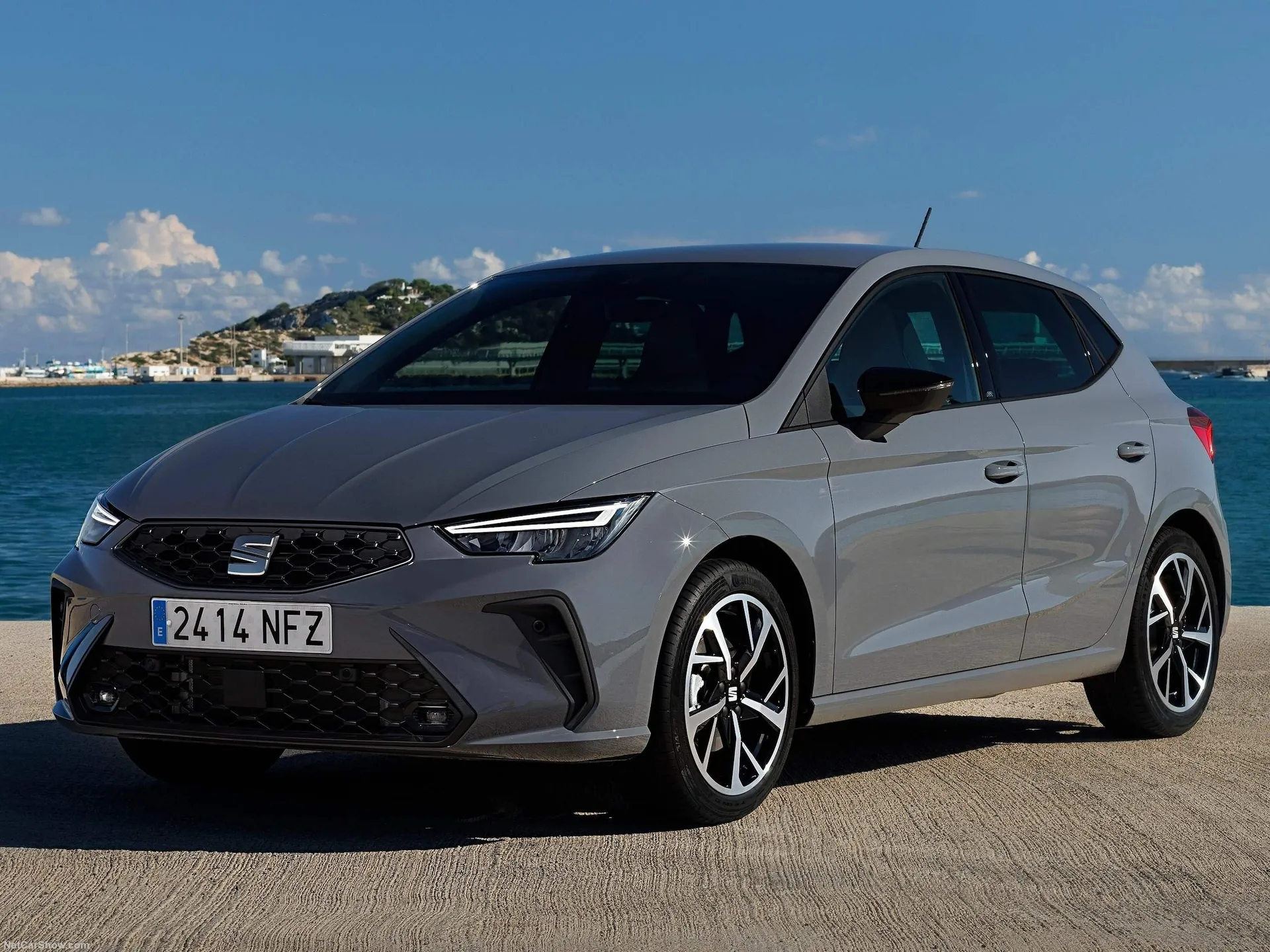
The changes that the SEAT Leon has received are therefore in two well-defined categories - design and technology. But the benefits aren't only perceived in terms of safety, functionality or comfort but also in quality and reliability. The aesthetic modifications are centralised around the front of the car with a new, wider grille and new-look headlamps; on the side, the XCELLENCE offers an exclusive chrome frame of the windows while for the rest of the range the chrome frame stands out in black, while the front and rear bumpers are new too, all with LED technology that include indicators and fog lights. New wheel designs also feature on the new Leon as well three additional colours: desire red, mystery blue and boheme purple.
On the interior there are aesthetic changes that reflected the new central console, new STD upholsteries in all trims and new lighting with LED in the cockpit, also with LED technology. The materials used are clearly of a better quality in the interior and on the central console which is slightly elevated, also now includes the electric parking brake.
In any case, the applied technology is the newest thing about the new SEAT Leon. Most of the new Leon's innovations are inside, under the bodywork. "Let's say we've put the Ateca inside the Leon," says the vice-president of R&D at SEAT, Dr. Matthias Rabe. The new SEAT Leon includes a GPS with a new 8-inch screen and a new central console (the whole connectivity system that is found in the Ateca) the wireless charging systems for smartphones or for keyless access (both to the car and boot), as well as many other things. And of course, the latest advances in driving assistance systems that will be discussed later.
Even though one of the main reasons for the Leon's success is without a doubt down to its quality design, some subtle changes have been made. Let's say everything has been changed with almost nothing changing. According to SEAT Design director Alejandro Mesonero-Romanos, "the Leon is a very attractive model and it isn't necessary to change its image, only reinforce it, refresh it. The objective is to harmonise all parts of the model, in particular the front and the rear with the sides of the car."
The Leon family has been characterised by a great design and this has been reflected in the results it has achieved. One of the main reasons is that Leon can adapt itself to different drivers. An example of this success is the family vehicle ST model, that has reached almost 35% of Leon sales.
The front and rear have sharper, more assertive lines than the current model, with incisive lateral lines that are less distinct at the front and rear. The intention has been to emphasise this sharp image, achieving a more coherent look with this update. It is noticeable especially in the new bumper design. Another intention has been to increase the perceived size of the car, stretching the grille an extra 40mm in a richer chrome than would be found in a superior category. Likewise, the character has been reinforced in terms of quality as much inside as out.
It is worth noting too that the new Leon is also even quieter than before. Inside the car, the ambient lighting LEDs' intensity can be regulated as the driver wishes from the newly designed 8-inch screen that eliminates the need for many of the buttons and dials that exist on the console of the current model. The multimedia system works similar to an iPod and includes new functions such as wireless charging for mobile phones, the new electric parking brake (except in the most basic model) and a new GPS signal amplifier for areas with low satellite coverage. Improvements have been carried out in each detail, including a better, more precise traffic sign recognition system.
The new, massively improved exterior lights are particularly worth mentioning thanks to the new rear lights and headlights complete with Full-LED technology that perform even in the worst weather conditions. LED technology has also been used in the indicators and fog lights. This technology reduces energy consumption as well as having a much quicker response, even quick the xenon plus lights.
With all these qualities and features, the new SEAT Leon manages to combine an emotional and rational design that is both functional and exiting, at the same time as transmitting the feeling of a car that is both dynamic, comfortable, technologically advanced, safe, reliable, with the highest level of connectivity, with exceptional quality, within the reach of any driver.
The new SEAT Leon will be available in 4 models. Each customer will be able to individually select the best combination which suits the driver's likes and needs; the 5-door sedan, 3-door SC coupe, ST estate and finally, the most adventurous, ST X-Perience.
The new SEAT Leon is offered initially in four equipment lines. The entry-level Reference, the Style and the FR. The new highlight is the XCELLENCE trim, this variant has a particularly distinctive and comfortable look-and-feel upholstery (Alcantara and leather as an optional), extensive trim elements and the multi-color ambient lighting. On the outside the New SEAT Leon gleams with the chrome design front grill, new front and rear bumpers, new chromed window frame, and comes also with FULL-LED rear lamps including rear LED's indicators. On the inside the New SEAT Leon has an aluminium XCELLENCE door step, LED interior illumination pack and the Keyless Entry System.
The FR and the XCELLENCE trims, will be at the same price in order to offer the best possible options to different kinds of drivers. The FR is for those looking for a sportier, more driving experience, whereas the XCELLENCE is focused on comfort, elegance and the latest technology. The CUPRA will be the fifth version, and will be launched in the near future.
It has to be said that this SEAT series is full to the brim with accessories. Although each market will adapted for its needs, the 'Style' version now includes ASR, ABS, ESP, XDS, cruise control, 16-inch rims, dual zone climate control, Bluetooth, daytime LED lights, Radio Media System Colour with 5-inch touch screen that includes an SD card slot, USB port on the central console, Aux in, and 6 speakers, as well electric parking brake, 7 airbags (2 in the front, 2 on the sides, 2 curtain airbags and a knee airbag for the driver), tiredness Recognition), auto-hold start assist, steering wheel and gearstick in leather, folding and reclinable rear seats 1/3 and 2/3, heated electric wing mirrors...
If this never-ending accessory list of the series seems short, we can even go a step further. Always taking into account that there will be slight variations in each country, the FR and XCELLENCE trims will include dark tinted windows, 17-inch alloy rims, full LED headlights including fog lights and cornering function, aluminium door sils, the Kessy System access with push-button start, exclusive upholstery, 2 USB ports (with Apple chip), aux-in/ iPod connection to the front console, 8 speakers, voice recognition, rear camera, electric wing mirrors, as rain sensor, front and rear reading lights with footwell lights and multicolour ambient lights, sports suspension (FR), SEAT Drive Profile with driving experience button for steering, acceleration and gearshift mode (only with DSG).
Technology; the latest in driver assistance systems
Following the launch of the Ateca with such an incredible range of driving assistance systems, it's now the Leon's turn to take onboard the latest technological developments:
This assistance function makes progress in heavy stop-and-go traffic far more bearable. At full-blown "traffic jam speeds", the new Leon steers, accelerates and brakes automatically within the system boundaries. At higher speeds of up to around 60 km/h, the system provides support with speed control and lane keeping. However, the driver's hands have to stay on the wheel.
The systems that form the basis of Traffic Jam Assist are Lane Assist and the ACC adaptive cruise control. Traffic Jam Assist also offers the function of adaptive lane keeping at speeds of less than 60 km/h. The system not only countersteers to correct when the New Leon leaves its lane, Lane Assist also keeps the SUV in the centre of the lane or alternatively "learns" the driver's preferred position. The ACC adaptive cruise control is likewise incorporated into Traffic Jam Assist, meaning that braking and accelerating is handled automatically when ACC is active in stop-and-go traffic. ACC and Lane Assist merge to become Traffic Jam Assist, which enables assisted guidance both laterally and longitudinally. The car thus steers, accelerates and brakes automatically - albeit only as long as the driver has his/her hands on the steering wheel and is ready and able to intervene at all times.
The radar-controlled ACC adaptive cruise control system automatically regulates the distance to the vehicle in front within the system boundaries. On long motorway journeys in particular, it plays a major role in relieving driver stress and aiding relaxation. Within a certain speed range, the integrated Front Assist can provide autonomous braking in dangerous situations.
One part of the Front Assistance system is the City Emergency Brake function with Pedestrian Protection. While Front Assist operates at higher speeds to warn against driving too close to the vehicle in front and potential collisions, automatically braking the vehicle if required, the City Emergency Brake system handles this task in urban traffic. Previously, the City Emergency Brake system only recognized vehicles. In the new Leon, the system has been developed further to also react to pedestrians.
Never miss another speed limit or traffic restriction thanks to the on-board camera and display. Traffic signs are reliably recognized and displayed in the cockpit and on the navigation screen.
This is a new function initiated in situations such as a medical emergency: If the driver remains inactive beyond a certain period, the vehicle issues first a visual then an acoustic warning, followed finally by a brief pulse of the brakes. If there is still no reaction, the new Leon slows down to a standstill, while staying in lane and activating the hazard lights and the electronic parking brake.
This assistance system guarantees optimum illumination of the road ahead - particularly in combination with the powerful LED headlamps - without dazzling or disturbing oncoming traffic. The camera in the housing of the rear-view mirror identifies traffic travelling closely in front or oncoming and dims the headlamps accordingly.
Connectivity, the constant connection with the digital world, is a major part of a modern, urban lifestyle for many people. The SEAT Leon offers the very highest level of connectivity - with the latest generation of Easy Connect infotainment systems, SEAT Full Link and the exclusive SEAT ConnectApp. The Media System plus, with its eight-inch screen, is the highlight of the new-generation infotainment systems, while The Connectivity Box in the central console of the SEAT Leon is easy to reach and for the first time enables wireless smartphone charging and, thanks to automatic coupling with the roof antenna, ensures better reception. It incorporates two USB ports for parallel connection of MirrorLink-capable smartphones and external music players. SEAT Full Link is the connectivity world for users of virtually all smartphones. Alongside MirrorLink, Full Link also incorporates the functions of Apple CarPlay and Android Auto.
The exclusive SEAT ConnectApp makes perfect use of MirrorLink integration. The driver is "always on", yet remains fully concentrated on the road ahead. One central function is "Voice Replay". This text-reading function converts messages from sources such as e-mail, text messages, Facebook and Twitter accounts into speech, reading them out loudly and clearly. Answers can be "dictated" by voice command. Another exclusive function is gesture control, whereby functions can be activated simply with just a small finger gesture on the touchscreen.
Engines; Great Performance with Low Emissions
The new SEAT Leon's range of engines satisfies a wide range of needs, including diesel, petrol and CNG (Compressed Natural Gas). The diesel range starts with the 90-horsepower 1.6 TDI version up to the 2.0 TDI with 184 horsepower, not forgetting the newest arrival to the range, the 115-horsepower 1.6 TDI unit.
In specific markets, the 115 horsepower 1.6 TDI unit will be available, as well as the 2.0 TDI engine with 143 horsepower. This version is also available with 110 horsepower for taxis as an estate ST model. In all cases, the engines are common rail petrol injection with excellent fuel efficiency accompanied by very low emissions.
If one is compared to the other, we see that the 1.6 TDI 90 horsepower engine - available with 5 doors, the 3-door SC and ST estate, can achieve top speeds of 180 kph, going from 0 - 100 kph in only 12.4 seconds, 12.6 seconds (5-door version) and 13 seconds (ST). This engine comes with a manual 5-speed gearbox and its average consumption stays between 4.3 and 4.6 litres per 100 km depending on the model and wheel size chosen (from 15 to 18 inches). The best thing of all is that not one of the engines surpasses 118 g/km of C02, with a minimum level of 114 g/km (3 and 5-door versions with 15 or 16-inch rims). As if that weren't enough, the 1.6 TDI 90 horsepower unit offers great driving pleasure thanks to a high-level of torque (230 Nm) that is available from only 1,400 rpm and remains constant up to 2,750 rpm. Similarly, the engine can remain at maximum power (90 horsepower) from 2,750 up to 4,800 rpm.
The next step up is occupied by the 110 horsepower 2.0 TDI unit that can be found in the ST estate. It comes equipped with a start-stop system, a 6-speed manual gearbox with longer ratios. And its performance is certainly extraordinary, it has to be said. With a top speed of 189 kph, 0 - 100 kph, in 10.7 seconds while its average consumption is only 4.1 litres per 100 km and its C02 emissions are lower than 106 g/km. With a maximum torque of 250 Nm between 1,500 and 3,000 rpm and a maximum power output of 110 horsepower between 3,250 and 4,500 rpm, the Leon ST 2.0 TDI guarantees outstanding efficiency of use with extremely low levels of consumption and C02 emissions.
The third variant of the 1.6 TDI is the 115 horsepower unit - the most significant newest addition to the new SEAT Leon's diesel engine range - also uses the start-stop ignition of the series. It can also be combined with the 5-door model, the 3-door SC and the ST, to which it's necessary to add the most adventurous of the family, the ST X-Perience. The 115-horsepower 1.6 Leon TDI can therefore have either front wheel drive or 4Drive complete with the 5th generation Haldex clutch system. The 4Drive models also have rear multilink suspension. Additionally the available gearboxes are 5-speed, automatic of double-clutch DSG with 6 (4Drive) or 7 speeds. Its maximum torque is 250 Nm but in this case between 1,500 rpm and 3,250 rom, while the 115 horsepower is available between 3,250 and 4,000 rpm. Average consumption - depending on the model, wheel size and traction system - is between 4,0 and 4,3 litre's per 100km, and C02 emissions are between 105 and 115g/km of C02.
The 2.0 TDI engine, with 150 or 184 horsepower, is also available with the 5-door model, the 3-door SC, the ST, meaning there is the option of having either front wheel drive or 4Drive. Similarly, it takes the same stop-start of the series, while the driver has the option of either a manual 6-speed gearbox or a 6 or 7-speed DSG. The 150 horsepower 2.0 TDI has a constant maximum torque of 340 Nm between 1,750 and 3,000 rpm, a truly powerful response from low engine speeds. Its 150 horsepower can also be maintained between 3,500 and 4,000 rpm. Coupled with the 3-door SC model, it's capable of achieving 0 to 100 kph in just 8.3 seconds, capable with both the DSG and the 6-speed gearbox. This acceleration from 0 to 100 kph can be achieved in 8.4 seconds with the 5-door model and 8.6 seconds with the ST versions (8.7 for the models that come with 4Drive). Its consumption and C02 emissions of course depends on the model, transmission and wheels (from 16 to 18 inches) selected, but never surpasses 4,9 litres per km or 126g of C02 per km, including 4.3 litres per km and 110g of C02 at its best. The 7-speed DSG is available for the ST 4Drive and ST X-Perience 4Drive. The 150-horsepower Leon TDI's top speed is between 211 and 215 kph.
The zenith of the range of engines is the 184-horsepower 2.0 TDI. With 380 Nm of maximum torque between 1,750 and 3,250 rpm, it is the definitive proof that the SEAT Leon is capable of combining ride comfort with superlative dynamism, as well as high performance expected by even the most demanding drivers. Indeed, multilink rear suspension is always the choice for the 184-horsepower 2.0 TDI Leon, regardless of drive (front wheel drive or 4Drive). Also equipped with the start-stop system of the series available with DSG or 6-speed gearbox, the 184-horsepower 2.0 TDI model can reach top speeds of 228 kph (226 kph with DSG, 224 kph with DSG and 4Drive) and goes from 0 to 100 kph in 7.4 seconds in the case of the SC, 7.5 seconds with the 5-door and 7.8 seconds in the ST. Fitted with 17 to 19 inch rims, its average fuel consumption and C02 emissions is between 4.5 to 4,9 litres per km and from 118 g/km to 139 g/km of C02 respectively.
With regard to the petrol engines, the range of power goes from 110 to 180 horsepower, with the stand-out new addition of the new SEAT Leon being the 115-horsepower triple-cylinder 1.0 TSI. Also in the range is the 1.4 TGI that can run on CNG and produces low levels of emissions. Below the petrol engine range is outlined.
The available gearboxes, depending on the version, are manual 5 or 6 speed, as well as the double-clutch 6 or 7 speed DSG. Front wheel drive or total 4Drive with the fifth-generation Haldex clutch will also be available.
One of the great innovations of the SEAT Leon range is the arrival of the 1.0 TSI 3-cylinder engine putting out 115 horsepower. This small marvel fits the 5-door, 3-door SC and ST. It follows the current trend in engine downsizing and is equipped with direct injection, turbo compressor, intercooler, variable valve timing and stop-start system. Coupled with the manual 6-speed gearbox, the Leon 1.0 TSI consumes 4.4 litres per km with C02 emissions of 102 g/km for manual and the double-clutch, 6-speed DSG. It's capable of accelerating from 0 to 100 kph in 9.5 seconds (the SC), 9.6 (5-door version) and 9.8 seconds (ST). It has a top speed of 202 kph and puts out no less than 200 Nm between 2,000 and 3,500 rpm. Its functionality sets an example to engine manufacturers everywhere with its low noise and absence of engine vibrations despite the absence of a balance shaft.
The 110 horsepower 1.2 TSI (available with 86 horsepower in certain markets) is found in the range combined with the 6-speed manual gearbox. 2 options are available with the 1.4; the 110-horsepower TGI can be fuelled with either petrol or natural gas (CNG) reserved for the 5-door and ST versions, and they can be ordered with both manual 6-speed gearbox and the 7-speed DSG. In terms of the 125 or 150-horsepower TSI, the 125-horsepower is available with the manual 6-speed gearbox, stop-start and it is available with any model (5 doors, SC, ST and ST X-Perience). The 150-horsepower 1.4 TSI stands out for the ACT disconnection system that is incorporated into two of the four cylinders to reduce consumption. It can be combined with a 6-speed manual gearbox or 7-speed DSG, as well as with the 5-door, ST and SC models.
The next step up is the 180 horsepower 1.8 TSI that uses direct injection. It is important to point out that, from this level of power and upwards, the SEAT Leon uses a multilink rear suspension axle. It is also worth noting that this is a car capable of reaching 226 kph and 0 - 100 can be done in 7,5 seconds. These are speeds that almost belong in the sports car category.
To conclude, highly efficient, environmentally engines with the latest in technology, such as the 1.4 litre version with ACT. All these attributes are without a doubt of exceptional performance and high quality often only seen in sport versions. And for sport, it must be mentioned that a CUPRA version of the New SEAT Leon will be available in the near future, complete with its own surprises. But that's a story for another day.