Porsche Macan Turbo
Since 2014, Porsche has delivered more than 850,000 examples of the Macan worldwide. Ten years after its launch, the second model generation is here, and in all-electric form. Through its progressive, timeless design and with characteristic Porsche performance, long-distance range and great everyday usability, the new Macan 4 and Macan Turbo aim to completely fulfil the requirements of Porsche customers who wish to drive an SUV. The cars will be built at the Porsche plant in Leipzig on a CO 2 -neutral basis, with the first customers taking delivery during the second half of this year. In combination with Launch Control, the Macan 4 produces up to 300 kW (408 PS) of overboost power, while the Macan Turbo boasts up to 470 kW (639 PS). The maximum torque is 650 and 1,130 Nm, respectively.
This guarantees excellent driving performance. The Macan 4 accelerates from 0 to 100 km/h in just 5.2 seconds, while the Macan Turbo takes just 3.3 seconds. They reach top speeds of 220 and 260 km/h, respectively. The combined WLTP range is up to 591 kilometres in the Macan Turbo and up to 613 kilometres in the Macan 4. With both models, WLTP ranges (EAER City) of well over 700 kilometres are also possible in pure city driving. Another feature with high everyday relevance: the SUV can tow trailers weighing up to two tonnes with the optional towing device.
"We are taking the Macan to a completely new level - with exceptional E-Performance, the new driver experience, and a very impressive design," says Oliver Blume, Chairman of the Executive Board of Porsche AG. "Our aim is to offer the sportiest model in its segment with the all-electric Macan," adds Jörg Kerner, Vice President Product Line Macan. Porsche is electrifying one of its highest-volume model lines with the new Macan. After the successful market launch of the Taycan in 2019, this is another important milestone on the road to electromobility. In 2030, more than 80 per cent of new Porsche models are to be all-electric - depending on customer demand and the development of electric mobility in the individual regions of the world. Porsche is also working towards net CO 2 neutrality across the value chain for newly built cars by 2030.
The Macan is the first model from Porsche to be based on the Premium Platform Electric (PPE), developed jointly with Audi. The PPE gives Porsche the opportunity to bring high-volume electric models, made to the highest technical standards, to the market in the future.
Design: sporty proportions and a coupé-like flyline
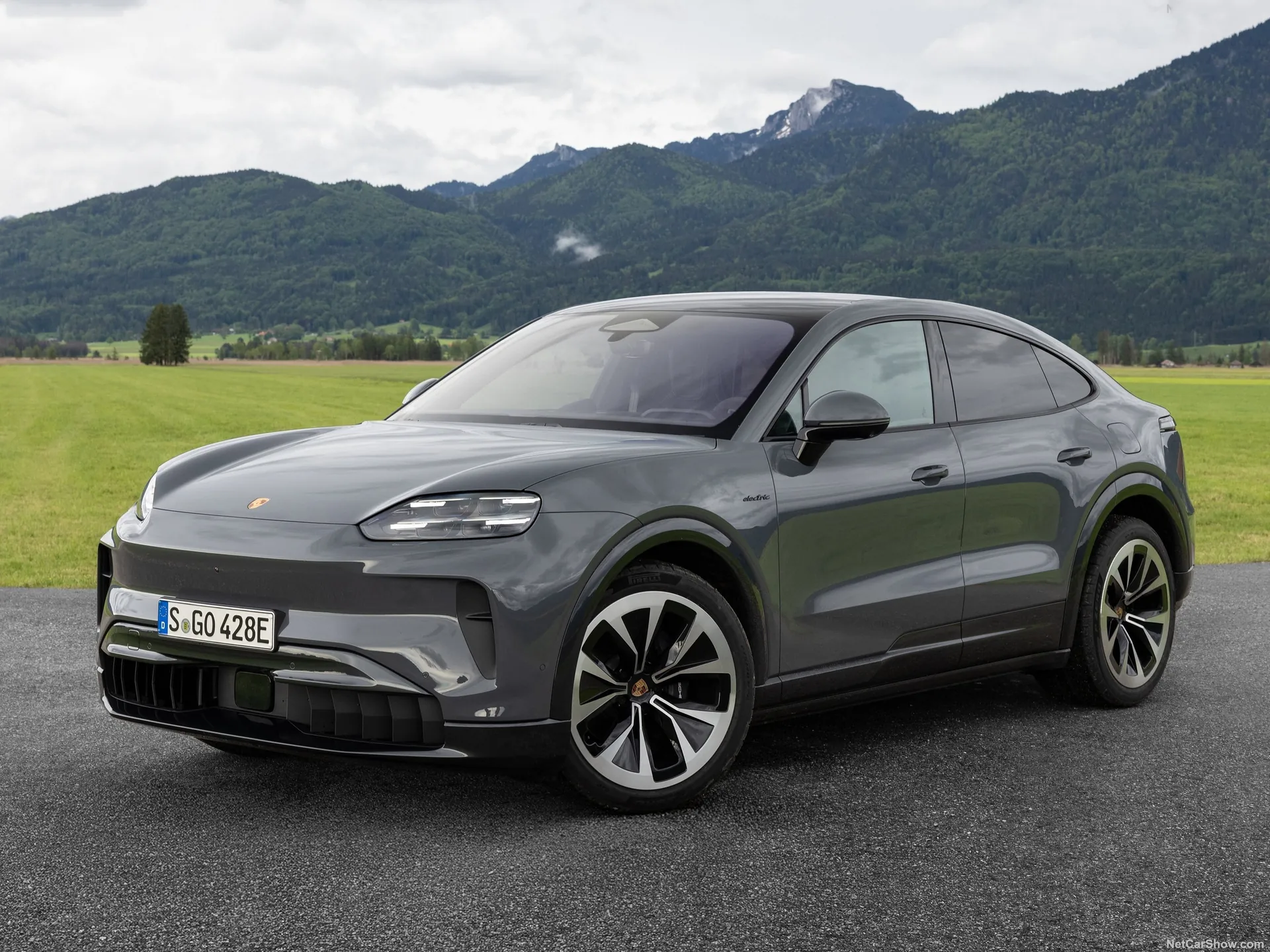
Thanks to their sharper proportions and Porsche Design DNA, the new Macan models look dynamic and purposeful. "With the all-electric Macan, we are presenting the first Porsche that we are taking electric from an established product identity," says Michael Mauer, Vice President Style Porsche. "The new Macan is clearly recognisable by its brand identity as part of the Porsche product family. The classic Porsche proportions have been further developed and optimally adapted to the challenges of an electric vehicle. This has further heightened the sporty, modern and dynamic appearance of the Macan. The design makes it clear: the Macan remains the sports car in its segment, even in electric form."
Short overhangs combine with a wheelbase 86 millimetres longer than the previous model (2,893 millimetres). The shallow pitch of the bonnet and the strongly pronounced wings give the entry-level SUV, which is 4,784 mm long, 1,938 mm wide and 1,622 mm high, a dynamic appearance even when it's stationary.
The headlights are divided into two parts: the flat upper light unit with four-point daytime running lights is embedded in the wings and emphasises the width of the car. The main headlight module with optional matrix LED technology is positioned slightly lower in the front end. The characteristic Porsche flyline forms a coherent whole with the shallow-raked rear window. In combination with the frameless doors and characteristic side blades, the result is a sporty design. Strongly pronounced shoulders give the rear a muscular look. The Porsche logo now sits in the centre of the sculptural 3D light strip.
Aerodynamics: active and passive elements for longer range
Porsche combines its design DNA with aerodynamics that are optimised for range. Thanks to the Porsche Active Aerodynamics (PAA) with active and passive elements and a drag coefficient of 0.25, the new Porsche Macan is one of the most streamlined SUVs on the market - with positive effects on range and fuel consumption. The PAA system includes the adaptive rear spoiler and active cooling flaps on the front air intakes. Air curtains below the headlight module, the low-slung front end and flexible covers on the fully sealed underbody optimise the air flow. At the rear, lateral tear-off edges and the diffuser blade ensure aerodynamic efficiency.
Interior: two luggage compartments and improved interior space
The new Macan is a performance-oriented SUV with a high level of practicality for everyday use, high-quality equipment and a spacious configuration. Electrification has led to increased luggage space in the Macan. Depending on the model and equipment fitted, the capacity behind the rear seat bench is up to 540 litres (cargo mode). In addition, there is the 'frunk', a second luggage compartment under the bonnet with a capacity of 84 litres. If the rear seat backrest is folded down completely, the rear luggage compartment capacity increases to up to 1,348 litres. With the Porsche Entry & Drive keyless comfort access, the tailgate can be opened and closed with a foot gesture. The frunk opens via a swipe gesture over the sensor, which is installed below the Porsche crest - while the key remains in the pocket.
Depending on the model and the equipment fitted, the driver and front passenger now sit up to 28 mm lower than before, while the rear passengers sit up to 15 mm lower, with increased legroom. The interior is unmistakably Porsche: the width of the cockpit is emphasised by an integrated black panel. The rising design of the centre console heightens the impression of a low and performance-focused position in the vehicle. At the same time, large windows give a light and airy feel to the interior space. In addition to the modern digital user interfaces, there are also select analogue control elements - for example, on the air vents and the air conditioning controls.
An LED light strip is integrated into the thoughtfully designed trim strip of the cockpit and doors. It acts as both ambient lighting and a communication light. Depending on the situation, it provides information or warnings - such as for greetings, charging processes or in conjunction with the driver assistance systems. The equipment in the new Macan enables a high degree of customisation. Porsche also aims to use more ecologically friendly materials in its cars. A proportion of such materials is used in selected parts in the interior of the all-electric Macan.
Porsche Driver Experience: new features and high performance
The Porsche Macan is equipped with the latest-generation display and operating concept with up to three screens, including the free-standing 12.6-inch, curved-design instrument cluster and the 10.9-inch central display. For the first time, the passenger can also view information, adjust settings on the infotainment system or stream video content while the car is being driven via their own optional 10.9-inch screen.
Also new is the head-up display with augmented reality technology, as offered by the Porsche Driver Experience. Virtual elements such as navigation arrows are visually and seamlessly integrated into the real world. The image appears to the driver at a distance of 10 m and corresponds to the size of an 87-inch display.
The new-generation infotainment system is based on Android Automotive OS. The standard Porsche Communication Management (PCM) in the new Macan takes computing performance to a new level. For example, the 'Hey Porsche' voice assistant suggests routes, including charging stops, at lightning speed. In the new Porsche App Centre, passengers can access popular apps from third-party providers and install them directly in the new Macan.
Electric powertrain: 800-volt technology and innovative bank charging
As in the Taycan, Porsche uses permanently excited synchronous electric motors (PSM) and 800-volt technology in the Macan. To optimise effectiveness, silicon carbide (SiC) is used instead of silicon as the semiconductor material in the pulse inverter (PWR) on the rear axle.
The electric motors draw their energy from a lithium-ion battery in the underbody. This has a gross capacity of 100 kWh, of which up to 95 kWh can be actively used. The DC charging capacity is up to 270 kW. At a suitably powerful fast-charging station the battery can be charged from 10 to 80 per cent in about 21 minutes. At 400-volt charging stations, a high-voltage switch in the battery enables bank charging by effectively splitting the 800-volt battery into two batteries, each with a rated voltage of 400 volts. This enables particularly efficient charging, without an additional HV booster, at up to 135 kW. AC charging at up to 11 kW is possible on household wall boxes. While driving, energy can be recuperated via the electric motors at a rate of up to 240 kW.
Suspension: the first Macan with rear-axle steering
Porsche developed the Macan with a keen focus on quintessential Porsche driving dynamics and a characteristic steering feel. "Thanks to its particularly sporty seat position and low centre of gravity, as well as its impressive driving dynamics and steering precision, the new Macan delivers a real sports car feeling," explains Kerner. Both the Macan 4 and the Macan Turbo have all-wheel drive.
The two electric motors are controlled via the power electronics almost in real time. The electronically controlled Porsche Traction Management (ePTM) operates about five times faster than a conventional all-wheel drive system and can respond to slip within 10 milliseconds. In addition, the all-wheel drive distribution is governed by the selected driving programme. Porsche Torque Vectoring Plus (PTV Plus), an electronically controlled differential lock on the rear axle, also contributes to the traction, driving stability and lateral dynamics of the Macan Turbo. Macan models with air suspension are equipped with the Porsche Active Suspension Management (PASM) electronic damping control. This can also be combined with the steel-spring suspension as an option. PASM now also features dampers with two-valve technology. Thanks to the more expansive damper map, this results in a wider spectrum between comfort and performance. This makes the differences between the driving programmes even more tangible.
For the first time, the Macan has optional rear-axle steering, with a maximum steering angle of five degrees. It enables a compact turning circle of 11.1 metres in urban traffic and when manoeuvring, while simultaneously enabling exceptional driving stability at higher speeds, ably assisted by the consistent and precise front-axle steering for which the brand is known.
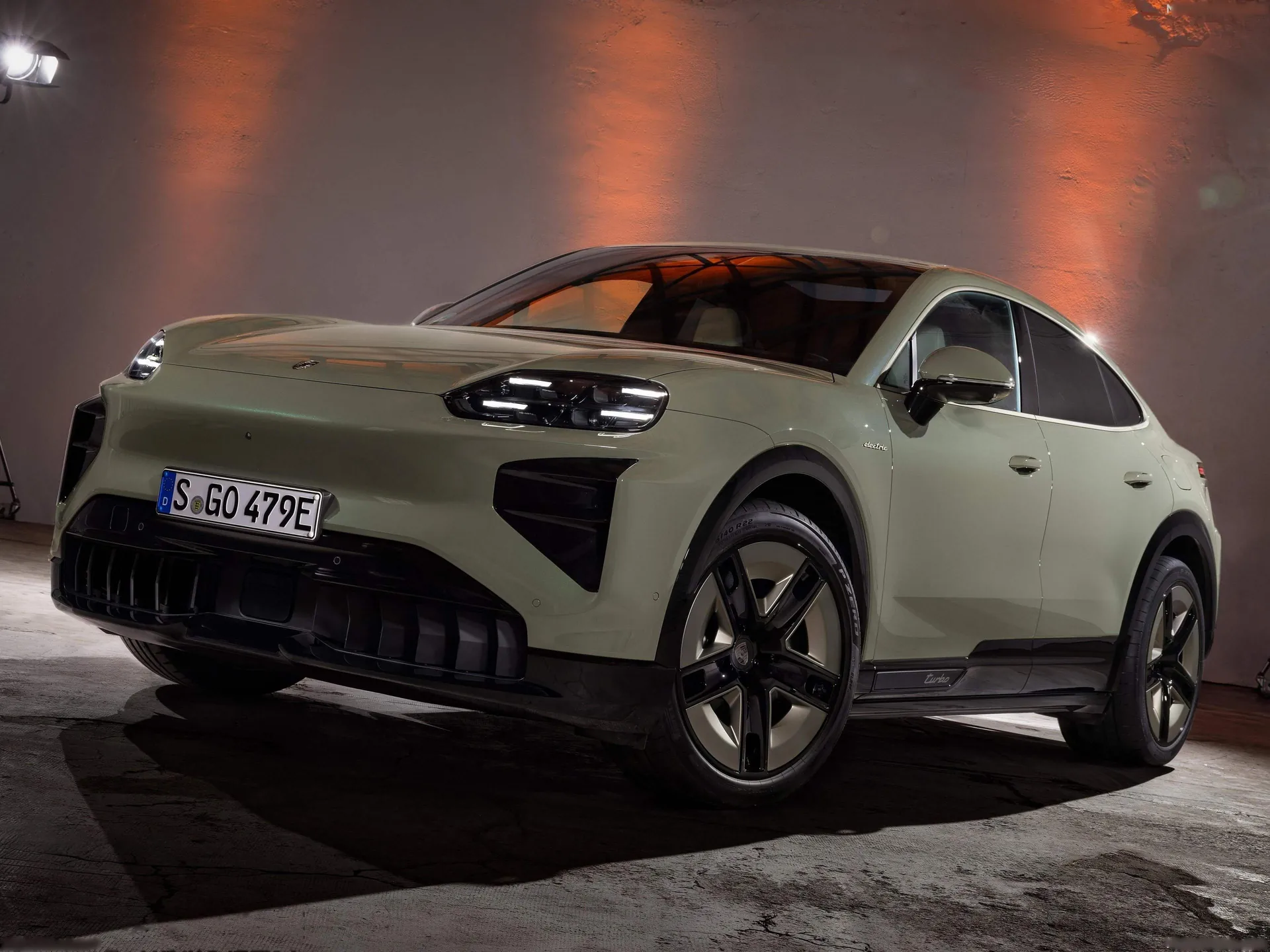
Thanks to coupé-like lines, a low front end and sporty proportions, the new Macan benefits from the classic Porsche styling that looks dynamic even at a standstill. Yet while the progressive exterior is typical of the brand's design DNA, the designers from Style Porsche have made good use of the creative freedom that electrification offers.
The shallow pitch of the bonnet and the strongly pronounced wings give the entry-level SUV (which is 4,784 millimetres long, 1,938 mm wide and 1,622 mm high) a powerful and sporty appearance. The headlights are split into two parts: the flat upper light unit with four-point daytime running lights is embedded in the wings and emphasises the width of the car. The main headlight module, meanwhile, is positioned slightly lower in the front end of the car and is available with matrix LED technology as an option. The 'air curtains' below the headlight module improve the aerodynamics, while smaller cooling air inlets underline the car's modern character. The front section, with its optimised 3D-look surface structure, contributes to aerodynamic optimisation and gives the Macan a progressive look at its front end.
The characteristic Porsche flyline forms a coherent whole with the shallow-raked rear window. In combination with the frameless doors, the result is a distinctly sporty design. Other striking elements in the car's profile are the recess in the doors and the sideblades - two classic characteristics of the Macan model line. Finished in Lava Black as standard and featuring a 3D texture on the Macan 4, they are available in up to five finishes depending on the model, including in carbon or in the same colour as the exterior paintwork of the car. The side profile of the Macan underscores the promise of performance: short overhangs combine with a wheelbase just under nine centimetres longer than the previous model (2,893 mm). The new Macan is fitted with up to 22-inch wheels with a staggered tyre fitment. The Macan 4 and Macan Turbo come as standard with aerodynamically optimised 20-inch wheels for the best possible efficiency.
Strongly pronounced shoulders give the rear of the Macan a muscular look. Below the adaptive rear spoiler, a continuous light strip spans the rear section and lends the vehicle a technical aesthetic. The Porsche logo now sits in the centre of the 3D light strip. It is moulded three-dimensionally like a glass sculpture. The rear diffuser harmoniously rounds off the lower part of the rear of Macan models.
There are 13 standard and 59 special colours (Paint to Sample) - as well as eight different wheel designs from 20 to 22 inches in diameter - allowing a high degree of design freedom for customisation.
Interior: driver-orientated, high-quality and individual
The interior is unmistakably Porsche: the width of the cockpit is emphasised by an integrated black panel. The rising design of the centre console heightens the impression of a low and performance-focused seating position in the vehicle. At the same time, large windows give a light and airy feel to the interior space. In addition to the modern digital user interfaces, there are also select analogue control elements - for example, on the air vents and the air conditioning controls.
To the left behind the steering wheel is a completely redesigned control lever. This allows the driver assistance systems to be activated directly. The mode button on the control lever can be used to open pop-ups in the instrument cluster and Porsche Communication Management (PCM), allowing additional settings for the assistance mode to be made directly and quickly. Thanks to the new, particularly ergonomic design of the control lever, the driver does not have to move their hand far from the steering wheel.
An LED light strip is integrated into the thoughtfully designed trim strip of the cockpit and doors. It acts as both ambient lighting and a communication light. Depending on the situation, it provides information or warnings - such as for greetings, charging processes or in conjunction with the driver assistance systems.
The equipment in the new Macan enables a high degree of customisation. Depending on the model, eight different colour variations can be combined with up to seven possible interior packages and up to four accent packages. Porsche also aims to use more ecologically friendly materials in its cars. A proportion of such materials is used in selected parts in the interior of the all-electric Macan. Econyl®, made of regenerated nylon, is used in the floor mats and flooring. The trim elements of the optional Summerwood interior package are partially made of rattan. Porsche also offers leather-free seats in the Macan 4.
For almost 50 years, the Turbo models have enjoyed a position of prestige in the Porsche programme. They represent distinctively high performance and are the pinnacle of every model series. To emphasise their uniqueness, Porsche is now differentiating the turbo models more strongly. The top-of-the-line Macan model is already benefiting from the sharpened look.
The new Turbonite metallic tone is exclusively reserved for the Turbo models. On the range-topping model a Turbonite finish is standard for the logo in the rear, the edging of the side windows, the airblades of the distinctive front end, the Porsche crest on the decorative covers of the alloy wheels, the design trim on the lower rear bumper and the sideblades. Turbonite is also the dominant colour in the exclusive crest on the Porsche Macan Turbo. All the range-topping high-performance models will soon feature this crest on their front, as well as on the lightweight alloy wheels and the steering wheel.
Selected interior components also feature Turbonite. The Macan Turbo comes standard with a leather package that features Turbonite accents. The accent strips in the doors feature this exclusive colour. In addition, Turbonite is used as a contrasting colour for the thread on the steering wheel, centre console, upper part of the gearshift and door panels, armrest and inner door handles.
Porsche combines its design DNA with aerodynamics optimised for range. Thanks to Porsche Active Aerodynamics (PAA) with active and passive elements and a drag coefficient of 0.25, the new Macan is one of the most streamlined SUVs on the market - with positive effects on efficiency and range. The automatically extending rear spoiler, active cooling flaps on the front air intakes and flexible covers on the fully sealed underbody all have an impact.
The rear spoiler extends variably in two stages depending on the speed and the selected driving programme. Whether the optional panoramic roof is open or closed is also taken into account. The cooling air flaps are fully open during charging to help cool the battery. They are usually closed while driving, which reduces wind resistance and extends the range. If the thermal management system recognises that additional cooling air is required for the battery, power units or interior air conditioning, the variable flaps open as required. The flat underbody has flexible elements near the rear wheels. They ensure that the surface remains closed during the rebound phase of suspension movement and therefore help to minimise air resistance. Air curtains below the headlight module and the low-slung front end optimise air flow. Two striking edges on the sides of the rear section, together with the diffuser blade, ensure aerodynamic efficiency. In combination with air suspension, the ride height can be lowered, depending on speed, which leads to improved aerodynamics and a higher electric range.
Optimal balance between performance and range
The new Macan 4 and the new Macan Turbo have a lithium-ion battery fitted low down within the chassis, of which roughly 95 kWh of the 100 kWh gross energy content can be actively utilised. A lightweight but sturdy glass fibre composite underbody guard protects the high-voltage battery from mechanical damage from below. A cooling plate is integrated into the battery housing. Twelve modules, each with 15 prismatic cells connected in series, are mounted on it. Prismatic cells have their own aluminium shell and are therefore exceptionally stable.
The anode, which accepts electrons and is therefore responsible for charging the battery, chemically consists of 100 per cent graphite. Graphite anodes offer high mechanical stability and good cycle stability. They also exhibit a slight change in volume during the charging and discharging cycle. These properties make them very robust and contribute to the service life of the batteries. The mixing ratio of nickel, cobalt and manganese is 8:1:1. Thanks to this cell chemistry, the battery achieves a high energy density.
During development of the high-voltage battery for the new Porsche Macan, there was also a focus on repairability. The twelve modules and other important components can be replaced individually if necessary, allowing the battery to be efficiently repaired.
The electrical control centre of the vehicle, the battery management system (BMCe), is seated on the battery cover. It distributes the electrical power between the electric motors and the high-voltage auxiliary consumers and enables DC charging with both 800 and 400 volts. Other tasks include monitoring the individual cell voltages and the entire current flow of the high-voltage system. This contributes to a long battery life. Safety components such as a pyrotechnic isolation unit and fuses are also integrated into the BMCe. If an overvoltage or short-circuit should occur, the high-voltage system is automatically switched off and can no longer be started. This also applies if a crash is detected and a restraint system (e.g. an airbag) is triggered.
Space-saving and efficient: the Integrated Power Box
Porsche has developed an innovation for the packaging of the electronic components and has applied for a patent. The Integrated Power Box (IPB) combines three components: the onboard AC charger, which converts alternating current (AC) into direct current (DC) during charging; the high-voltage heater, which controls the temperature of the high-voltage battery and the passenger compartment; and the DC/DC converter, which supplies the 12-volt vehicle electrical system. With a total weight of 19 kilograms, the IPB is about 3 kg lighter than conventional components. It is also very compact and as such it has been possible to position it under the rear bench seat above the battery to save space. This packaging optimises the weight distribution of the vehicle and enables a large front luggage compartment.
The high-voltage heater can be used to heat high-voltage components, such as the battery, in colder months. This keeps the battery in an optimal temperature window. This applies to both driving and charging. Thermal preconditioning is also carried out by the Porsche Charging Planner using the route planning function.
Robust and fast: charging with up to 270 kW
The powerful battery and high charging capacity are the key to efficient, fast travel. The Premium Platform Electric (PPE) comprises an 800-volt architecture that enables the new Macan models to achieve a DC charging power of up to 270 kW. The battery can be charged from 10 to 80 per cent (SoC) within approximately 21 minutes at a suitable fast-charging station.
The new all-electric Porsche Macan can charge rapidly over a very wide state-of-charge range (SoC range) - with the battery temperature and weather conditions having relatively little impact on the charging time. Up to about 55 per cent SoC, the Macan is capable of achieving more than 200 kW of charging capacity. This enables it to recharge for a range of up to 250 km in 10 minutes. The battery is preconditioned for an optimal charging experience.
At 400-volt charging stations, the battery is divided by means of a high-voltage switch. Before charging, the 800-volt electric circuit is switched into two separate 400-volt electric circuits. This effectively splits the 800-volt battery into two batteries, each with a 400-volt rating. This enables highly efficient charging with a capacity of up to 135 kW - without an additional HV booster. If necessary, the states of charge of the two battery halves are first aligned before they are charged together. The SoC can be charged from 10 to 80 per cent within about 33 minutes.
AC charging with up to 11 kW is possible at standard household wall boxes. For example, the battery can be charged from zero to 100 per cent overnight at home in around 10 hours. The Porsche Mobile Charger or the Porsche Wallbox are available for convenient charging at home. The Macan comes standard with two charging ports in the rear. The AC/DC connection is on the left on the driver's side, while the AC connection is on the right, on the passenger side. The charge port doors are manually operated as standard. The optionally available electric charge port doors are illuminated and can be opened via a touch gesture using a sensor in the tailgate or alternatively via the PCM.
A new control unit (Smart Actuator Charger Interface Device, or SACID) controls both charging sockets. The advantage for customers is that Plug & Charge becomes even more convenient. Anyone with a corresponding charging electricity contract will receive a digital certificate. Once this has been installed in the car, the corresponding vehicle function is activated automatically. With the help of the software key, the charging station and car communicate independently as soon as the charging cable is connected. Further authentication via an app, RFID or credit card is not necessary.
The innovative drive architecture of the Macan, which is based on the Premium Platform Electric (PPE), is designed for long-lasting sportiness and high efficiency. The 800-volt technology, powerful electric motors and sophisticated battery and charging management ensure impressive, reproducible driving performance with combined WLTP ranges of up to 613 km.
Depending on the model, the Macan is equipped with different powertrain combinations. Permanent magnet synchronous motors (PSM) are exclusively used on both the front and rear axles, as they enable high efficiency and robust reproducibility of the power output. All electric motors in the new Macan use windings made of rectangular copper wire to maximise the copper filling factor of the slots in the stator. The windings are arranged either as U-shaped hairpins and therefore welded on one side or - as in the performance rear axle motor of the Macan Turbo - as an i-pin welded on both sides.
The electric motor on the front axles of the Macan 4 and Macan Turbo has a diameter of 210 mm and an active length of 100 mm. It alone delivers up to 175 kW. The two models differ at the rear axle. The Macan 4 utilises a compact concept with an inverter, which ensures a particularly efficient and lightweight powertrain. The electric motor has a diameter of 210 mm and an active length of 200 mm and boasts an output of up to 280 kW. The Porsche Macan Turbo has a larger and more powerful drive unit on the rear axle with a diameter of 230 mm and an active length of 210 mm. With a maximum output of 470 kW, the electric motor delivers particularly high torque and therefore a very high continuous output and power density as well as a maximum efficiency of up to 97 per cent.
System output up to 470 kW and 1,130 Nm of torque
In combination with both electric motors, the Macan 4 achieves a system output of up to 285 kW (387 PS) and the Macan Turbo up to 430 kW (584 PS). With Launch Control in the Sport and Sport Plus driving modes, overboost output of up to 300 kW (408 PS) in the Macan 4 and up to 470 kW (639 PS) in the Macan Turbo is possible for a short time. The maximum torque is 650 and 1,130 Nm respectively. This guarantees excellent driving performance. The Macan 4 accelerates from 0 to 100 km/h in just 5.2 seconds, while the Macan Turbo takes only 3.3 seconds. They reach top speeds of 220 and 260 km/h respectively.
Power is transmitted to the wheels on the front and rear axles via a two-stage single-speed transmission, designed as a parallel-axis three-shaft gearbox. On the front axle, the Macan 4 and the Macan Turbo use a gearbox with a ratio of 9.2. A lightweight spur-gear differential is used here to keep the gearbox compact. The two models differ again at the rear axle. The Macan 4 uses a gearbox with a ratio of 9.8. The Macan Turbo uses a gearbox with a ratio of 9.0, which is designed for higher forces. A special feature here is the additional integration of an electronically controlled rear-axle differential lock for Porsche Torque Vectoring Plus.
Power electronics with silicon carbide semiconductors in the Turbo
The pulse inverter comprises the power electronics that convert the direct current from the battery into three-phase alternating current for the electric motors. The main distinguishing features are the current carrying capacity and the semiconductor material. The pulse inverter used on the front axle of the Macan 4 and Macan Turbo utilises silicon as the semiconductor material. It conducts a maximum of 350 amps to the electric motor. In the pulse inverter on the rear axle of the Macan 4 and Macan Turbo, the highly efficient semiconductor material silicon carbide (SiC) is used for the sake of higher efficiency. This significantly reduces switching losses in the pulse inverter and enables higher switching frequencies. The rear-axle pulse inverter in the Macan 4 conducts a maximum of 480 amps; in the Macan Turbo it achieves an impressive 900 amps.
The operating strategy also plays an important role in the overall efficiency of a vehicle. Depending on the selected driving mode and the driving situation, the drive torque of the new Macan is distributed fully variably between the front and rear axles. Under stable, moderate driving conditions, it actually comes exclusively from the rear-axle drive unit. In this case, the front axle runs passively and can immediately provide drive torque again if required. This fully exploits the efficiency potential of the SiC pulse inverter while retaining the driving stability of an all-wheel drive vehicle.
Up to 240 kW recuperation capacity and coasting
Recuperation offers further efficiency benefits. Up to 240 kW can be recuperated in the Macan, depending on how much the driver presses the brake pedal as well as the temperature and state of charge of the battery (SoC), among other factors. This corresponds to a deceleration of around 4.3 m/s², which is about 40 per cent of the maximum braking power. This means that up to 98 per cent of the total braking energy can be recovered in everyday use. If the desired deceleration is greater than the power that can be absorbed via recuperation, the hydraulic brake is applied. The driver does not perceive the fine adjustment via the blending function.
In keeping with the Porsche philosophy, the Macan can also coast. If the driver eases off the accelerator pedal but does not actively brake, the drive unit is switched off or, at higher speeds, put into zero-torque-control mode. This slows down the dissipation of kinetic energy and the car glides as far as possible without energy input. Alternatively, the driver can activate thrust recuperation via the PCM. Recuperation then takes place with a moderate deceleration of 0.6 m/s². This corresponds approximately to the deceleration generated by engine drag torque, commonly referred to as the engine braking, in conventional drive systems.
All in all, the efficient high-voltage and drive systems of the new Macan models result in long ranges despite the typical sports car performance. The combined WLTP range is up to 591 km in the Macan Turbo and up to 613 km in the Macan 4. In city driving, well over 700 km is possible on a single charge with both models.
Exhilarating sound experience: Porsche Electric Sport Sound
The sporty driving experience of the new Macan models can be underscored with a Porsche Electric Sport Sound specially created for the SUV. An intelligent control algorithm provides the right emotional sound depending on the driving situation, the torque and speed of the electric motors. The specific sound of the Macan is reproduced throughout the entire sound system as well as to the outside.
Quintessential Porsche driving dynamics and precise steering feel
Porsche has developed the new Macan with a focus on outstanding driving dynamics and a sporty, direct steering feel. Thanks to a centre of gravity that is up to 140 mm lower than in its predecessor, new Porsche Active Suspension Management (PASM) with two-valve technology, Porsche Traction Management (ePTM), Porsche Torque Vectoring Plus (PTV Plus) and the rear-axle steering available for the first time in a Macan, the car delivers an exceptionally broad spectrum between comfort and performance. With its particularly sporty seating position, impressive driving dynamics and precise steering, the new Macan conveys a genuine sports car feeling. For its first all-electric SUV, Porsche is tapping into the full potential of electrification and raising the bar in every aspect of chassis development.
Aluminium double-wishbone front suspension with a separate control arm level supports the Macan's chassis, which enhances responsiveness, steering precision and directional stability thanks to its kinematics and elastokinematics. The Macan Turbo also scores points with its high-performance rear end. The electric motor has been rotated around the vehicle's transverse axis and therefore positioned further to the rear. This enables the desired rear-biased weight balance of 48 per cent in the front and 52 per cent at the back. In the Macan 4, the drive unit is mounted within the chassis subframe, while the Turbo's drive unit is attached directly to the body via four points. The separate connection of the axle and electric motor enables the engine and suspension mounts to be tuned separately to the respective optimal configuration. The body in the Macan also offers space for a rear axle steering system and the PTV Plus rear differential lock, which is standard in the Turbo.
Porsche Traction Management distributes drive power within milliseconds
The two electric motors in the new Porsche Macan are controlled individually and almost in real time via the power electronics. The electronically controlled Porsche Traction Management (ePTM) operates around five times faster than a conventional hang-on all-wheel drive system and can respond to slip within 10 milliseconds. In addition, the all-wheel drive distribution is governed by the selected driving programme. In normal mode, the drive distribution is designed for high efficiency and range. This means that rear-wheel drive is used as often as possible. In Sport and Sport Plus modes, the focus of the ePTM is on optimising traction; the drive on the front axle is engaged more frequently. In off-road driving mode, the Macan switches to all-wheel drive with a 'rough road' configuration. The differential speed between the front and rear axles is limited by a virtual centre-differential lock, which improves traction. In addition, High Level I (plus 20 mm or plus 40 mm in High Level II) is activated.
As well as the ePTM, Porsche Torque Vectoring Plus (PTV Plus), an electronically controlled differential lock on the rear axle, contributes to traction, driving stability and lateral dynamics in the Porsche Macan Turbo. The control strategy of the PTV Plus depends on the respective driving situation. The rear differential lock and carefully measured, dynamic braking interventions on the rear axle support the steering behaviour and steering precision in a targeted manner.
Rear-axle steering for even more agility and stability
For the first time, the Porsche Macan has optional rear-axle steering, with a maximum steering angle of five degrees. It enables a compact turning circle of 11.1 metres in urban traffic and when manoeuvring, while simultaneously enabling exceptional driving stability at higher speeds, ably assisted by the consistent and precise front-axle steering for which the brand is known.
At speeds of up to around 80 km/h, the rear wheels steer in the opposite direction to the front wheels, with a maximum steering angle at the rear axle of up to five degrees when parking. This makes manoeuvring easier, the turning circle is reduced by around one metre and the steering angle requirement of the steering wheel is reduced by up to 24 per cent. This virtual shortening of the wheelbase through the rear-wheel steering also results in a more responsive turn-in when cornering. At speeds above approximately 80 km/h, the rear wheels steer in the same direction as the front axle. As a result, the wheelbase is effectively lengthened, further increasing driving stability, for example when changing lanes on the motorway.
The rear-wheel steering is accompanied by a 15 per cent more direct steering ratio on the front axle. The front-axle steering in the Macan is uncompromisingly Porsche-like and offers maximum precision in all steering manoeuvres. Combined with high-actuator dynamics, this results in optimal control. The Porsche-developed power steering support identifies and amplifies important steering information for the driver, such as the surface characteristics of the road and the grip capability of the tyres. Disruptive vibrations and bumps, on the other hand, are eliminated and not transferred to the steering wheel, giving the driver a clear and direct steering feel.
PASM damper control offers greater performance and comfort
Macan models with air suspension (standard on the Macan Turbo, optional on the Macan 4 in Europe) are equipped with Porsche Active Suspension Management (PASM) electronic damping control. PASM can also be combined with the steel-spring suspension as an option. The system reacts to the condition of the road but also to speed, longitudinal acceleration and lateral cornering force, accelerator actuation, steering input and the ride-height setting of the car.
PASM now also features dampers with two-valve technology, in which the rebound and compression levels can be individually controlled. This makes it possible to switch between performance and comfort at lightning speed and apply the maximum damping force in both directions. Compared to single-valve technology, the force potential in the pressure range is significantly greater. This ensures excellent pitch and roll support as well as a high level of body stability. Thanks to the more expansive damper map, this results in a wider spectrum of comfort and performance. This makes the differences between the driving programmes even more tangible. In conjunction with air suspension, each individual driving programme has its own ride-height setting. Depending on speed, the body can be lowered by up to 30 mm below the standard ground clearance of 185 mm, which benefits the range of the vehicle thanks to the reduced drag. At High Level II, the ground clearance is raised to up to 225 mm.
The wheel and tyre setup in the Macan is also classic Porsche. This is particularly evident in the staggered wheel fitment: the wheel widths on the front and rear axles differ significantly to accommodate the rear-focused weight distribution - for more grip and improved driving dynamics. Further performance potential is provided by the wheel sizes (which range from 20 to 22 inches in diameter) and the newly developed performance tyres, which shorten the braking distance by six per cent compared to the standard summer tyres and are characterised by even better performance in dry handling. The performance tyre is only available in conjunction with the 22-inch RS Spyder design wheel.
In keeping with the sporty driving performance, the Macan models deliver characteristic Porsche braking performance in all driving situations - although the high recuperation capacity of up to 240 kW means that the mechanical brakes are used much less frequently. The brake pads and brake callipers have been completely redeveloped for the all-electric SUV. The callipers have significantly reduced residual brake torque in order to support the range requirements. Both models have grey cast iron brakes at the rear with 350 x 30 mm discs and floating callipers. At the front, the new Macan 4 features four-piston aluminium fixed-calliper brakes measuring 350 x 34 mm while the Macan Turbo features six-piston aluminium fixed-calliper brakes measuring 400 x 38 mm.
The Porsche Macan is equipped with the latest-generation display and operating concept with up to three screens, including the free-standing 12.6-inch, curved-design instrument cluster and the 10.9-inch central display. For the first time, the passenger can also view information, adjust settings on the infotainment system or stream video content while the car is being driven via their own optional 10.9-inch screen.
The 12.6-inch, fully digital and free-standing curved display is positioned directly in the driver's line of sight. As usual with Porsche, this screen forms the highest point of the dashboard. A central assistance screen simplifies the operation of the driver assistance systems and supports the driver with a large display. Using the steering wheel control, the driver can customise the display of the instrument cluster and the optional AR head-up display.
The central display of the Porsche Communication Management (PCM) system is a high-resolution, 10.9-inch touch display in full HD quality. Like on a smartphone, the driver can customise the positioning of their favourite apps for quick access. The optional passenger display also has a diagonal measurement of 10.9 inches. The passenger can adjust settings for infotainment or navigation, browse through media apps or stream video content. This is even possible while the car is being driven. Thanks to special display technology, this display cannot be seen from the driver's seat.
Large-scale: the head-up display with augmented reality
For the first time at Porsche, a head-up display with augmented reality (AR) technology is available. Colour AR content is projected almost seamlessly into real-world surroundings with pinpoint accuracy. For example, navigation arrows are displayed in the correct turn lane. The system uses both environmental data and the position of the car to achieve this. This also supports the functions of some driver assistance systems, such as activated Adaptive Cruise Control, where the selected distance to the vehicle in front is virtually laid over the road in a carpet of dots. Warnings from the driver assistance systems can also be displayed in the AR area. This allows the driver to register notifications and information more quickly and further reduces the risk of distraction. The image of the head-up display appears to the driver at a distance of 10 m and corresponds to the size of an 87-inch display. This makes the head-up display one of the largest currently available on the market. In the status area under the AR display, speed, traffic signs and assistance and navigation symbols are displayed statically.
Intuitively displayed in colour: the communication light
The Porsche Macan comes as standard with ambient lighting featuring a communication light. In the front area of the interior there is a light strip with 56 LEDs running across the instrument panel from one door panel to the other. This colourful animated strip visualises various vehicle states, such as the charging process, and greets passengers as they board with a light display. Characteristic Porsche features such as Launch Control or the change of drive modes are highlighted with a flourish. The communication light also works with some driver assistance systems, such as Lane Change Assist, and can provide location-based warnings. Danger is indicated to the driver, for example, by a pulsating strip of light on the door if opened when a cyclist is approaching from behind.
The standard Porsche Communication Management (PCM) in the new Macan takes computing performance to a new level. This also applies to the voice assistant, which responds with lightning speed to the command 'Hey Porsche'. It also cooperates with the communication light. Using two microphones, the system recognises who is talking and visually displays this on the central screen as well as via a light sequence in the communication light. If the driver and passenger talk over each other, there's no confusion: the system simply focuses on who spoke first. With the addition of Turkish, Czech, Hungarian, Portuguese, Taiwanese and Cantonese, the language assistant now understands six more languages than before. There are now 23 languages available in total. At the same time, the voice assistant has become even more intelligent. It helps the driver find specific parking and charging options, and controls music playback as well as vehicle and comfort functions.
High-performance and easy to use: new operating system and range of apps
The new infotainment generation uses Android Automotive OS as its operating system and boots up in the background as soon as the driver approaches with the key. Vehicle and infotainment functions are therefore directly available and can be operated quickly and smoothly. Porsche has fundamentally revamped the range of connectivity capabilities in the Macan. Thanks to the new operating system, digital content meshes even more seamlessly with the vehicle. The new hub for connectivity services is the Porsche App Centre. It is constantly evolving and keeps the Macan up to date throughout its lifecycle. In the Porsche App Centre, drivers and passengers can directly install and use their favourite third-party apps just as they can on their smartphones. When the Macan launches, a variety of apps of different categories will be available and the range will be constantly expanded. In European markets, this includes music services such as Spotify, Amazon Music and TuneIn Radio, the YouTube streaming platform, the Cisco WebEx conference system as well as the Home Assistant smart home app and various games.
The smartphone integration of Apple CarPlay and Android Auto has also been further developed: when using Apple CarPlay, Apple's map is displayed in the instrument cluster, as is Google Maps in Android Auto. Many functions of the optional Sport Chrono package can be operated via the Sport Chrono app integrated into the PCM in the central display. This includes recording lap times and telemetry data, adding new tracks and section and lap analysis.
In the navigation app, monthly map updates as well as the updating of relevant map data for route calculation ensure a high-quality customer experience. If the customer is not in the car at the time, they can also plan and send the route to the vehicle from wherever they are via the My Porsche app.
Intelligent charging planning for fast, efficient travel
Whenever route navigation is active, the Charging Planner uses intelligent charging planning with optimal charging stops to help you travel in a relaxed fashion and without wasting time, even on long journeys. First, the navigation system calculates the quickest or shortest route using real-time traffic information. If the battery state of charge is not sufficient for arrival at the destination at current consumption levels, the Charging Planner automatically plans the necessary charging stops along the route. The Charging Planner takes into account the charging capacity available at charging stations and the resulting charging time is calculated to achieve the optimal fast-charging option. To fully utilise the charging capacity available, the system also regulates the battery preconditioning in advance of the charging stop.
The online functionality required for the Charging Planner is included for 10 years as part of the Porsche Connect Package. The Charging Planner can also suggest charging stops offline thanks to the locally stored database entries.
The new Porsche Macan is also characterised by high everyday practicality, high-quality equipment and family-friendly spaciousness. Electrification has significantly increased the variability of Porsche's B-segment SUV. The luggage compartment volume of the 4,784 mm long, 1,938 mm wide and 1,622 mm high Macan (1,621 mm high for the Turbo) can be increased to up to 540 litres (Macan 4) or even 1,348 l with the rear seat bench folded down. Luggage space is also available under the bonnet: at 84 l, the frunk offers sufficient volume for small luggage or, for example, the charging equipment. The frunk can be opened with a convenient hand gesture. The automatic tailgate can be opened and closed with a foot gesture.
The Macan can also be optionally equipped with an electrically unlocking towbar system. Thanks to the maximum towing capacity of 2,000 kg and a towbar load of up to 80 kg, depending on the market, bigger towing jobs or installing a bicycle rack are no problem.
Sporty seating position and (new in the Macan) seat massage
The driver and front passenger sit up to 28 mm lower in the all-electric Macan compared to the previous model. Heated eight-way comfort seats are fitted as standard in the Macan 4, while adaptive 18-way sports seats and 14-way comfort seats are available for the Macan Turbo. Seat ventilation and a massage function are available as options. There is more standard storage space and there are more storage options in the first row of seats than before, plus two USB-C quick-charging ports in the storage compartment in the centre console and a 12-volt plug socket. A cooled smartphone tray enables wireless charging with 15 watts of charging power. In the rear of the Macan, passengers can sit comfortably on the 40:20:40 split rear bench seat, with optional seat heating. The rear-seat position, which is 15 mm lower than in the predecessor model, also offers people above 1.80 m tall sufficient headroom when sitting in the rear seats. The significantly increased wheelbase of 2,893 mm offers greater legroom for rear passengers. Two USB-C fast charging ports are also available in the rear.
The new air-quality system in the Porsche Macan offers occupants protection against particulate matter and pollutants from the air outside the car. The proven cabin air filter and GPS recirculation function are fitted as standard. The latter recognises tunnel entrances based on predictive navigation data and activates the recirculation function automatically ahead of time. This prevents odours and exhaust fumes from reaching the passenger compartment in the first place.
The sensor of the optional air quality system continuously measures the PM2.5 particulate matter pollution in the outside air and vehicle interior and displays the values in the PCM. The automatic recirculation mode, which is activated when limit values are exceeded, and the multiple recirculation runs through the fine dust filter clean the interior air and keep out polluted outdoor air. The ioniser removes many germs and pollutants from the air in the automatic climate control before it flows into the vehicle's interior. Allergy sufferers in particular benefit from the significantly more pleasant interior climate and improved air quality.
In addition to the Sound Package Plus with 10 speakers and 150 watts of total power as standard in the Macan 4, the now even more powerful sound systems from BOSE® and Burmester® ensure a first-class sound experience. With 14 speakers including a separate subwoofer, 14 amplifier channels and a total output of 710 watts, the BOSE® Surround Sound System offers powerful and dynamic sound in every seat. The Macan Turbo comes with the BOSE® system as standard. Thanks to the subwoofer installed under the load compartment floor, the luggage compartment capacity of the top model is between 480 and 1,288 l. The Burmester® 3D High-End Surround Sound System has 21 speakers with a two-way centre system and a 400-watt active subwoofer. The system delivers a total output of 1,470 watts. In addition to the familiar 'Symmetrical' listening position, the Burmester® sound system also features the new driver-orientated 'Driver' configuration. This increases both the bass precision and the naturalness of voice and instrument playback for the driver. For the BOSE® and Burmester® systems, there is also the new Eco-Mode sound setting, in which the rear speakers and the subwoofer are not included in the playback. Depending on the volume and style of music, this can save energy.
The standard LED headlights including PDLS in the new Macan 4 are divided into two light modules arranged one above the other. The upper module contains the characteristic Porsche four-point daytime running lights. The daytime running light and indicator LEDs are positioned in alternating order in each of the four strip modules. The lower module integrates the functional units for the low beam and high beam, including the associated assistance functions of the PDLS. In addition to the high beam assistant, the standard LED main headlights also have speed-sensitive headlight control and dynamic range control.
The Porsche Macan Turbo comes standard with LED Matrix headlights with Porsche Dynamic Light System Plus (PDLS Plus). This lighting system utilises speed, camera and navigation data to provide ideal illumination. A total of 84 LEDs per headlight generate the high beam together with upstream lenses and reflectors. The system can illuminate the road to a distance of more than 600 m.
A camera recognises vehicles in front and oncoming vehicles as well as reflective traffic signs. This information is used to distribute the high beam intelligently, as individual areas of the matrix can be specifically omitted. This enables optimal visibility with the high beam activated without disturbing other road users or being dazzled by traffic signs. The boost function additionally increases the illumination of the vehicle's own lane in two-way traffic. This guides the driver's eyes, thereby increasing comfort and safety. The technology also enables adaptive functions such as static cornering lighting and motorway high beams. The LED matrix headlights welcome and bid farewell to the Macan driver with a Coming/Leaving Home animation. In the Exclusive Manufaktur version, the headlights can be darkened on request and are available in Glacier Ice Blue. They also include an exclusive animation with a theatre effect. Driver assistance systems: more safety, more comfort
The new Macan offers a wide range of comfort and assistance systems. They make the car safer and make travelling and parking more convenient. The hazard display via the standard communication light is particularly impressive. It provides visual support for the Exit Warning and warnings from the Lane Change Assist function.
Overview of standard assistance systems and their functions:
An optional adaptive cruise control system is available that takes the strain off the driver on long trips. This assistance system allows you to maintain a constant speed and distance from the vehicle in front. The latter function is possible right down to a standstill. Restart is semi-automated.
Porsche InnoDrive including Active Lane Keeping supports the driver with predictive longitudinal control and continuous steering interventions to maintain lane, speed and distances. Speed, acceleration, deceleration and cornering speeds adapt to the route and programmes. The system also reacts proactively to speed limits, bends, roundabouts, right-of-way rules and bottlenecks. The system links online navigation data and information from the vehicle's cameras and sensors as well as available Connect services. This transfers the route ahead and the traffic into a high-resolution real-time model. On well-developed country roads and motorways, the system takes over lane keeping in traffic jams with continual steering interventions - even in roadworks and bottlenecks. The system automatically detects lane markings and vehicles ahead in its own lane and the adjacent lane.
The Surround View including Active Parking Assistance supports the driver in three ways when parking and manoeuvring. The driver can start the search for a parking space via the PCM. The system recognises parallel and perpendicular parking spaces using ultrasonic sensors. As soon as a suitable space has been found, the driver can start the automatic parking process via the PCM. The intelligent parking assistant takes over steering, accelerating and braking during the parking process and automatically parks the vehicle in and out of parallel parking spaces.
The Surround View function uses four individual cameras to calculate a virtual top view of the Macan, which is displayed in real time in the PCM. The trailer manoeuvring assistant helps the driver when the vehicle is being used as a towing vehicle and needs to be manoeuvred in reverse. After engaging reverse gear, all the driver has to do is activate the system and gently accelerate. The driver can use the PCM to set the angle at which they want to reverse the vehicle. The image from the reversing camera on the PCM shows corresponding guiding lines for orientation. The system automatically turns the steering wheel and steers the trailer on the path selected by the driver.