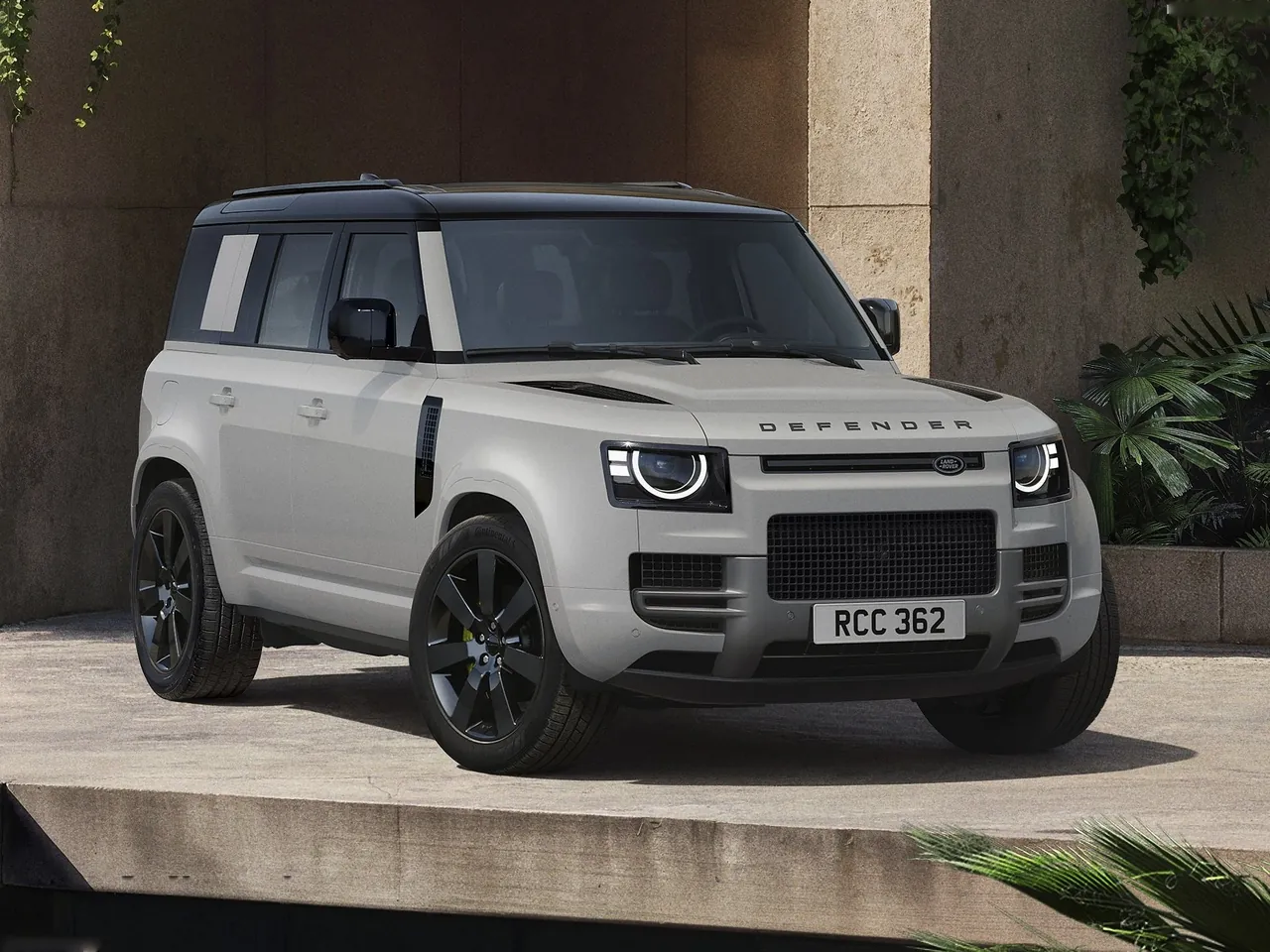
Land Rover Freelander Td4 3door
Market research by the Rover Group in the late 1980s suggested that Land Rover could enter the compact SUV market segment. In the early 1990s, the Rover Group had a restricted product development budget and looked for a partner to develop the project, which was codenamed CB40 (after Canley Building 40, where the concept was initially developed). Rover's then-partner Honda declined and chose to develop its own CR-V model that was launched in 1997.
Rover decided to go it alone with the CB40, using existing parts and components, as it had done with the MGF roadster. When BMW took over Rover Group in 1994, the CB40 project received the capital it needed to proceed. In December 2007, Autocar reported that early development designs and sketches of the Freelander featured Hyundai badging, suggesting that a tie up between both manufacturers was being proposed. The design of the Freelander was by Gerry McGovern, who went on become the head of design at Land Rover in 2007.
Land Rover initially intended to subcontract the manufacture of the Freelander to Valmet in Finland, however BMW terminated this agreement upon acquiring the Rover Group, and instead funded production facilities at Solihull, finally making use of the old Rover SD1 assembly hall which had been mothballed in the early 1980s, when Rover car production was moved to Cowley.
The Freelander was launched in October 1997. It became Europe's best-selling four-wheel drive model until 2002. The last Freelanders in North America were sold as 2005 models.
There were a variety of models, based around five-door estate and three-door softback (semi-convertible), hardback, and commercial (van-like) versions. In 2004, Land Rover introduced an improved and upgraded version of the Mark I; changes included a new interior and major external revisions, including a new face and rear.
The three-door model was available in E, S, SE, Sport and Sport Premium trim and the five-door model in available in E, S, SE, HSE, Sport and Sport Premium trim.
Manual gearboxes dominated the early models, but automatic Tiptronic-style gearboxes (Jatco JF506E) became increasingly popular and were standard on the V6. The Automatic Tiptronic gearbox was also available as an option on the Td4.
The first generation Freelander was used in the 1998 Camel Trophy and participated in Land Rover's G4 Challenge. The vehicle represented a compromise because it did not have a low-range gear selection, nor a locking differential, as found on larger Land Rover models. This meant that in comparison to other Land Rovers, off-road performance was not as good. In comparison to similar models produced by other manufacturers in the same period of time like the Honda CRV or the Toyota RAV4, however, the first generation Freelander was far more competent off-road.
It had more than sixteen patented features, including the IRD or Intermediate Reduction Drive, which acted as a front differential and fixed ratio transfer; the VCU or viscous-coupling, which reacts to the differing rotational speed of the prop shafts, allowing varying torque across itself; and the Hill Descent Control system, which was then implemented in the rest of the Land Rover range and even in the first generation BMW X5. (BMW was the parent company of Rover Group at the time of the introduction of this model).
This first generation also used a Traction Control system and a special version of ABS produced by Wabco and modified to assist driving in off-road situations. Lack of the MG Rover K18 and KV6 engines after the end of the MG Rover production led Land Rover to discontinue the model on 31 August 2005 in the U.S. and Canada.
This article is licensed under the GNU Free Documentation License . It uses material from Wikipedia .