Volkswagen ID.3 Neo [UK]
In just six years the mould-breaking Volkswagen ID.3 has grown to become one of the most popular electric cars in Europe - regularly appearing among the best sellers in key markets such as the UK. Now, the car that signalled the start of Volkswagen's hugely ambitious electrification strategy is being reimagined with fresh looks, a comprehensively redesigned interior, a new infotainment set-up and a new drive system that offers even further real-world range.
Making its UK debut in the second half of 2026, and building on the solid sales foundations laid down by the mould-breaking original ID.3 - itself among the best-selling electric models in the Volkswagen UK Passenger Cars line-up here in the UK in 2025 - the ID.3 Neo delivers important design and engineering improvements across several key areas to significantly enhance and upgrade both form and function.
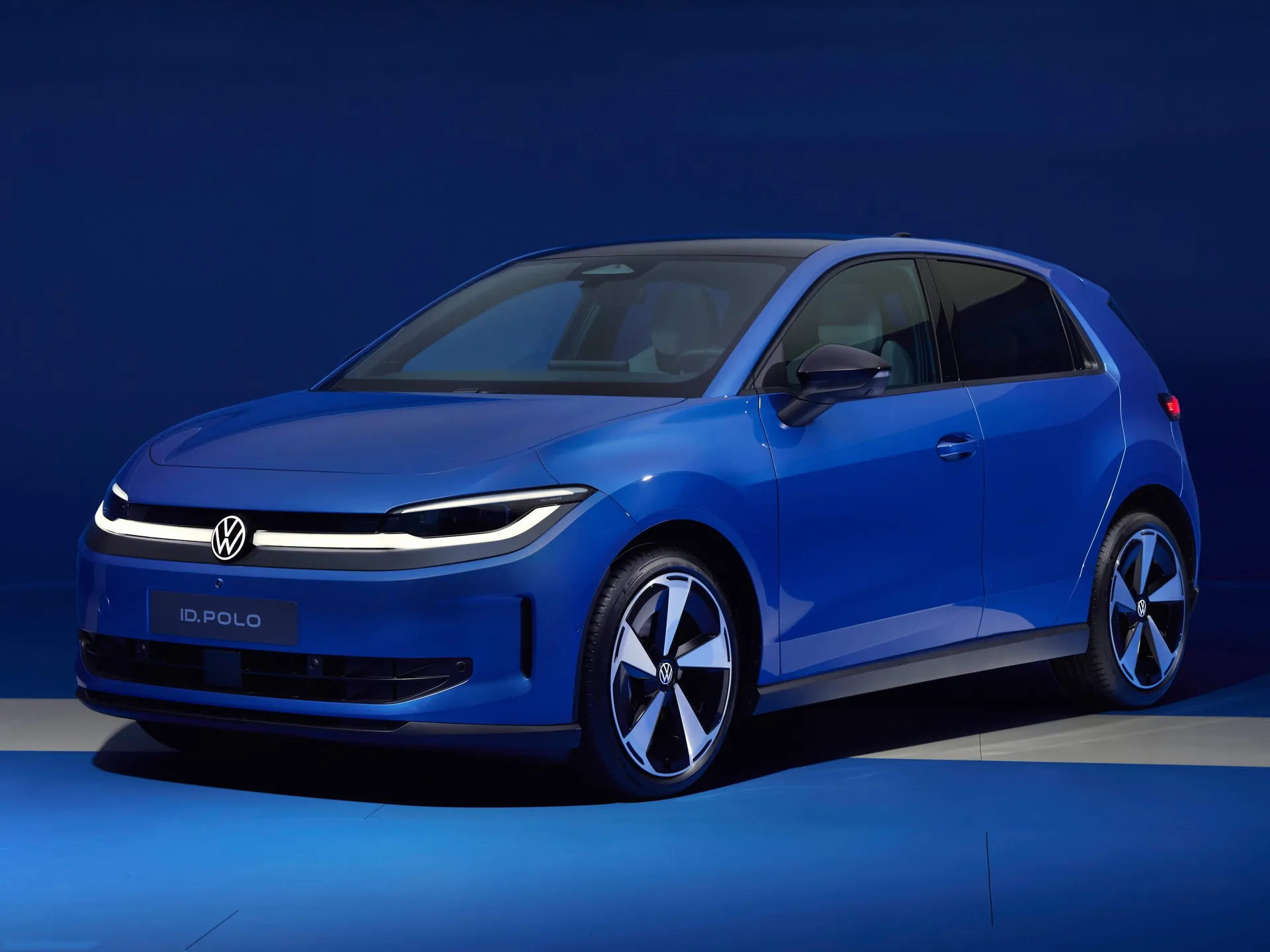
Outside, the ID.3 Neo now follows the new Volkswagen 'Pure Positive' design language defined by Andreas Mindt, Chief Designer of both the brand and the broader Volkswagen Group. The new car's distinctive and now familial front-end styling creates a clear visual bridge to other new electric Volkswagen models such as the ID. Polo and ID. Cross. Inside, the changes are even more comprehensive, and compelling. Acting decisively on customer feedback, a completely new cockpit and centre console, including the centre tunnel, enhances the vehicle's operation, quality and design with high-grade materials, a clearer layout, new ergonomic and intuitive controls and the return of conventional buttons for functions on both the centre console and steering wheel. There are new digital instruments with clearer displays and expanded options, and an entirely new infotainment system - named Innovision - replaces the previous Discover systems, bringing with it improved functionality and performance.
The ID.3 Neo is one of the first Volkswagen vehicles to be based on the latest evolution of the modular electric drive matrix, the MEB+, and its arrival marks the introduction of three new and efficient batteries by Volkswagen in capacities of either 50 kW, 58 kW or 79 kW. Each battery has a longer range than its equivalent predecessor - up to 390 miles in the case of the 79 kW battery - and DC charging from 100 to 183 kWh means topping-up the battery from 10 to 80 per cent takes as little as 26 minutes.
The ID.3 Neo opened for order in the UK in August 2026 with, at launch, three trim options - Life, Style and a limited-run Style Launch Edition. Prices started from £33,080, £38,500 and £39,750 respectively (on-the-road recommended retail prices including VAT).
Exterior design: a new Pure Positive visual language
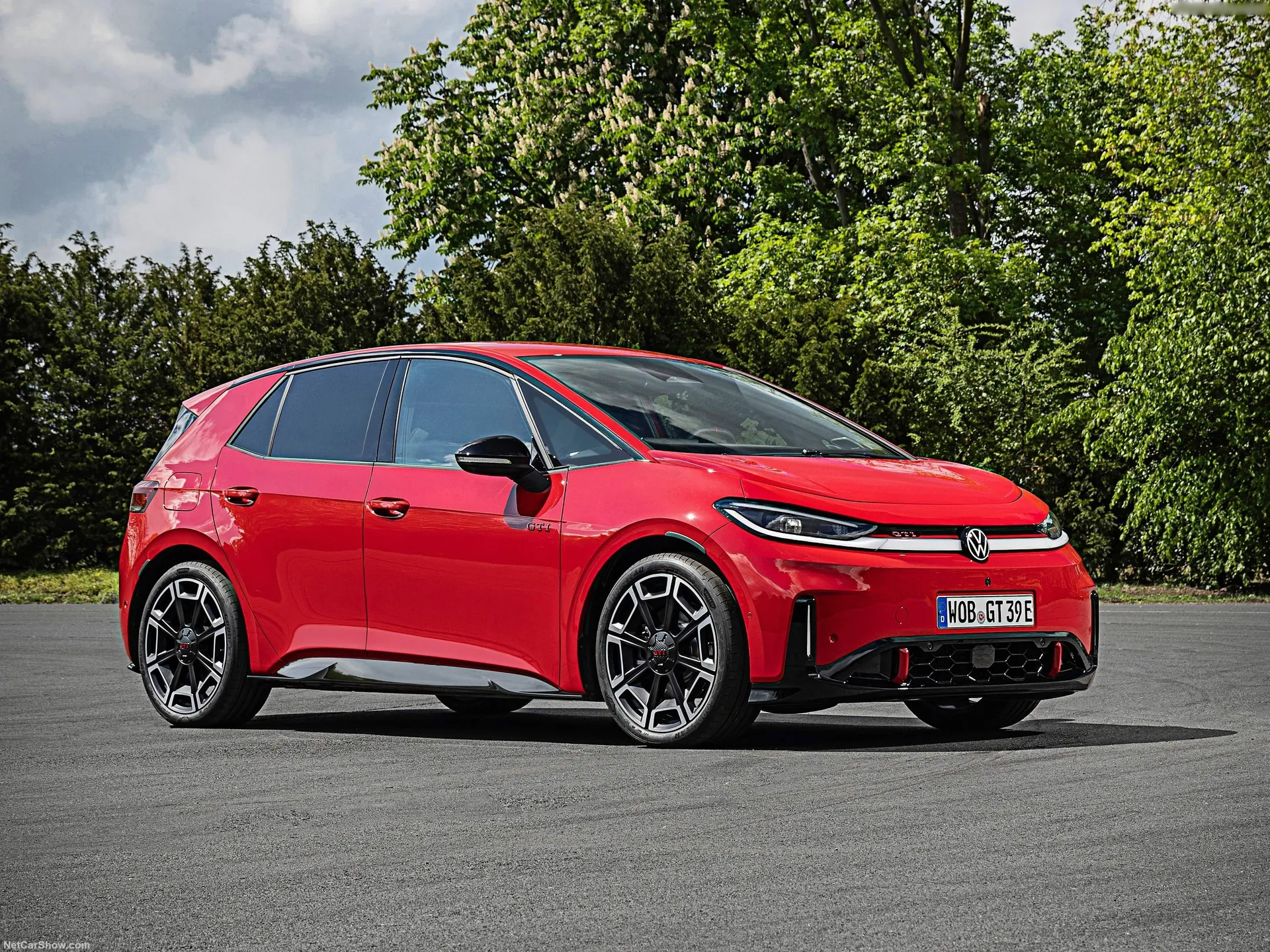
Revisions to the already distinctive styling at the front of the ID.3 Neo represent far more than a simple 'facelift' - they signify a shift to a bold new design language, entitled Pure Positive, which underscores the key elements that define every new Volkswagen, going forward. Created to represent the guiding principles that underpin all new models from the brand - known as True Volkswagen - the Pure Positive design language comprises three elements: visual stability, a likeable appearance and surprising, engaging details. The new design language, defined by Andreas Mindt - Chief Designer of the brand and the broader Volkswagen Group - increases the focus on the brand's iconic, timeless and high-quality design. Each of the three pillars of this new language shapes the ID.3 Neo in a new way, while the front-end design also creates a distinctive visual bridge to other new electric Volkswagen models such as the ID. Polo and ID. Cross.
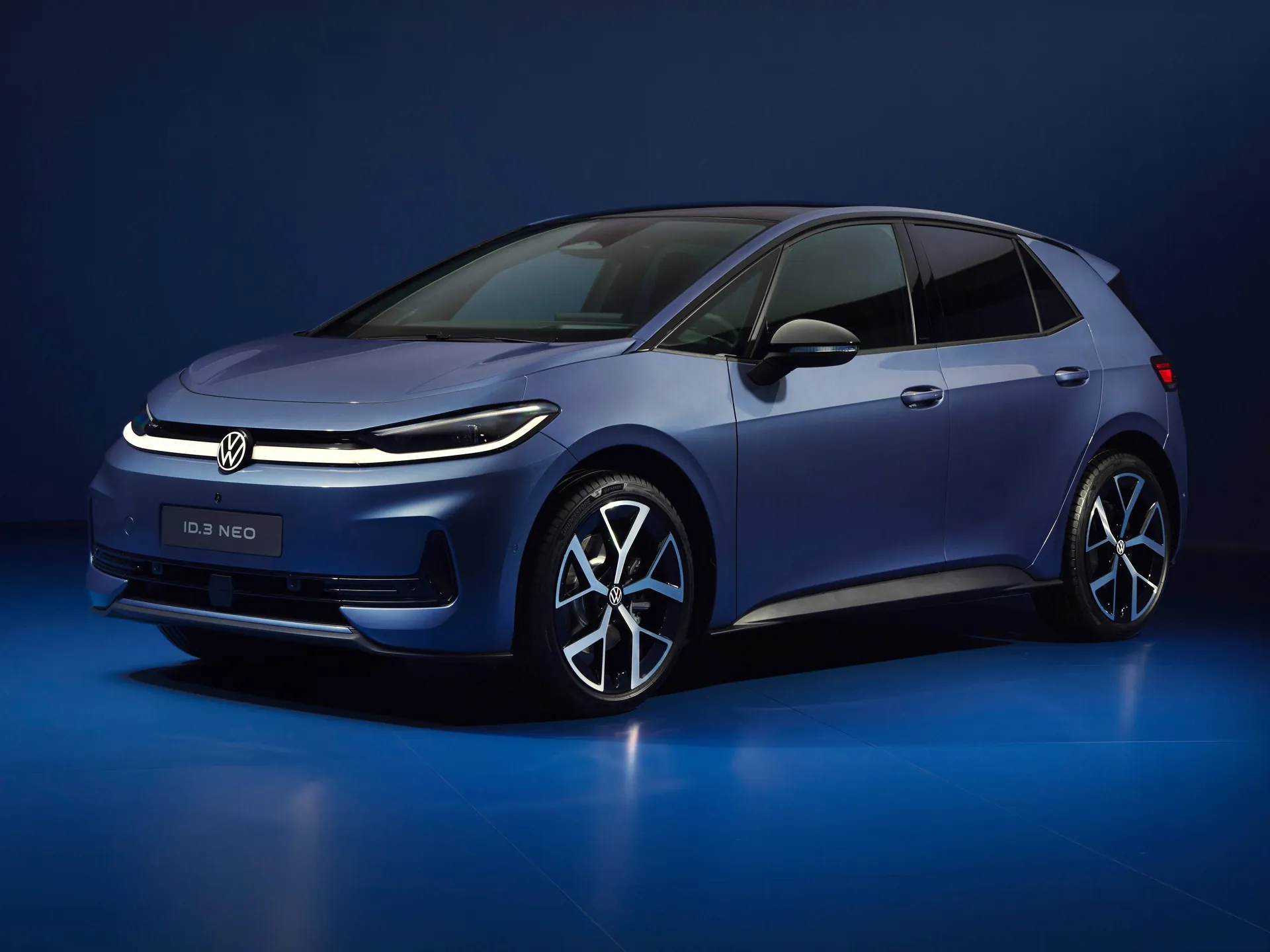
The ID.3 Neo is immediately recognisable from the front, with an elegant division into three horizontal levels that creates a new clarity and a particularly likeable appearance. In the upper third, the newly developed LED headlights are visually striking in that they are slim and have a particularly charismatic appearance. The headlights are connected by a wide, glass-covered horizontal bar which, depending on the trim level, is continuously illuminated in the lower half. When this is selected, the centrally integrated 'VW' logo is also illuminated. The headlights themselves are bordered upwards by narrow LED strips that look somewhat like 'eyebrows', while the interplay of these various LED elements creates an unmistakable Volkswagen, day or night. The central and lower areas of the front end have also been redesigned, with the creation of additional linear clarity. The horizontal structure emphasises the width of the ID.3 Neo and makes it look even more stable on the road. In contrast to its predecessor, the ventilation openings for the vehicle's drive and cooling system have been extended into the sides of the bumper, while the adaptive cruise control (ACC) radar sensor is integrated centrally beneath the number plate.
With a visually elongated silhouette, plus a rear end painted in the vehicle colour, it is immediately evident that the ID.3 Neo has a dynamic and mature appearance when viewed side on. Importantly, this effect is achieved even though the design of the vehicle's flanks - with the exception of new wheels - has not been modified. Instead, the fresh look is cleverly achieved by the use of a new colour scheme. Previously, the ID.3 was characterised by a black roof, black roof spoiler and a windscreen surround also painted black, but now these areas are finished in the chosen vehicle colour, which makes the roof section appear longer and more elegant. This, in turn, means the ID.3 Neo has a greater presence on the road from this perspective.
The move to paint the boot lid in the vehicle colour now means this electric compact vehicle is intentionally visually closer to classic Volkswagen compact models. Thanks to the roof spoiler now also painted in the chosen vehicle colour, the roof appears to gain length at the rear and makes the ID.3 Neo appear more dynamic than its predecessors. Finally, the ID.3 Neo lettering is centrally positioned under the 'VW' logo on the boot lid.
Interior design: quality and clarity that is 100 per cent Volkswagen
At Volkswagen the enhancement of an existing model is referred to internally as a product upgrade, but with the ID.3 Neo the brand took the decision to go much further, with an entirely new cockpit landscape and centre console layout - including the centre tunnel - appearing much more like the changes one might see when a Volkswagen moves from one generation to the next. This huge development effort, and associated results, come in part because the brand has listened closely to feedback from existing ID.3 customers.
Simply opening a door of the ID.3 Neo demonstrates how the car boasts a new level of quality and clarity. Soft, elegant materials; a consistent horizontal layout of lines and surfaces; new ergonomic and intuitive controls and buttons for central functions; newly developed displays; a new-generation multi-function steering wheel that is easy and precise to operate; sturdy and upholstered centre armrests between the driver and front passenger as well as completely redesigned upholstery fabrics for the seats and doors make sure the interior looks and feels appreciably comfortable and welcoming - clearly demonstrating the new True Volkswagen philosophy in action.
Every detail in the ID.3 Neo's dashboard has been redesigned, developed and enhanced. The new, rectangular and larger Digital Cockpit aligns with the new infotainment display on one visual axis. It features crystal-clear graphics and measures 26 cm (10.25 inches) across the diagonal and, unlike the smaller digital instruments in its predecessor, the new Digital Cockpit also offers various graphical 'views' - including integration of the map display from the navigation system. Proving that function includes 'fun', using the View button on the multi-function steering wheel, the driver can now also call up a retro display as a graphic of the Digital Cockpit, which shows an instrument view mimicking that of a late-model Golf Mk I from the 1980s. With this display selected there is a classic speedometer on the left and a 'rev counter' on the right: the latter displaying the energy output or energy absorption, by recuperation, of the drive as a power display. Other important functions such as the display for the dynamic road sign display and other assist systems are cleverly integrated into the layout of the retro display.
The new Innovision infotainment system debuting in the ID.3 Neo replaces the previous Discover system and, like the previous version, will be launched in three configuration levels. A new app store has also been integrated into the system's in-car shop, which allows functions and services to be activated or extended digitally, flexibly and on a vehicle-specific basis. As with a smartphone, popular apps relating to audio, video streaming, parking, charging and gaming are available for download. The design and graphics of the touch display itself follow the now familiar format of models such as the ID.7, the current Golf and the new ID. Polo and ID. Cross. The crystal-clear display, with a diagonal of 32.77 cm (12.9 inches), gives the system the appearance of a high-quality, horizontal tablet.
The new software generation debuting in the ID.3 Neo sees a major change, too, with the VW Connect package implemented free of charge for 10 years from initial delivery. It will be developed over time to include numerous functions that were previously part of the VW Connect Plus paid offer, including the IDA online voice assistant, navigation services, a digital vehicle key, various charging services and several remote functions. The specific functional scope of individual available services depends, in general, on the hardware installed in the vehicle.
Digital vehicle key with mobile phone access
The new digital key in the ID.3 Neo allows for easy access to the vehicle with a mobile device such as a smartphone or smartwatch. This supplements, rather than replaces, the classic vehicle key. No special app is required; communication takes place wirelessly in a similar way to payment processes with a smartphone or smartwatch, maximising convenience and ease of use.
The ID.3 Neo's multi-function steering wheel has been completely redesigned. It now features a 'squircle' rim that is flattened at the top and bottom, along with new clearly structured button panels. Importantly, and in response to customer feedback, the new wheel replaces previous haptic touch-sensitive panels with real, physical buttons and dials. In terms of button placement, the functions of the cruise control system or, depending on equipment, adaptive cruise control and connected Travel Assist, are combined in the button group to the left of the airbag, along with a volume control rocker switch at the base of the button cluster.
To the right of the airbag is the button panel controlling the Digital Cockpit as well as activating the IDA voice assistant (supported with ChatGPT) and operating the steering wheel heating, which can be actuated later, on demand, if not specified initially. There is also a corresponding rocker switch at the bottom of the button cluster for selecting different tracks, or stations, in the Innovision infotainment system.
The steering column switches for gear position and the parking brake (right) as well as for the indicators, headlight main beam and windscreen wiper functions (left) are located behind the steering wheel, while integrated in the steering column itself is the separate start/stop button for the vehicle's drive. Alternatively, the ID.3 Neo can be started, with the brake pedal pressed down, simply by turning the drive position selector to D or R. In right-hand drive markets such as the UK, the controls for the headlight and tail light cluster functions are located on the lower right-hand side of the dashboard.
Centre console with conventional 'classic' buttons
The central climate control functions including temperature control, blower settings, air conditioning on/off, automatic climate control mode, air recirculation, windscreen defrost and heated rear window are now physical buttons, integrated into a strip in the centre console below the central screen. The hazard warning light switch is located in the centre of this strip of easy-grip buttons, which resemble rocker switches and look and feel like the controls found in some sports cars.
Immediately below the new climate control buttons is a storage compartment for two smartphones with, on the driver's side, an inductive charging function (depending on trim), while two drinks holders that can be varied in size using plug-in adjustments, along with a top-opening centre armrest which splits by folding out to the left and right, comprise the remainder of the central tunnel in the front, save for the return of a lone rotary control that governs the infotainment system. A further large storage compartment, capable of accommodating up to a 13-inch tablet, is located beneath the folded-open centre armrest.
The prominent new rotary knob for the audio volume is integrated between the smartphone tray and the drinks holders in the centre console. It can also be used to change songs and stations using the track function. The addition of this new control sees Volkswagen responding directly to the clear requests of customers to control the audio volume intuitively, using a classic rotary control instead of a haptic slider. Below this area is a second level, open to the sides, which offers space for a small handbag or shoulder bag, for example.
The ID.3 Neo has redesigned door trims and, as with the entire interior, these are haptically and visually more elegant than before with high-grade materials in use. There is also a completely new touch panel in the driver's door for the four electric windows.
As with its predecessor, the ID.3 Neo can be optionally equipped with an augmented-reality (AR) head-up display - still a unique feature in this segment of the market. The AR head-up display projects information directly relevant to the drive in-progress into the driver's field of view, enabling drivers to keep their eyes on the road. Active navigation from a mobile phone app, connected via Apple CarPlay or Android Auto, is now also integrated into this AR display. Meanwhile the practical and highly intuitive ID. Light uses an interactive LED strip in front of the lower area of the windscreen to alert the driver to dangers, or display understandable navigation, charging or telephone instructions. Depending on the trim level specified, there are either 10- or 30-colour background lighting options in the ID.3 Neo.
The ID.3 Neo is one of the first Volkswagen vehicles to be based on the latest iteration of the MEB modular electric drive matrix: known as MEB+. In contrast to front-wheel drive models such as the ID. Polo and ID. Cross, a rear-wheel drive variant of the MEB+ is used in the ID.3 Neo, making it an ideal match for the, in some cases, higher output and revised packaging of the larger batteries used here. The ID.3 Neo's driveline is also new. Known internally at Volkswagen as APP350, it is highly efficient and replaces the previous APP310 familiar from the ID.3, and the new system is capable of handling outputs of up to 231 PS (170 kW). Meanwhile, a future high-performance flagship model, due in the UK in the coming months, will use its own drive system: the APP550.
APP is the abbreviation for axial parallel position, which describes the configuration of the permanently excited synchronous motor; the 350, 310 and 550 respectively indicate the maximum torque measured in Newton-metres. The higher efficiency of the APP350, when compared with the APP310, is important in that it reduces the system's energy consumption as a whole. In turn, this means the ID.3 Neo is capable of covering longer distances between charges than a comparably equipped ID.3 with the same battery size.
At launch, the ID.3 Neo is available in three equipment lines (Life, Style and Style Launch Edition) and three power outputs, as well as with three different battery sizes. The three electric drive motors develop outputs of 170 PS (125 kW), 190 PS (140 kW) and 231 PS (170 kW) respectively. The ID.3 Neo Life is available with all three battery capacity and power outputs, while the ID.3 Neo Style is offered with either the 58 kWh battery and 190 PS output, or the 79 kWh battery with the 23 PS output. The Style Launch Edition uses the 58 kWh battery with a 190 PS maximum output.
The batteries with an energy content of 50 and 58 kWh have a charging capacity of up to 105 kW at DC quick-charging stations, while the 79 kWh version is capable of DC quick charging with up to 183 kW. DC quick charge times (10 to 80 per cent) vary from 24 minutes to 29 minutes, depending on the battery version being charged. The ID.3 Neo offers a pure electric range (WLTP combined) of between 258 miles and 390 miles, depending on battery size, trim level and power output.
The exterior sound of the ID.3 Neo is new, and comes in response to safety requirements which stipulate that pedestrians must be able to hear an electric vehicle at low speeds. Volkswagen has designed a new brand sound with various parameters considered to make the sound both as pleasant and as noticeable as possible. The new sound is active at speeds of up to 15 mph, in all gear selector positions and in all driving profiles. In the Sport driving profile, a particularly charismatic and engaging 'sports' sound is generated at speeds of up to 31 mph. The soundscape is adapted in real time depending on variables such as speed, accelerator pedal position and drive torque.
The ID.3 Neo comes with a range of cutting-edge assist systems as standard while advanced functions are optionally available, too, such as the latest generation of Travel Assist which uses swarm data for the first time and, to reflect that update, has been renamed Connected Travel Assist. The system helps the ID.3 Neo driver to stay in lane and maintain a set maximum speed and distance from the vehicle ahead. The system predictively adapts the vehicle's speed - for instance around bends, with speed limits or when approaching traffic lights. It can even brake the vehicle to a stop if it detects a red traffic light - a first for Volkswagen. When driving on motorways, Connected Travel Assist can actively assist when changing lanes. The swarm data, mentioned above, sees the experiences of hundreds of thousands of Volkswagen drivers compiled anonymously in online data. If this online data is available, Connected Travel Assist can keep the ID.3 Neo in its lane even without lane markings, and thus better adapt the vehicle's speed to the road layout. This makes assisted driving feel more natural. Connected Travel Assist requires an active internet connection to use this online data, which needs a separate contract, a Volkswagen ID user account and a VW Connect contract. It is activated via the infotainment system shop.
Another new feature is Eco Assistance, also known as one pedal driving, which rapidly decelerates the ID.3 Neo through control of the accelerator pedal alone. The system helps the ID.3 Neo's driver save energy and increase the vehicle's range while, at the same time, making driving more comfortable by automatically adjusting the energy recovery level in response to the driving situation, taking into account vehicles ahead, speed limits and the road layout. In many situations, the driver can therefore control the speed of the car just by using the accelerator pedal. Eco Assistance can also help with braking and, if a vehicle ahead slows down, the function can brake the ID.3 Neo to a stop.
As with other new ID. models, it is now possible to supply power to external devices - from electric barbecues to e-bikes - via the ID.3 Neo's bidirectional charging, which offers an output of up to 3.6 kW directly from the high-voltage battery, using the car's new vehicle-to-load function. The energy output can be used both when stationary and while driving and can even be supplied simultaneously with a charging session, subject to conditions. A smart control system monitors the high-voltage battery and, if the charge level drops to about 20 per cent, the power output is automatically terminated to make sure the car has sufficient range left.
Park Assist can optionally be extended by the addition of a memory function and simplify difficult parking situations: the ID.3 Neo can store and independently carry out individual parking manoeuvres - ideal for garages and carports. The driver simply parks or drives out of a parking space once and then saves the manoeuvre to the car's memory. The memory function is then capable of repeating the manoeuvre itself, with the driver simply required to monitor it. In all, five different parking and pulling out manoeuvres can be stored and, in combination with Park Assist Pro, the car can even be controlled remotely while it carries out the stored manoeuvre.