Kia Ceed SW
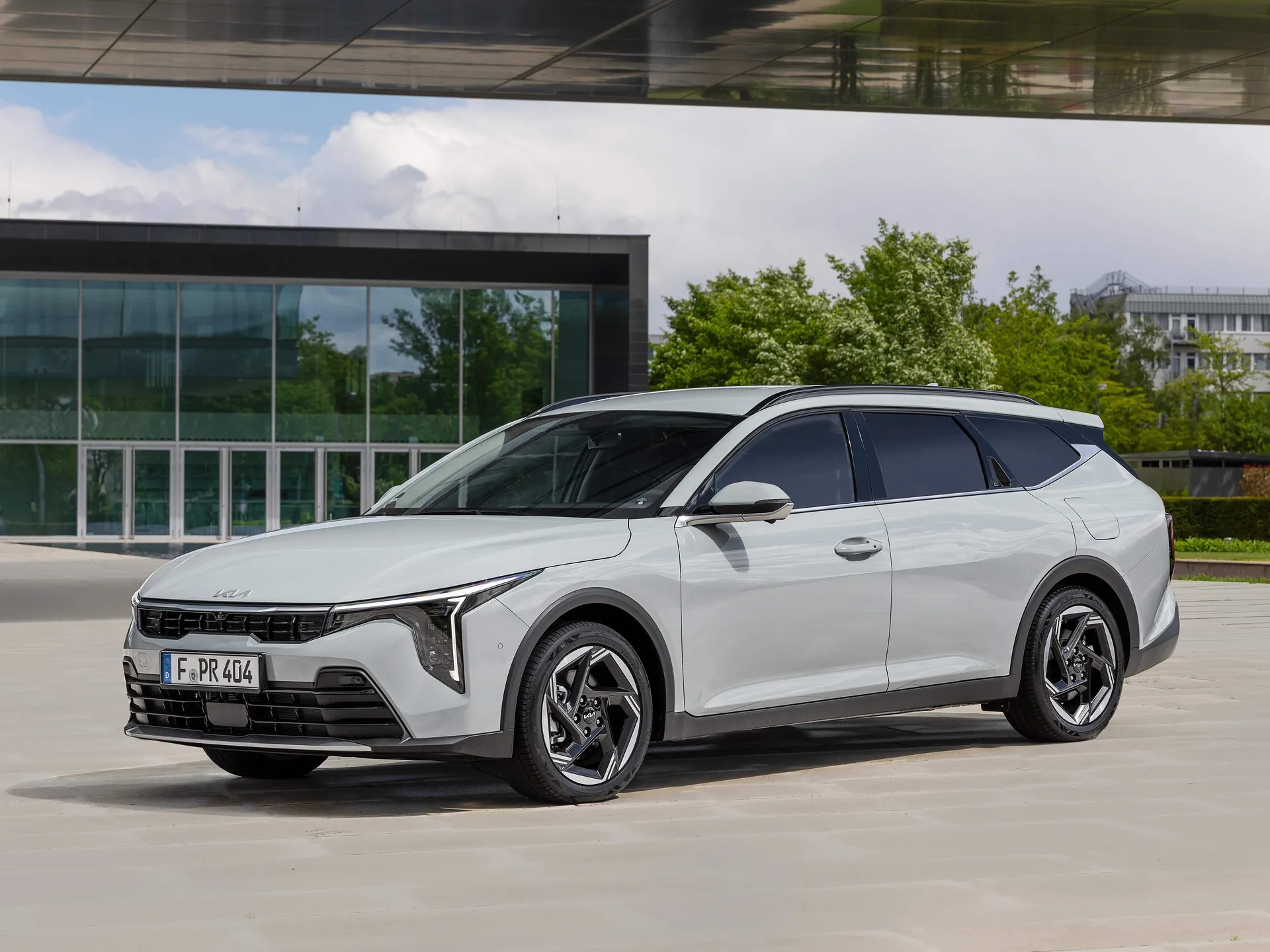
Kia's best-selling Ceed Sportswagon range has received a range of bold and contemporary enhancements for 2021, including dynamic and athletic design accents. The Kia Ceed Sportswagon features an entirely redesigned front-end, sporty updates to the rear, restyled alloy wheels and a refreshed interior and new body colour.
The Ceed family offers one of the most comprehensive C-segment line-ups on the market, and its enduring presence in the Kia range highlights the model's outstanding customer appeal and reputation. Long recognised for its key role in establishing the Korean brand in Europe, the Ceed range was Kia's first car designed, engineered and built in Europe specifically to appeal to European tastes. Now contributing to 28 per cent of Kia's European market share, the Ceed range remains a strong contender and stands confidently alongside many best-selling brands that have dominated this segment for decades.
Like its predecessors, the Ceed Sportswagon has been designed, developed and engineered in Frankfurt by Kia's European design, product development and R&D teams. It is manufactured at the brand's production facility in ilina, Slovakia, alongside the Sportage.
In 2020, the Ceed model family (incorporating the Ceed five-door hatchback, Ceed Sportswagon, ProCeed and XCeed) accounted for 27 per cent of Kia's total European sales in 2020 and has regularly ranked alongside the Sportage as one of the brand's best-selling models in Europe in recent years.
Since the introduction of the cee'd, Kia's annual European sales have more than doubled, from 225,000 in 2006 to more than 502,000 in 2019. In 2020, Kia's 416,715 European sales meant the brand reached its highest ever market share of 3.5 per cent. In the medium term, Kia is targeting annual sales of more than 500,000 vehicles. The Ceed model family will therefore continue to underpin the sustained growth of the Kia brand for years to come, remaining one of Kia's best-selling product lines. The Ceed occupies a unique position in the Kia line-up, perceived by buyers as the most dynamic and sporty volume car to drive, while also being one of the most reliable, practical and recognisable.
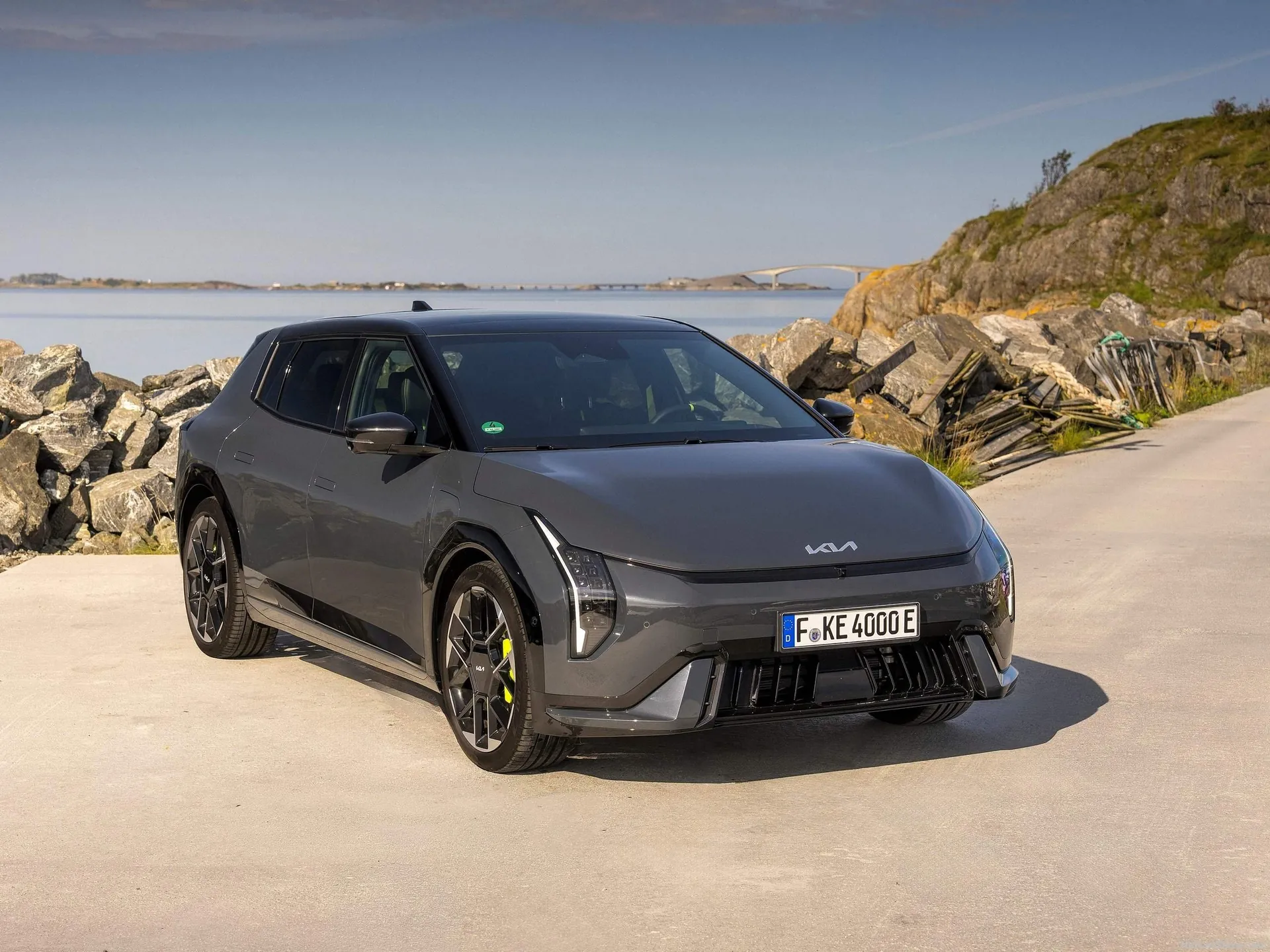
From the outside, the rejuvenated exterior speaks of vitality, creating a contemporary and dynamic stance. A completely redesigned front end features Kia's new logo, a simplified graphic of the company name that reflects the ethos 'movement that inspires'. Special attention has been given to make each variant more unique and distinct from each other.
The iconic tiger-nose grille, which makes the Ceed Sportswagon a recognisable Kia, is upgraded to a black gloss finish with satin chrome upper. To the sides, two large side air intakes shoot through the front bumper creating the sportier look. The 'wing' inspired theme repeats in other elements of the front redesign, such as the satin chrome trim on the lower air intake grille and the sweeping side garnish which extends into the front wheel arch. At the rear, to highlight the simplicity of the new Kia badge, the surface between the LED combi lamps has been smoothed out to accommodate the sleek new brand emblem. A new glossy black diffuser is added to the sporty rear bumper, which also echoes the satin chrome finish seen at the front of the car.
To further enhance the exterior updates, a new colour is added to the line-up called Machined Bronze.
Inside the updated Kia Ceed Sportswagon, the driver is instantly welcomed by chic interior décor, sophisticated soothing colours, tactile materials, and a layout designed to put all occupants at ease. The Ceed Sportswagon is more ergonomic than ever, and with high-quality materials used throughout. The cabin architecture from the most recent Kia vehicles has been adapted for the Ceed Sportswagon, with the dashboard laid out horizontally for a more sculptural, seamless and slimline appearance. This design also creates greater space and a sense of openness for the front passenger, creating more room in the footwell and a clearer view ahead.
The dashboard is split into an upper area - for the 'floating' touchscreen infotainment system - and lower area, housing controls for audio and heating and ventilation. Driver-centric in its layout, the centre console is angled slightly towards the driver's seat for ease of use on the move. The interior is finished in a higher proportion of sophisticated soft-touch materials throughout, subtly intensifying the refined and upscale ambience of the cabin. Surfaces are finished with satin chrome trim, and a leather-wrapped steering wheel and gearstick are standard.
Seating is black cloth with black faux leather bolsters for the single well-equipped '3' model. The fascia trim is satin chrome, with the same finish on interior door handles. The Ceed Sportswagon features a handy centre console armrest with storage box.
The Kia Ceed SW has been engineered with European buyers in mind. Tested exhaustively on European roads - including the UK - Kia's test tracks in Korea and at the infamous Nürburgring race circuit in Germany, the Kia Ceed Sportswagon provides relaxed and safe family motoring and easy, economical long-distance motorway cruising for those who use their cars for business or travel.
The ride and handling characteristics have been tuned to elevate the Ceed Sportswagon over its predecessor in terms of dynamism and driver engagement. At the same time, a focus throughout the new model's development on eliminating noise and vibrations means the cabin is more refined than ever.
The fully independent suspension system provides drivers with agile and immediate handling responses, complemented by revised spring and damper rates. The ride has been developed on Europe's wide variety of road surfaces, remaining comfortable while giving drivers the confidence of tighter body control under cornering and stability at higher speeds.
The front springs are 40 per cent stiffer and the torsional rigidity of the front stabiliser is reduced by 22 per cent. In addition to accommodating the lighter range of engines, these modifications enable more immediate handling responses and a flatter ride under cornering, reducing understeer and producing greater mechanical grip. The front suspension is aided by a damper valve system to absorb smaller vibrations. Conversely, the rear spring rate has been relaxed by 10 per cent, absorbing small vibrations and giving the Kia Ceed Sportswagon a relaxed gait at a cruise or over broken road surfaces. The adoption of a rear stabiliser, trailing arm bushings, and optimised shock absorber bushings ensures maximum body control under cornering.
The Ceed Sportswagon sports a 17 per cent more direct steering rack than its predecessor, with a 12.7:1 ratio from its electric motor-driven power steering system. Requiring just 2.44 turns of the wheel from lock-to-lock, the new model provides a more incisive response to drivers' steering inputs.
Technology in the Ceed Sportswagon also plays a role in enhancing driver enjoyment, as well as safety. The front-wheel drive Ceed Sportswagon features Electronic Stability Control (ESC) and Kia's Vehicle Stability Management (VSM) system as standard. This enables the inclusion of Torque Vectoring by Braking technology, an additional electronic driver support feature which intelligently brakes the inside wheels to reduce understeer around corners - making the Kia Ceed Sportswagon more enjoyable and confidence-inspiring to drive.
Refinement and the suppression of noise, vibration, and harshness (NVH) was a principal focus during the Ceed Sportwagon's development. Engineers analysed every element of cabin, engine and suspension insulation and 'transfer paths' for NVH. The latest Ceed features thick, insulating dashboard padding, sound-absorbent insulation around the rear wheel arches, and an insulation layer beneath the cabin carpet, reducing engine and road noise. Shaped windscreen side mouldings and sealing around the doors have led to a reduction in wind noise. The Ceed Sportwagon is therefore quieter than its predecessor at every engine speed, with road noise at 37.5mph (60kph) reduced from 67.5 to 66.5dB. Wind noise is also reduced, with 63dB registering in the cabin at 68.75mph (110kph), compared to 64dB in the second-generation model.
The chassis and bodyshell also contribute to lower levels of vibration from poor road surfaces. A thicker rear crossmember and additional reinforcement beneath the rear cabin and boot floors reduce the effect of vibrations from the rear axle. Anti-vibration pads are also fitted to the upper cowl, at the base of the windshield, reducing the effect of engine vibrations on the cabin.
In 2021, Kia added a new 158bhp 1.5-litre T-GDi (Turbocharged Gasoline Direct injection) engine to the Kia Ceed Sportswagon line-up, paired with a slick-shifting six-speed manual transmission.
The new 'Kappa' 1.5-litre T-GDi power unit produces 158bhp, 20bhp more than the 1.4-litre T-GDi engine it replaces. The turbocharger also ensures a wider torque band than the earlier 1.4-litre engine, making it more responsive in a wider range of driving conditions - while also reducing emissions. 253Nm torque is available from 1,500 to 3,500rpm, with emissions (on the WLTP cycle) rated at 131g/km. Acceleration from 0-to-62mph is completed in just 8.6 seconds, with a top speed of 130mph.
The 1.5-litre T-GDi engine is fitted with a gasoline particulate filter to further reduce tailpipe emissions, ensuring the Ceed Sportswagon goes beyond the requirements of the Euro 6d RDE2 standard.
The manual gearbox is a six-speed unit, light and compact with a short, slick shift. It offers a wide spread of ratios and long final drive to help bring down fuel consumption and CO2 emissions.
All versions of the Ceed Sportswagon are fitted with Kia's Intelligent Stop and Go (ISG) stop-start system to reduce fuel consumption and emissions in traffic. As the name implies, this switches off the engine when the car comes to rest and the driver puts the gear stick into neutral and releases the clutch pedal. The engine restarts instantly as soon as the clutch pedal is partially engaged again. This feature means the car is not using fuel and no emissions are released when it is at rest.
ISG consists of crankshaft position, battery and vacuum sensors plus neutral, on-off and clutch switches that feed into an electronic control unit. This operates the ISG starter, intelligent alternator and cluster. The air conditioning units and bonnet switch also feed into the ISG ECU.
The crankshaft position sensor measures the crankshaft angle during engine run-out and monitors it while the vehicle is stopped, ensuring the starter is activated for as short a time as possible by optimising cranking and combustion. The battery sensor monitors battery condition and temperature, while the clutch and neutral switches recognise when drivers wish to continue driving and ensure the engine is started. There is a brake booster pressure sensor to make sure the engine continues to operate if brake boost falls too low.
A heavy-duty maintenance-free Absorbent Glass Mat (AGM) battery delivers the power necessary to run the system, and intelligent alternator management reduces drain on the battery while accelerating and recharges the battery during coasting and braking. The system has been engineered not to stop the engine during warm-up after a cold start or if the air conditioning is working hard. Drivers can also manually turn off ISG through a switch next to the gear stick.
Innovation sits at the heart of the Kia Ceed Sportswagon, which is one of the most high-tech cars in its class.
The cabin of the '3' grade model features a wide range of new technologies to enhance comfort and convenience for occupants. The 'floating' infotainment system is a 10.25-inch touchscreen satellite navigation system, with Kia Connect telematics and Kia Connected Services powered by TomTom®.
The 10.25-inch touchscreen satellite navigation system features Bluetooth® multi-connection as standard, enabling occupants to connect two mobile devices at once, as well as Apple CarPlay™ and Android Auto™. Its advanced split-screen functionality lets users control or monitor numerous vehicle features at the same time, customising the screen to display up to three applications simultaneously, among a series of available widgets. This enables the driver to have a single display (such as navigation) or combine different elements on-screen at the same time. This means the driver can follow navigation directions while passengers choose their favourite songs or check the weather forecast.
Kia Connect (formerly UVO Connect) links drivers to the world by providing invaluable information via the in-car touchscreen and on their smartphone. Featuring Kia Live services and housed within the 10.25-inch TFT LCD widescreen, the system uses its own eSIM chip to retrieve and update live data during a drive. This includes live traffic information, weather forecasts, points of interest, and details of potential on- and off-street parking (including price, location, and parking availability). The second element of the Kia Connect diagnostic data about owners' cars and the trips they take, enables drivers to send route directions to their car before a journey, and enables them to check the location of their vehicle at any time.
In addition to the car's seven standard airbags, advanced driver assistance technologies further enhance occupant protection, using active safety systems to mitigate the risk of collisions. Standard safety technologies include High Beam Assist (HBA), Driver Attention Warning (DAW) with Leading Vehicle Departure Warning, Lane Keeping Assist (LKA) with Forward Collision-Avoidance Assist - City and Pedestrian (FCA). Cyclist detection is also available.
Technology in the Kia Ceed Sportswagon also plays a role in enhancing driver enjoyment, as well as safety. The front-wheel drive Ceed features Electronic Stability Control (ESC) and Kia's Vehicle Stability Management (VSM) system as standard. This enables the inclusion of Torque Vectoring by Braking technology, an additional electronic driver support feature which intelligently brakes the inside wheels to reduce understeer around corners - making the Ceed more enjoyable and confidence-inspiring to drive.
The Kia Ceed Sportswagon is offered in the UK in a single comprehensively equipped '3' grade, featuring an extensive package of comfort, convenience and safety items. As standard, the Ceed Sportswagon '3' is fitted with many features that are usually a cost option on rivals.
Grade '3' features a comprehensive equipment level, offering customers cruise control with speed limiter, dual-zone air conditioning, an alarm system, front wiper de-icer, electric windows all-round and automatic headlight control. Also standard are front fog lights, projection headlights, electrically adjustable and heated door mirrors in body colour with LED indicators, a high gloss black front grille, chrome window surrounds, and LED rear lights. The car also features 17-inch alloy wheels, privacy glass and rain sensing front wipers, in addition to black cloth seat trim with black faux leather bolsters and power lumbar support for the front seats. It also includes a leather-trimmed steering wheel, gearshift and hand brake.
Technology includes a 10.25-inch touchscreen satellite navigation with telematics, European mapping, and traffic messaging channel, along with Kia Connected Services featuring TomTom® Live. This system also offers a reversing camera system with dynamic guidelines, DAB radio, Bluetooth® with voice recognition and music streaming, together with Android Auto™ and Apple CarPlay™ smartphone compatibility with voice control. Practicality is further enhanced thanks to an auto-dimming rear view mirror and rear parking sensors, in addition to a USB fast charger in the front centre console. The central fascia and the interior door handles have a satin chrome finish.